
What basement waterproofing is, and what it is not
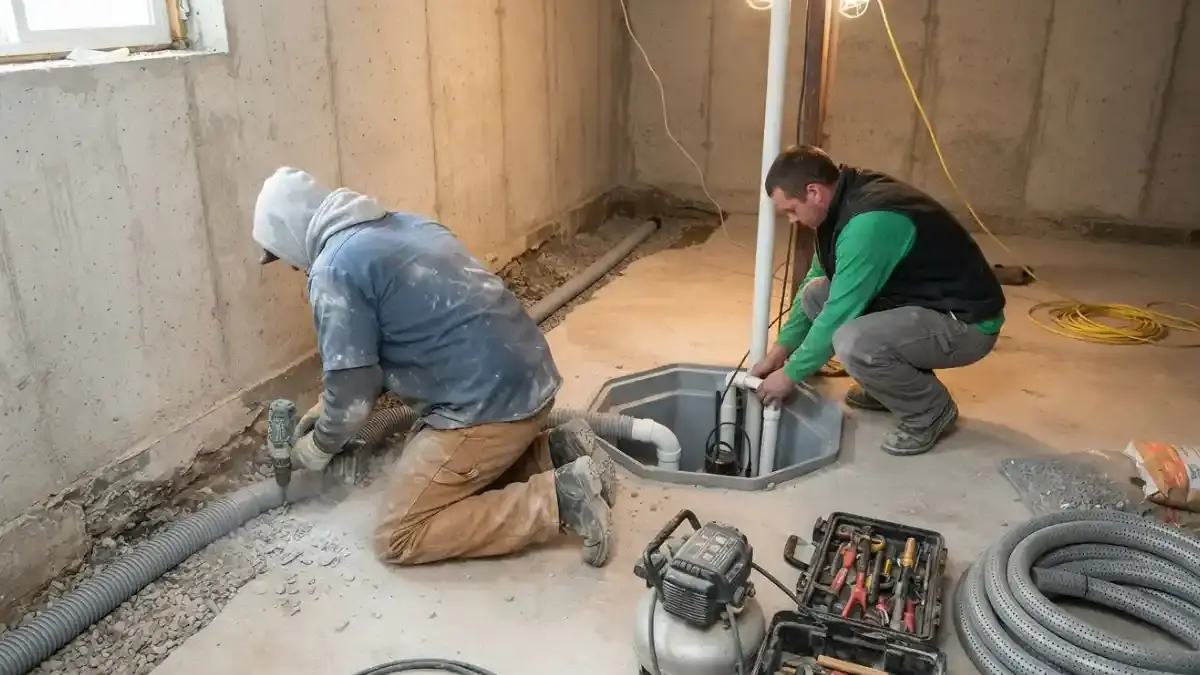
Basement waterproofing is the work of keeping water out of a basement or getting it out fast, through grading, gutters, drain tile, a sump pump, and sealing, in an order that matches where the water comes from. It is not one product or one trench, and a fix aimed at the wrong source wastes the effort spent on it.
That is why this process starts with questions instead of machinery. A damp basement can be condensation, seepage through the wall or floor, or a plumbing leak, and each one has a different cure. The plumbing and drainage side is what we handle, and we will say plainly when the cause is structural.
Three kinds of wet: condensation, seepage, and a plumbing leak
Ask which of these matches what you see before deciding anything else.
Condensation
Dampness on cold walls and pipes in warm, humid weather, often fogging windows or cold water lines. It tracks the weather and the indoor humidity, not the rain.
Seepage
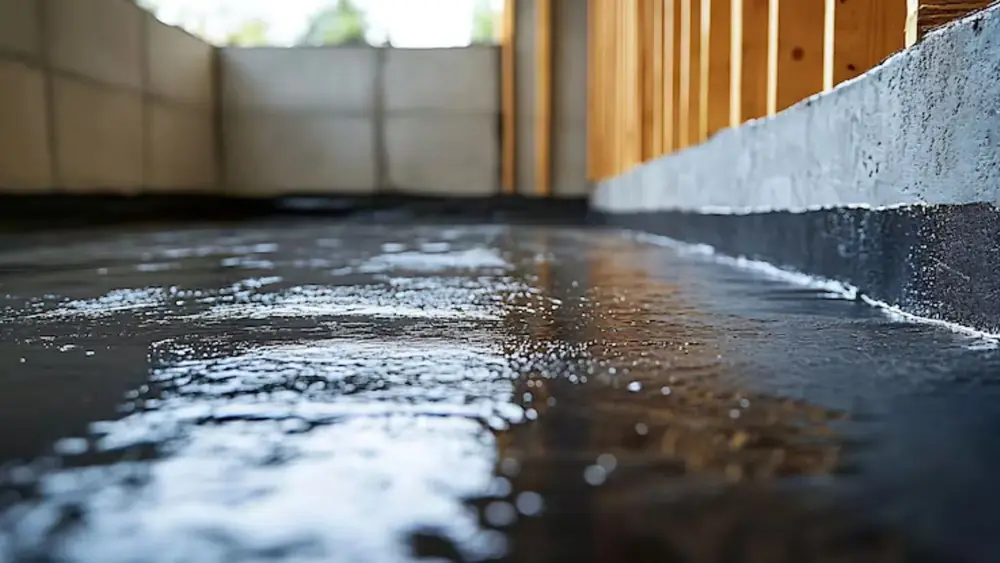
Moisture or standing water after rain, usually at the wall-floor joint, at cracks, or along a line of the wall. It tracks storms and a high water table.
A plumbing leak
A steady wet spot near a water heater, supply line, drain, or fixture, with no connection to rain. It keeps going when the weather is dry.
A diagnosis you can do before anyone visits
Each of these tests costs nothing but patience, and together they narrow the source.
- 1
Do the foil test
Tape a square of foil flat against the damp wall, sealing all four edges, and leave it for a day or two. Moisture on the room side of the foil points to condensation. Moisture trapped under the foil points to water coming through the wall.
- 2
Keep a rain log
Note when the wet spot appears and whether it follows rain by hours or days. Add the date, how hard it rained, and where along the wall it showed up. A pattern here is worth more than any guess.
- 3
Run a meter test
Shut off every tap and appliance that uses water, note the water meter reading, wait without using water, and read it again. A moving meter points to a leak in the plumbing, not groundwater. If the dial keeps spinning, call us.
- 4
Walk the outside
Look at the ground along the wet wall, the gutter outlets, and the downspouts. Soil sloping toward the house, a downspout dumping at the foundation, or a broken gutter explains a great deal.
Grading, gutters, and downspouts come first
Water that never reaches the foundation never has to be pumped out. The ground next to the house should fall away from the wall, and gutters should carry roof water well past the footing before it hits the ground. Extending a downspout several feet beyond the wall, or onto a splash block that slopes away, is a small change with a large effect.
Check that gutters are clear and that the downspouts are not connected to a buried line that has since collapsed or clogged. A buried downspout drain that has failed spills roof water straight into the soil beside the wall. Soil can also settle against the foundation after years, so refilling and re-sloping low spots is often the cheapest real fix available.
Which fix matches which symptom
A decision framework, not a promise. Real houses often have two causes at once.
| Symptom | Probable source | First step | Who usually handles it |
|---|---|---|---|
| Cold, damp walls in humid weather, dry in winter | Condensation | Dehumidify, insulate cold pipes, improve ventilation | Homeowner |
| Wet after storms, at the wall-floor joint | Seepage and a high water table | Fix grading and downspouts, then consider interior drain tile and a sump | Plumber for drainage, homeowner for grading |
| Wet on one wall near a downspout | Roof water at the foundation | Extend downspouts, repair gutters, re-slope soil | Homeowner or a general contractor |
| Wet spot with no link to weather | Plumbing leak | Meter test, then locate the leak | Plumber |
| Single crack that weeps after rain | Water finding a crack | Monitor it, then seal if stable | Specialist, after an engineer if it is moving |
| Bowed wall, stair-step or horizontal cracks | Structural movement | Do not seal it, get an engineer | Structural engineer |
A sealed crack on a moving wall hides the symptom while the wall keeps moving.
Interior drain tile and the sump
Interior drain tile is a perforated pipe laid in gravel along the inside edge of the footing, under a strip of cut-out floor, sloping to a sump pit. Water that comes up through the floor or wall joint is caught by the pipe and carried to the pit. The pump then sends it out through a discharge line to ground that slopes away.
The method manages water, it does not make a wall waterproof. It works best where the cause is groundwater pressure under or beside the slab, and it does little for a roof-water or plumbing-leak problem. The system needs a reliable sump pump, a check valve, and a discharge outlet that does not freeze or loop back to the house.
Maintenance matters as much as the install. The pit collects silt and the pump needs a monthly test, and a backup is worth considering where the power goes out in storms. Be wary of any promise of a perfectly dry basement forever, because no installer controls the weather or the water table.
Cosmetic crack or structural warning
A crack by itself tells you less than its width, direction, and whether it is moving.
Watch and seal
- Thin vertical hairline cracks that stay the same width
- Cracks that weep only after heavy rain
- A crack with no matching crack in the siding, floor, or ceiling above it
- A crack that has not changed across two or three seasons
Call a structural engineer
- Horizontal cracks, especially mid-height on a block wall
- Stair-step cracks in mortar joints
- A wall bowing inward, or a corner that has pulled apart
- Cracks that widen, doors or windows that stick, or floors that slope
Honest limits
We handle the plumbing and drainage side of a wet basement: leak tracing, sump pumps, drain lines, and discharge. We do not do structural or foundation repair, and a bowing wall or widening crack needs an engineer before anyone seals anything.
Nobody can promise a basement will never see water again. Weather changes, the water table moves, and drain systems need upkeep. What a good fix does is cut the sources you can control and give the remaining water somewhere to go.
Water in the basement right now?
Call. A person answers around the clock, and while you wait, keep stored items off the floor, stay away from standing water near outlets, and turn off the breaker if water is near the panel.
Not sure where the water is coming from?
Tell us what you see and when it appears. We serve Etna, Kirkersville, and Reynoldsburg, and we can start with the meter test and the sump before you spend anything on sealing. The full list of what we do for wet basements is on the basement waterproofing page.
Frequently asked questions
Tape foil flat to the damp wall, seal its edges, and wait a day or two. Moisture on the room-facing side of the foil means condensation from humid air. Moisture trapped between the foil and the wall means water is moving through the wall.
A water meter test also rules plumbing in or out, because a meter that moves with everything off means a leak.
Not before you know the source. A coating on the inside of a wall can hide a symptom and trap water behind it, and it does nothing for roof water, gutters, or a plumbing leak.
Grading, downspouts, and drainage usually come first, because they remove the water before it reaches the wall.
A sump pump removes water that collects in a pit, which is half of what a drainage system does. Drain tile gathers the water and the pump discharges it, so the two work together.
It does not seal walls or stop water from getting under the slab. It manages what arrives, and it needs a backup plan for power outages.
Neither. A flood map shows areas along mapped creeks and tributaries that the agency expects to flood, and a letter revising the map changes those lines. A basement seeps for other reasons: soil, grading, gutters, and the water table.
Use the map to see how close you are to a mapped channel, and use the tests above to find your actual source.
Call an engineer for horizontal cracks, stair-step cracks, a bowing wall, or any crack that keeps widening. Those point to structural movement, which sealing does not fix.
A plumber handles leaks, drainage, sump pumps, and discharge lines. The two can work together, with the engineer deciding what the wall needs and the plumber handling the water.
No one honestly can. Weather, soil, and the water table change, and drain systems need upkeep. What we can do is find the sources we can control, fix the plumbing and drainage side, and tell you what is outside our work.
Be cautious about anyone who promises a basement will never see water.