
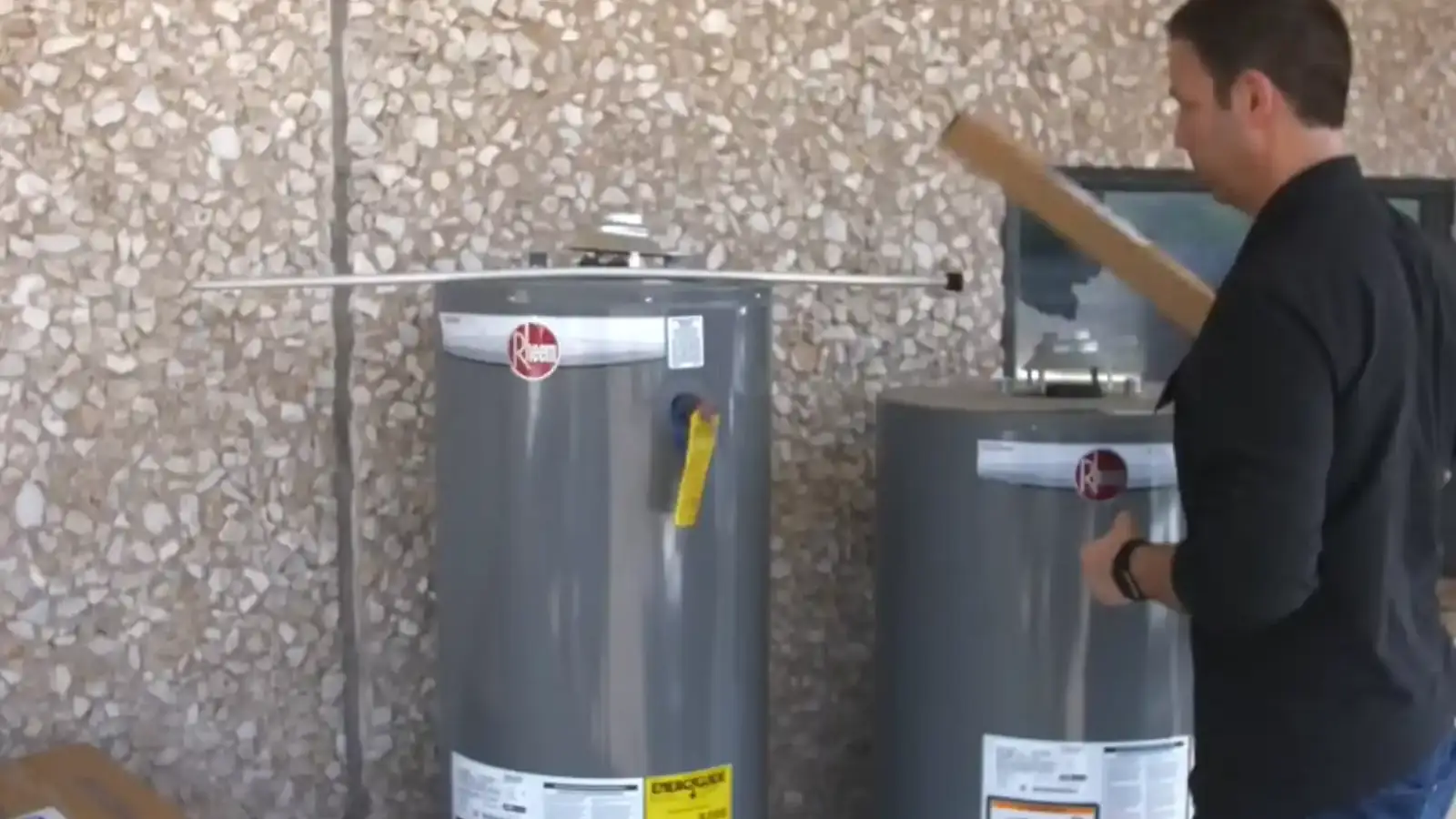
Tank leaking or no hot water? Do this first
A water heater that is leaking or has stopped heating is an urgent problem, and a person answers our line around the clock. While you wait, switch off the breaker for an electric unit or turn a gas unit's control to off, then close the cold supply valve on the pipe feeding the top of the tank.
Water heater replacement is the removal of a failed tank-style or tankless unit and the installation of a new one, including the supply lines, gas or electrical connection, venting and safety valves. Same-day appointments are available when the schedule allows, including after hours for a tank that is actively leaking.
Cut the power
At the panel, switch off the double-pole breaker marked for the water heater. Standing water and a live 240-volt element do not mix.
Close the cold valve
The shutoff handle sits on the cold pipe above the tank. Turn it until it stops and the flow into the tank halts.
Protect the floor
Set a bucket under any drip, move boxes and laundry out of the puddle, and keep pets and children away from the area.
Photograph the rating plate
The label lists capacity, fuel type and model. A clear photo helps us plan the right replacement before we arrive.
Why tanks leak, and what that means for your decision
Most tanks fail from the inside out. The steel shell sits in water all day, and the sacrificial anode rod that protects it is slowly used up. After that, corrosion works on the liner and the welded seams. A weep at the bottom seam or a steady trickle from under the jacket usually means the tank itself has failed, and no fitting or valve will change that.
Not every puddle means a dead tank. Water can come from a loose supply connection, a dripping drain valve, or the discharge pipe of the relief valve. We trace the source first, because a short valve fix on a sound tank is a different job from a replacement. The full list of leak sources is on our water heater repair page.
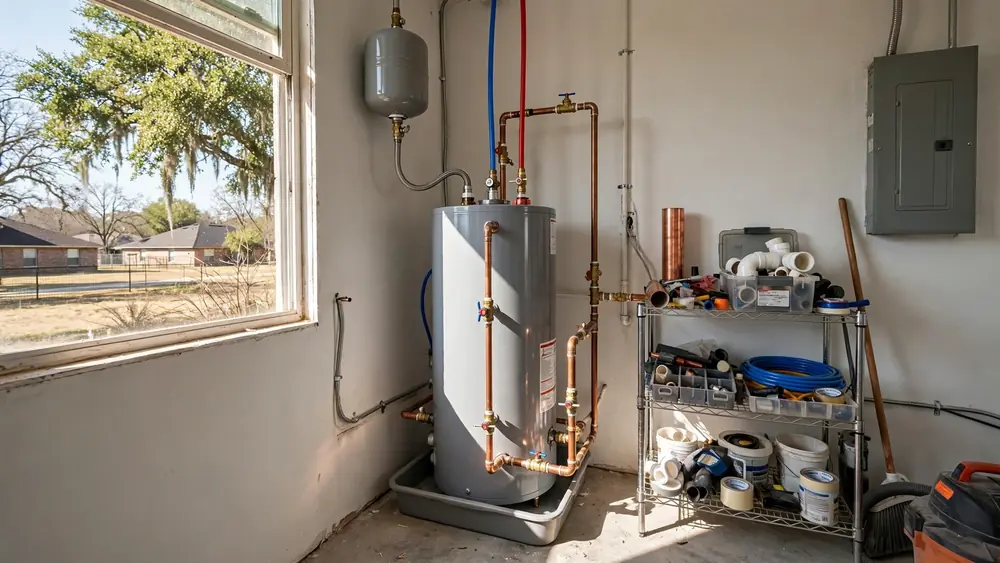
If the leak is coming from the tank, the unit has to go. A failed tank cannot be patched, and running it until it floods risks the drywall, the flooring and anything stored nearby. Basement and garage installs often sit near a floor drain, and a drain pan piped to that drain is what limits the damage the next time something fails.
Repair or replace: a quick decision guide
These patterns come up again and again at the water heater, and they point toward one answer or the other.
| What you see | What it usually means | Usual decision |
|---|---|---|
| Water pooling under the tank, jacket wet | Tank shell or seam has failed | Replace |
| Drip at a pipe connection on top | Loose or corroded fitting | Repair if the tank is sound |
| Water running from the relief valve discharge pipe | Excess pressure or a worn valve | Diagnose first, often repairable |
| Rusty hot water, tank well past ten years | Anode used up, liner corroding | Plan a replacement |
| Electric unit, no hot water, tank dry | Failed element or thermostat | Repair |
| Second or third repair on an old tank | Cumulative wear | Replace |
Many manufacturers encode the build date in the serial number. Send us a photo of the label and we can usually read the age from it.
How a replacement goes once we are at the house
- 1
Confirm the cause
We test the tank, the connections and the relief valve so a replacement happens only when the old unit is really finished.
- 2
Shut down and drain
Power or gas goes off, the cold supply is closed, and the tank drains to a floor drain or through a hose to the outdoors. A full 50-gallon tank takes a while to empty, and we plan for that.
- 3
Remove the old unit
The flue, supply lines and electrical connection come apart and the old tank is carried out. Old tank removed from the property is part of the job.
- 4
Set, connect and vent
The new heater goes on a drain pan with new flexible connectors, a fresh relief valve and discharge pipe, and a flue or vent run checked for slope and clearance.
- 5
Fill, purge and test
The tank fills with a hot tap open so air can escape. Then power or gas comes back on, we confirm the flame or elements are working, and we check every joint for weeping.
Tank down and the house has no hot water?
A person answers the line at any hour. Tell us the fuel type and whether the tank is leaking, and we will find the soonest slot we can offer.
Choosing the new unit: size, fuel and venting
The replacement does not have to match the old tank, and sometimes it should not.
Capacity
A 40-gallon tank suits many households of two or three people, and a 50-gallon tank is common for four or more. The first-hour rating on the yellow EnergyGuide label says more than gallons alone, since it shows how much hot water the unit delivers in a busy hour.
Fuel type
Gas for gas, or electric for electric, keeps the job simple. A fuel change is possible but adds a gas line, a new 240-volt circuit, or both, so it is a bigger project than a same-day swap.
Venting
Atmospheric gas units draw air from the room and vent up a flue. Power-vent and direct-vent models use a fan and plastic pipe through a wall, which lets a heater move away from an old chimney.
Expansion and pressure
When a check valve or pressure reducing valve closes the plumbing system, heated water has nowhere to expand. A small expansion tank on the cold line absorbs that growth and spares the relief valve.
Want a number before we start?
Tell us the size, the fuel and where the heater sits. You get a clear price before work starts.
No hot water, but nothing is leaking
Sometimes the tank is dry and sound but the water is cold. On an electric unit that usually points to a tripped breaker, a burned-out element or a failed thermostat. On a gas unit it is more often a pilot that will not stay lit or a worn thermocouple.
Those are frequently repairs, so we check them first. Replacement comes into play when the tank is old, rusted at the base, or has already been repaired more than once. If your heater is part of a bigger remodel, planned water heater installation gives more room to choose the size and location.
Help us keep the visit short
A few minutes of prep before we arrive saves time at the heater.
- Clear a path from the nearest door to the heater, including stairs and tight corners.
- Find the main water shutoff and make sure it turns fully.
- Note whether the unit runs on gas, electricity or something else.
- Mention if the heater vents into a chimney, since that can change the plan.
- Move stored items away from the area so the old tank can come out.
What township heating fuel tells us about your replacement
Census figures for Etna Township count about 7,100 occupied homes, and the fuel they heat with is only a hint about what feeds the tank, since a home can heat with one fuel and make hot water with another. Matching what is already piped or wired keeps a swap short.
| Heating fuel | Roughly how many homes | What it means for a new tank |
|---|---|---|
| Utility gas | About 5,100 | If the tank is gas too, the swap is the quick path, with the flue and combustion air checked again |
| Electric | About 1,500 | If the tank is electric too, a circuit is likely already there, and we check it before we quote |
| LP gas | About 300 | The tank must be set up for LP, and we confirm that before one is ordered |
| Fuel oil | About 130 | Hot water may run on a different fuel than the furnace, so tell us what feeds the tank |
Licking County Health Department runs the plumbing program here, and its permit rules exempt replacing a fixture with the same or similar one in the same location. Whether a heater swap falls under that exemption is not something we assume, so we tell you what applies before work starts. Homes in nearby Pataskala, Kirkersville and Reynoldsburg follow the same call-first routine with us.
Frequently asked questions
A person picks up the phone at any hour, so a tank that starts flooding at 2 a.m. gets reported as easily as one at noon. Same-day appointments are offered when the schedule allows.
Until we arrive, switch off the breaker or gas control, shut the cold valve over the tank, and keep the area dry. Do not drain the tank unless the power is off.
A tank that leaks from its body is finished, and a tank over about a decade old with rust in the hot water is nearing the end. A bad element, thermostat or relief valve on a sound tank is usually a repair. We check the cause before suggesting anything, and we will tell you if repair is the better value.
Yes, but it is a larger job. The electric route needs its own 240-volt circuit, which may require an electrician and panel capacity, and the old gas line has to be capped safely. Gas to gas, or electric to electric, is the quick path when time matters.
We disconnect it, drain it and carry it out of the house as part of the replacement. You do not need to arrange a pickup or find somewhere to store it.
A drain pan piped to a floor drain is good practice anywhere a leak would damage finished space. An expansion tank is needed when the plumbing is a closed system, for example with a check valve or pressure reducing valve at the meter. We check for that on every job and tell you what applies.
Licking County Health Department runs the plumbing program, and its permit rules carve out a like-for-like fixture swap in place. Whether a tank swap qualifies depends on the details, so we do not guess. Give us your address and fuel type, and we explain what applies before any work begins.