
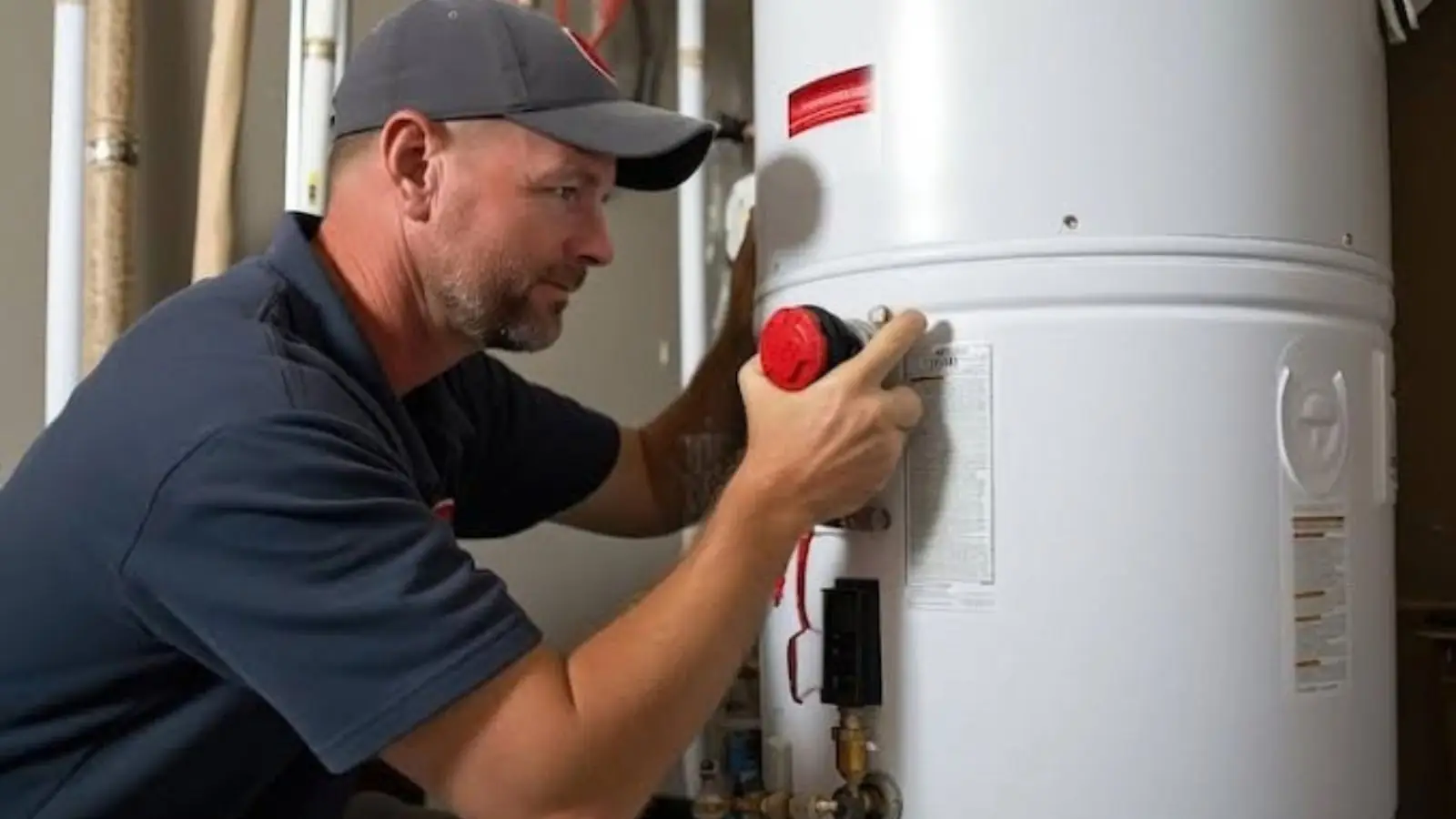
Water heater leaking? Stop the water, then the power
Water around a heater is an emergency until you know where it comes from, and a person answers our line 24/7. Shut the cold supply valve over the tank, switch off the power, and mop up what you can so nobody slips or touches a wet electrical part.
Water heater repair means finding which part of the system has failed, a fitting, a valve, an element, a gas control or the tank itself, and fixing it when the rest of the unit is sound. After-hours calls get the same questions as daytime ones, and same-day service is offered when the schedule allows.
Electric unit
Switch the double-pole breaker off before touching anything. Do not open the access panels on the tank while the circuit is live.
Gas unit
Turn the gas control knob to off. If you smell gas, leave the house and call the gas utility or 911 before calling a plumber.
Pipe drip only
If water beads at a fitting but the tank is dry, closing the cold valve usually stops it until we can look.
Water from the side pipe
A trickle from the relief valve discharge pipe is a warning, not a leak to ignore. Leave the valve alone and tell us when you call.
Where a water heater leak actually comes from
Four places account for nearly every puddle. Finding the right one decides whether this is a quick repair or a new tank.
Fittings and connections
The inlet and outlet nipples, flexible connectors and any union on top can corrode or loosen. These drips run down the jacket and look like a tank leak from below. Often it is a repair.
Relief valve and discharge pipe
The temperature and pressure relief valve opens to protect the tank. Steady dripping can mean high pressure from thermal expansion, a worn valve seat, or a tank running too hot.
Drain valve
The spigot at the bottom can weep from a worn washer or debris in the seat. A new valve is inexpensive hardware and a short fix when the tank is otherwise sound.
The tank itself
Water that comes from under the insulation or the base, especially with rust streaks, is a failed shell. A tank leak is not repairable, and the answer is a new unit.
No hot water: what we check, by fuel type
The same symptom has different causes on gas and electric heaters, so the checklist differs too.
| Check | Electric unit | Gas unit |
|---|---|---|
| Supply | Breaker tripped or off, loose wire at the terminal block | Gas valve closed, pilot or igniter out |
| Control | Upper or lower thermostat out of calibration | Gas control valve not opening |
| Heat source | Burned-out upper or lower element | Dirty burner, weak flame, failed thermocouple or flame sensor |
| Safety trip | High-limit reset button popped | Flame rollout switch tripped, blocked flue or air supply |
| Water side | Cold water mixing from a failed dip tube or crossed connection | Same dip tube and mixing causes |
Both types can also run out of hot water simply because the tank is full of sediment or the household demand has grown.
Lukewarm showers and short hot water
If the water turns lukewarm after a few minutes, the lower element on an electric tank is the usual suspect, because the upper element heats only the top of the tank. On a gas tank, a burner coated in soot or a failing flame sensor can cut heating time. A cracked dip tube is another cause, since it lets incoming cold water mix with the hot at the top.
We test the elements with a meter, check thermostat settings and look at the burner before suggesting parts. Turning the temperature up is not the answer, and it raises scald risk.
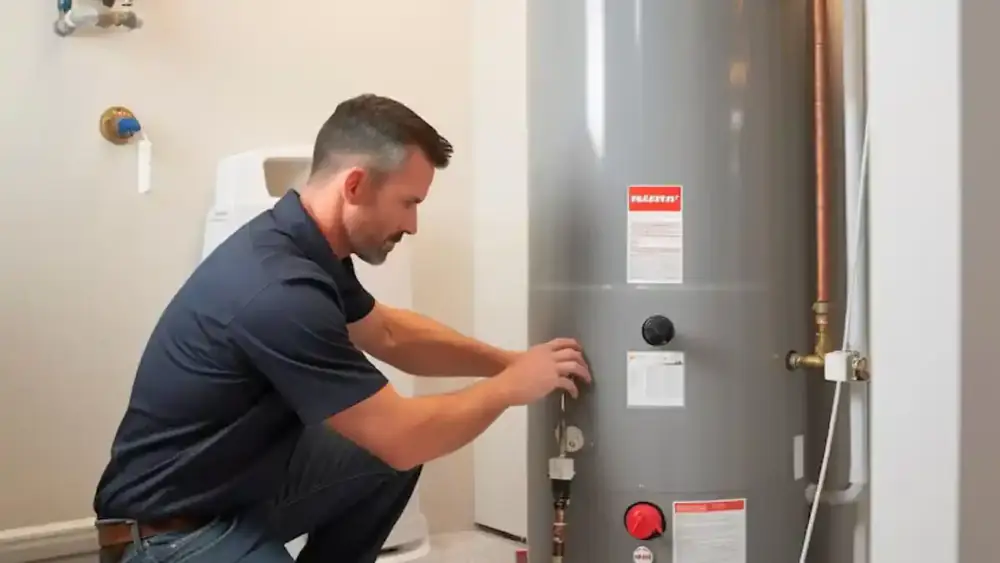
Popping, rumbling and ticking tanks
Sediment settles at the bottom of the tank and traps a thin layer of water that boils into steam bubbles, which is the popping or rumbling you hear. The mineral layer also insulates the water from the burner or lower element, so the unit uses more energy and wears faster. Ticking is often just pipes expanding, which is normal.
A flush through the drain valve can remove loose sediment from a young tank. On an older tank the sediment may be hardened, and flushing can open leaks at the valve, so we advise you honestly before starting.
Heater acting up in the middle of the night?
Call and tell us whether it is leaking, cold or making noise. Someone picks up at any hour, and we book the earliest visit the schedule permits.
What you can try yourself, and what to leave to us
A few checks cost nothing and are safe if you stay careful.
Safe homeowner steps
- Check that the breaker is on, or that the pilot light is lit if the manual shows how.
- Press the red reset button on an electric unit once, with the power off at the breaker.
- Look for a closed cold valve or a tripped GFCI nearby.
- Photograph any leak and note where the water first appears.
Leave to a plumber
- Replacing elements, thermocouples or gas controls.
- Anything involving the gas line, the flue or combustion air.
- Relief valve replacement and discharge piping changes.
- Draining a tank that leaks, hums or smells of gas.
When repair is a waste
A new element or thermostat on a sound tank is money well spent. The same part on a rusted, ten-year-old tank that is also weeping at the base buys only a few more months. We will tell you plainly which side your heater is on, and our water heater replacement page covers what the next step looks like.
Repeated repairs in a short period, a tank that leaks from the shell, or a gas unit with a corroded flue are all signs that more money in the old unit is a poor trade.
Checking a heater on public water in Etna Township
Water in the township comes from the Licking Regional Water District, which draws groundwater from wells and runs it through nano-filtration to remove calcium and magnesium. The district publishes no hardness figure, so we will not guess one. Test your tap with a home kit, then look at the water that comes out of the drain valve during a flush. Gritty or cloudy water means sediment is building at the bottom of your tank.
Repairs fall under the Licking County Health Department plumbing program, where plumbers must be registered and permits cover most repair work except a like-for-like fixture swap in the same spot. We tell you what applies to your job before we start. We also work in Reynoldsburg, Pataskala and Kirkersville. If you are chasing a hidden drip elsewhere, our leak detection service can help.
Frequently asked questions
Water around a heater does not wait for business hours, and neither does our line, which is staffed by a person 24/7. A leaking tank gets a same-day visit whenever the calendar has room.
While you wait, shut off the power or gas, close the cold supply valve and keep water away from outlets and power strips.
Top leaks usually come from the inlet and outlet connections, a corroded nipple, or the relief valve. Water runs down the jacket and shows up at the base, which makes it look like the tank failed. A plumber can tell which it is in a few minutes, and the fix is often small.
Check that the breaker is on and press the reset button on the upper thermostat with the power off. If both are normal, an element or thermostat has likely failed and needs testing with a meter. Do not open the panels while the circuit is live.
On a newer tank with a working drain valve, a flush is a reasonable chore. Turn off the power or gas first, and let the water cool. On an old tank, the drain valve can start to leak after it is opened, so call us if you are unsure.
Dripping usually means pressure is too high, the temperature is set too high, or the valve itself has worn. Closed plumbing systems without an expansion tank are a common cause. Do not cap the discharge pipe, because that disables a safety device.
Etna has seen wind chills of 20 to 40 below zero, so a heater in a garage or outbuilding deserves a look in autumn. Check that pipes near it are insulated, the relief valve discharge is clear, and nothing is stored against the jacket. Keep a path to the cold valve so you can shut it fast.