
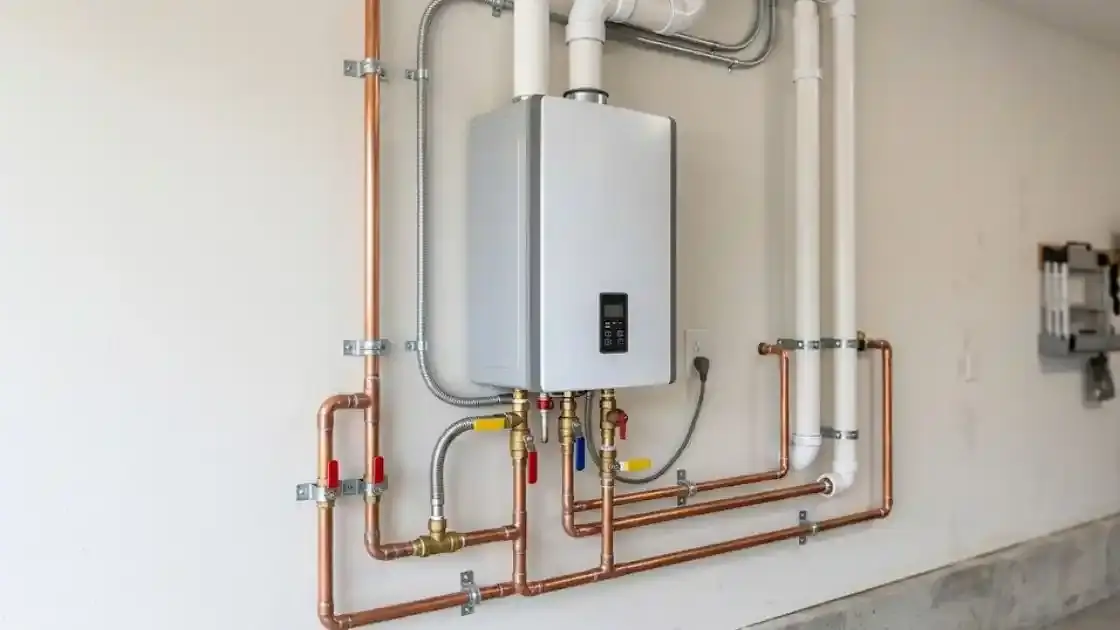
What a tankless water heater does
A tankless water heater heats water only as it flows, using a gas burner or electric elements to raise the temperature in a heat exchanger the moment a tap opens. There is no stored tank, so there is no standby loss and no steel shell to rust through. The trade is that the unit must deliver a lot of heat at once, which is why gas line size, venting and flow rate decide whether an install works.
We install tankless units, repair ones that have stopped heating or are throwing error codes, and flush them on a schedule. If a conventional tank is still on the table, see water heater installation for the comparison.
Tank or tankless for your house?
Neither is better in every home. The right choice depends on demand, space and what your utilities can support.
A tank usually fits when
- The existing gas line, vent and circuit already suit a tank.
- The budget favors the simplest, quickest swap.
- Hot water use comes in short, predictable bursts.
- You want repairs to be straightforward for any plumber.
Tankless usually fits when
- Floor space is tight and a wall-hung unit helps.
- Demand is long and steady, such as big households and long showers.
- The home can take a larger gas line or heavier electrical service.
- You want to remove a tank that could leak and flood a finished space.
Tankless water heater flush and descale
Heating water drops minerals out of it, and in a tankless unit that scale builds up on the inside of the heat exchanger where the temperature is highest. A narrowed passage means the unit has to work harder, the temperature swings, and the control board may throw an overheat or flow error. A yearly flush is the single most useful maintenance chore on these units.
The flush connects a small pump to the service valves on the unit and circulates a descaling solution through the heat exchanger, typically for 45 minutes to an hour. Then clean water rinses it out and we clear the inlet screen, which catches grit before it reaches the exchanger. The whole routine only works if the unit has isolation valves, so older installs without them get that added first.
A common manufacturer recommendation is once a year, more often if the water carries a lot of minerals. We cannot tell your hardness from memory, so test your tap or ask your water utility, or have a private well tested. Warning signs that a flush is overdue include fluctuating temperature, a rumbling kettle sound, and longer waits for hot water.
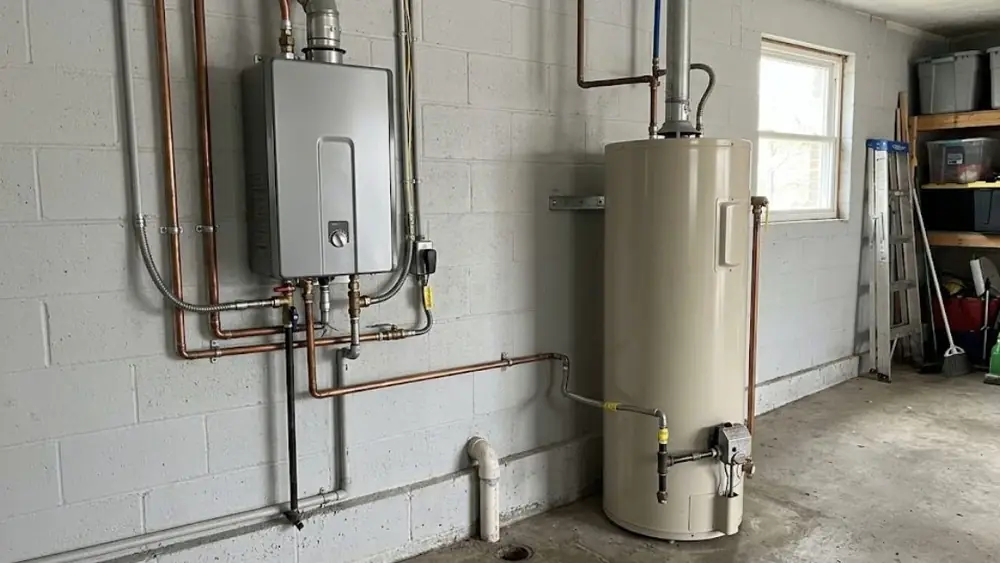
What a flush visit involves
- 1
Shut down and isolate
Power or gas goes off and the isolation valves close so the heat exchanger can be cleaned without draining the house.
- 2
Circulate the descaler
A pump moves the solution through the unit in a closed loop. We watch the color and flow to judge how heavy the scale is.
- 3
Rinse and clean the screen
Fresh water flushes the solution out, and the inlet filter is pulled and cleaned.
- 4
Restart and verify
We bring the unit back up, check the outlet temperature, look for error codes and confirm the flow at a tap.
Error codes in general terms
Codes differ by manufacturer, so your manual's list is the first reference. These are the families we see most often.
| What the unit is doing | Common cause | First step |
|---|---|---|
| No ignition or no flame | Gas supply, igniter or flame sensor trouble | Check the gas valve and have the sensor tested |
| Overheat or limit trip | Scale, restricted flow, closed valve | Flush the heat exchanger and open all valves |
| Will not turn on at low flow | Dirty inlet filter or low-flow fixture | Clean the screen and test at a higher-flow tap |
| Vent or exhaust fault | Blocked, misrouted or flooded vent or condensate trap | Inspect the vent run and drain line |
Tell us what the display says and what the unit did just before it stopped. That narrows the search a great deal.
What a tankless installation needs
Tankless often looks easy because the unit is small. The utilities behind it are where the work lives.
Gas line capacity
A tankless burner draws far more gas at once than a tank burner. The existing line, sized for a tank, is often too small and the run may need upsizing.
Venting
Most units vent through stainless or plastic pipe out a wall or the roof, and condensing models also need a drain for acidic condensate. An old chimney flue usually cannot be reused without changes.
Flow rate and temperature rise
Sizing comes from gallons per minute at the taps multiplied by the rise from cold incoming water to your set temperature. Winter groundwater in Central Ohio is cold, so the winter rise sets the size.
Electric models
A whole-house electric tankless unit draws a heavy current and may need wiring and panel capacity that older panels lack. We say so early because it can decide the project.
Wondering if your house can take one?
We check the gas line, the vent route and the fixtures, then tell you honestly if a tank is the better fit.
The cold-water sandwich and what to do about it
A blast of cold between two hot spurts happens when you shut a tap and reopen it quickly. The burner shuts off, the pipe holds cooled water, and the unit takes a few seconds to relight. Waiting a beat before reopening, running a slightly higher flow, or adding a small buffer tank or recirculation line can reduce it, though it cannot always be eliminated.
Tankless unit cold, noisy or throwing a code?
Tell us the model, the code on the display and what the unit did just before it quit. We work out a visit time from there.
Common tankless repairs
Many repairs are small: a clogged inlet filter, a faulty igniter, a flame sensor coated with residue, or a condensate trap that needs clearing. Heat exchanger failure is less common but costly, and scale is the usual cause when it happens. We diagnose first and tell you if a part is a manufacturer-only item.
If the unit was installed by someone else, we can still look at it. Some parts and firmware-level faults need the manufacturer's support, and we say so rather than guess.
Etna conditions that shape a tankless decision
Four local facts change how we size, install and maintain these units. Neighbors such as Reynoldsburg, Kirkersville and Pataskala share some of them.
Public water
The Licking Regional Water District filters out calcium and magnesium by nano-filtration, the minerals behind scale. It publishes no hardness figure, so test your tap before settling on a flush schedule.
Gas or electric
Utility gas heats about 5,100 of 7,100 occupied homes here and electricity about 1,500. Gas homes need the line sized for a tankless burner. Electric homes need panel capacity checked.
Cold incoming water
Central Ohio normals, measured at Columbus airport, put the January average low near 22 F, with about 34 days a year at or below 20 F. Size the unit for that winter temperature rise.
Permits
Licking County Health Department handles plumbing permits and inspections. We tell you what applies to a tankless install before work starts, and we do not assume a swap is exempt.
Frequently asked questions
It depends on the house. Long, steady hot water use, tight floor space and a home that can take a bigger gas line favor tankless. A small household with a good tank already in place may be better served by replacing like with like. We give you an honest read after seeing the setup.
A common recommendation is once a year, more often where the water carries a lot of minerals. Test your tap or ask your water utility about hardness, since we cannot give you a figure from memory. A well should be tested at a lab.
Common causes are scale in the heat exchanger, a clogged inlet filter, too many fixtures running at once, or flow dropping below the unit's minimum. A flush and a filter cleaning fix many of these. If it repeats, we check the gas supply and sensor.
Most gas models still need electricity for the control board and fan, so they will not run without power. Electric models will not run either. A small battery backup or generator connection can bridge short outages.
If your water is hard, scale builds faster, so a softener or a more frequent flush helps. Test your tap before deciding, and see our softener and filtration page for how we approach it.
Yes. We can flush it, test the sensors and gas supply, and tell you what is wrong. Some control board and warranty items belong to the manufacturer, and we will say so.
Start by testing your tap, since the water district publishes no hardness figure. Its nano-filtration removes calcium and magnesium, but the test tells you what reaches your heat exchanger. If the result shows scale potential, we shorten the flush interval or discuss a softener, and we always clean the inlet screen.