
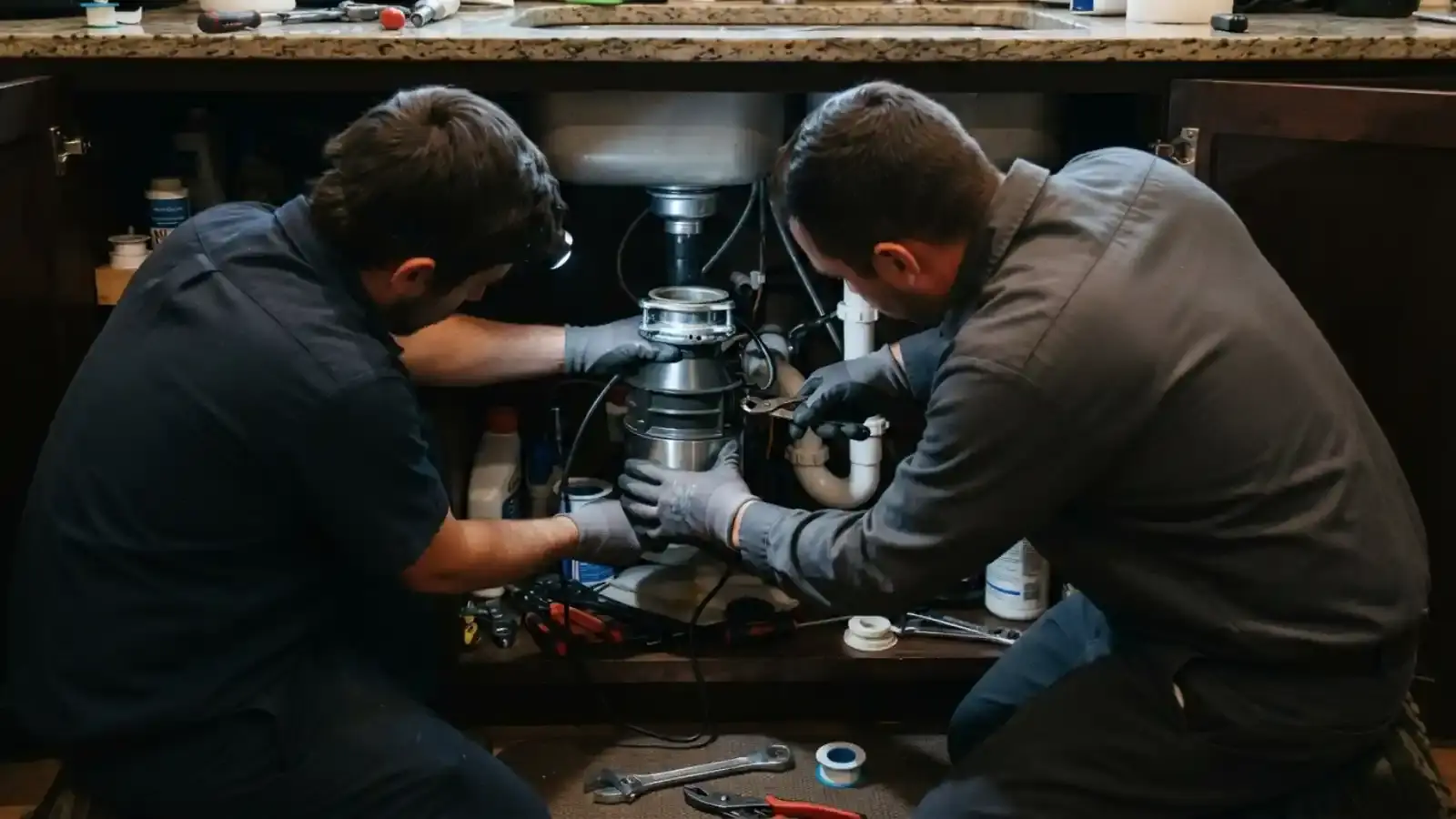
Disposal jammed, humming or leaking?
A dead disposal usually means a dirty sink and a lot of kitchen to work around, and a leak can ruin the cabinet floor overnight. A person answers our line 24/7. While you wait, switch the disposal off at the wall switch, then flip the breaker or unplug the unit before you put a hand anywhere near it.
Never reach into the grinder chamber, even with the power off. Use tongs or pliers for anything you can see, and stop if it does not come loose. Standing water in the sink is a separate question from the grinder, and the next section covers it.
Power off first
Wall switch off, then the breaker or plug. A disposal that was running can restart when a jam frees.
Bucket under the leak
Find the wet spot with a flashlight. Water from the top, the side or the bottom means three different repairs.
Keep the sink empty
Do not run the faucet or the dishwasher until the leak source is known. A leak at the dishwasher hose connection will fill the cabinet fast.
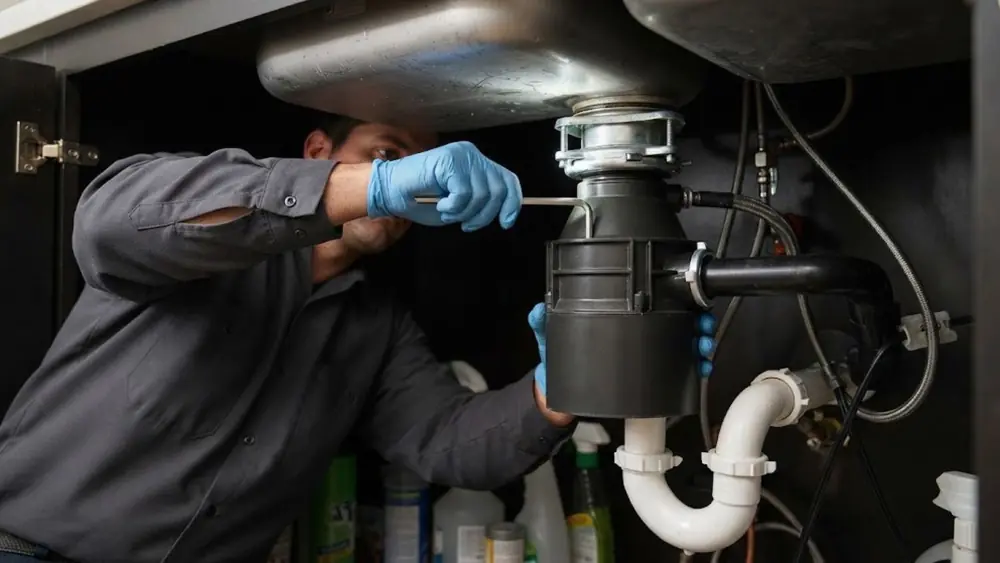
Freeing a jammed disposal safely
A hum without a spin is the classic sign of a seized impeller. It is also the one disposal problem most people can fix themselves in a few minutes, provided the power is off.
- 1
Cut the power
Switch off, then unplug or trip the breaker. Confirm the switch does nothing when you flip it.
- 2
Use the hex socket
Most units have a 1/4 inch hex socket in the center of the underside. Work an allen key in and rock it back and forth until the impeller turns fully.
- 3
Remove what jammed it
Look down the drain with a flashlight and pull out bones, fruit pits, bottle caps or utensils with tongs. Never use your fingers.
- 4
Press the red reset
A small red button on the bottom resets the thermal overload. Wait several minutes if it has popped, restore power and run cold water as you test.
Three places a disposal leaks, three different causes
Where the water appears tells us what failed. Guessing wrong means buying a part that fixes nothing.
| Where the water shows | What failed | Usual repair |
|---|---|---|
| Under the sink flange at the top | Plumber's putty or gasket breaking down | Remove the unit, reseat the flange, replace the gasket |
| At the dishwasher inlet on the side | Loose hose clamp or cracked inlet | Tighten or replace the clamp, replace the unit if the inlet is cracked |
| Through the bottom or the body | Internal seal worn out, housing cracked | Replace the disposal, since the seals are not serviceable |
| At the drain pipe below the unit | Slip joint nut loose or washer worn | Retighten and replace the washer |
Housing leaks cannot be mended. Everything else is a smaller repair.
Sink backed up and the disposal will not drain?
Describe what the sink and the unit are doing. We will check the schedule for the earliest opening that fits.
Reset and clear it yourself, or call?
A jam is routine. A disposal that cannot drain is a plumbing problem and sits in the drain, not the grinder.
A reasonable homeowner fix
- Using the hex socket to free the impeller
- Pressing the reset button once after the motor cools
- Flushing with cold water after a gentle grind of ice and citrus peel
- Clearing the dishwasher drain hose if it kinks
Time to call a plumber
- The motor hums, smokes or trips the breaker again
- Water stands in both sink basins
- A leak from the body or the bottom
- The cabinet smells of mold or the floor is soft
- The unit is loose in its mount
What never belongs in a disposal
Grease and oil harden in the drain line and cause most of the kitchen clogs we see. Coffee grounds settle into a paste, pasta and rice swell, and fibrous items like celery and corn husks wrap around the impeller. Bones, fruit pits and glass or metal are the usual cause of jams. If you have a septic system, ask before assuming a disposal is fine for it.
Replacing a disposal: what we size and check
A replacement is quick when the sink opening and wiring are standard. These points decide the model and the labor.
Horsepower
A half horsepower unit handles light use. Three quarters to one horsepower grinds tougher scraps and runs quieter under load.
Mount type
Newer units use a quick-lock mount, while older sinks have a bolted flange. The existing mount sets how much adaptation is needed.
Electrical connection
Disposals are either hardwired or plug into an outlet under the sink. A missing outlet or switch is an electrical job.
Dishwasher and drain
The dishwasher inlet may need to be knocked out and the drain line to the trap re-aligned to the new outlet height.
No disposal installed yet?
We can add one under a sink that never had it, provided the plumbing and a switch location allow. We confirm both on the visit before you commit.
When the clog is below the disposal
If the sink backs up even with the disposal off, the blockage is in the trap or the line beyond it. Kitchen drains clog from grease and starch long before they fail mechanically, and our drain cleaning team uses a cable for that. Repeat clogs in a main line point to sewer line cleaning instead.
Before a disposal swap in an Etna Township kitchen
Most of these are quick to check, and together they settle whether the job is a simple exchange or something bigger. A disposal replaced with a similar unit in the same sink falls under the county exception for same-fixture swaps, and we tell you what applies if the work grows.
- Confirm whether the house is on public sewer or a private septic system
- Look for the wall switch and the outlet or hardwire box under the sink
- Check the cabinet floor with a screwdriver tip for soft, swollen board
- Note whether a dishwasher drains into the unit
- Scrape plates into the trash first, because grease is what clogs kitchen lines
- Give us the street address when you call, including homes toward Kirkersville on the east edge
Frequently asked questions
Our line is answered by a person at every hour, so a dead disposal at ten at night still reaches someone. Turn the unit off at the switch and the breaker, put a bucket under any drip and tell us what you hear and where the water shows. Never put a hand into the grinder, even with the power off. After that we book the earliest visit we have.
Power off first. A hum means the motor is trying to turn a seized impeller, so work a 1/4 inch allen key into the hex socket on the underside and rock it until it spins freely. Then press the red reset button and test with cold water. If it hums again, the motor is failing.
A leak at the top flange or the drain pipe can be repaired in place. A leak through the bottom or the body means the internal seal has failed and the unit has to be replaced. Replacement is also sensible when the unit jams every week or is more than a decade old.
Horsepower is the main spec. Half horsepower fits a household that cooks lightly, three quarters suits regular family cooking and one horsepower handles more waste with less noise. Match it to your habits and your septic or sewer situation, and we can walk you through it.
Slow draining with no disposal running points at a clog in the trap or branch line. Grease buildup is the common cause. We use a cable to clear it, and if it keeps coming back we recommend a camera view of the line.
The Licking County Health Department runs the sewage treatment program, with permits and periodic inspections for private septic systems, so start there or with your septic service. We handle the plumbing inside the house and do not pump or repair tanks. If your home is on public sewer, the Licking Regional Water District is the contact for the line itself.