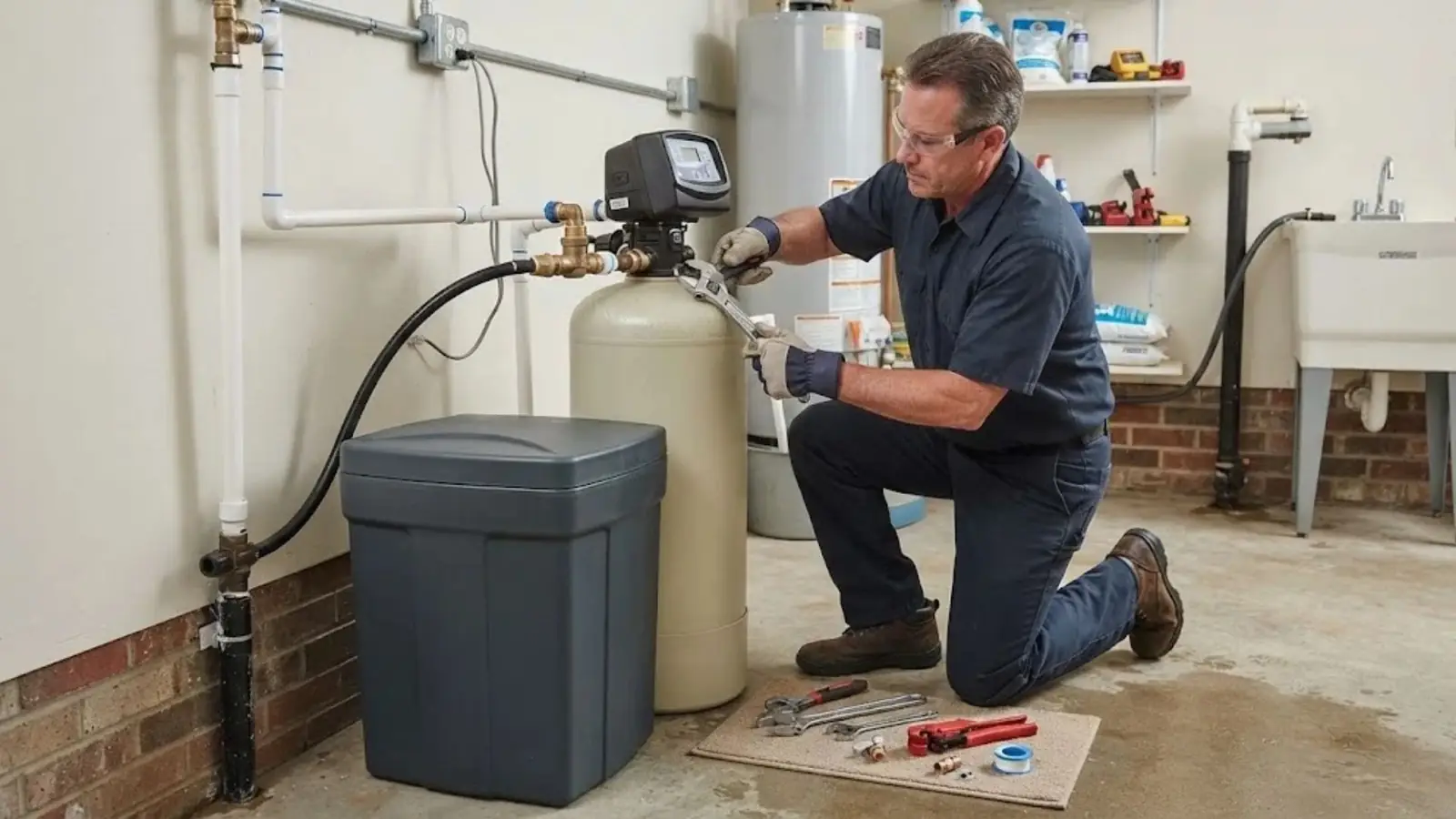
Start with the water, not the equipment
Scale on faucets, spotted glasses and soap that will not lather point at hard water. A metallic taste, a rotten egg smell or cloudy water point at something else, and a softener will not fix any of them.
So test your tap before buying anything. A basic test strip shows hardness and chlorine, and a lab test shows iron, nitrates and bacteria. Ask your water utility for its report if you are on public water, and use a lab test if you are on a private well.
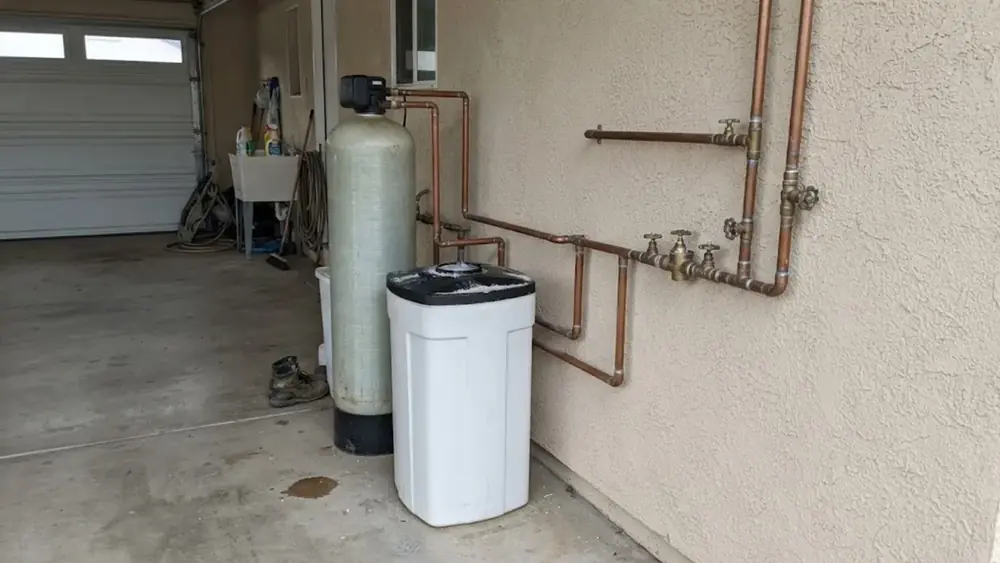
Softener, filter or reverse osmosis
These are three different tools, and people often buy the wrong one.
Softener
- Swaps calcium and magnesium for sodium or potassium through a resin bed
- Protects water heaters, fixtures and appliances from scale
- Does not remove chlorine, bacteria or most contaminants
- Needs salt and a drain connection
Filter or RO
- Whole-house sediment filters catch sand and rust
- Carbon filters reduce chlorine taste and odor
- Under-sink RO treats drinking water only
- Filters need cartridge changes on a schedule
Which problem points to which system
| What you notice | Likely cause | Likely answer |
|---|---|---|
| White crust on faucets and showerheads | Hard water | Softener, plus descaling the old fixtures |
| Chlorine smell or taste | Disinfectant in public water | Carbon filter at the sink or the main |
| Brown or orange stain | Iron or rusty pipes | Test first, then a sediment or iron filter or pipe work |
| Cloudy water that clears | Air or sediment | Sediment filter if it stays |
| Rotten egg odor | Sulfur or a water heater issue | Lab test, then treatment or water heater service |
| Drinking water taste | Dissolved solids | Under-sink RO |
A test should come first, since several of these overlap.
Not sure which system you need?
Describe what you see and taste and we will talk through test options. We can then line up the next available appointment for a visit.
Salt or salt-free: an honest comparison
Salt-based softeners really remove hardness. Salt-free conditioners change how scale forms so that it sticks less, but they do not soften the water. Both have a place, and which one fits depends on how much scale you see and how you feel about adding sodium or maintaining a salt tank.
How a softener works, and what regeneration means
Knowing the cycle makes problems easier to spot.
- 1
Hard water enters the resin tank
Beads inside the tank grab calcium and magnesium as the water passes through.
- 2
The resin fills up
After a set volume, the beads can hold no more, and the control valve starts a regeneration cycle.
- 3
Brine flushes the resin
Salty water from the brine tank washes the minerals off the beads and sends them down the drain.
- 4
Rinse and return
The tank rinses and goes back into service. Most units regenerate at night.
Signs your softener needs attention
A softener that fails quietly lets hard water through while looking normal.
Scale is back
Crust on faucets or a gritty feel after showers means the resin or the valve is not working.
Salt bridge
A hard crust in the brine tank stops the salt from dissolving. Poking it with a broom handle can free it.
Constant draining
A valve that keeps running water to the drain wastes water and signals a worn seal.
Bypass left open
A bypass valve set to bypass skips treatment entirely. Check the position before calling.
Softener and filter maintenance
A routine takes ten minutes a month and prevents most service calls.
- Keep the brine tank at least a quarter full of salt
- Break up any crust on the salt surface
- Replace sediment and carbon cartridges on the maker's schedule
- Sanitize the system once a year or as the manual says
- Note the date of every cartridge change on the housing
Repair or replace a softener
Many softener problems come down to a stuck valve, a clogged injector or a worn seal, and each can be fixed on site. Resin beads eventually wear out, and a unit that is well past a decade old may have little left.
Replacement often costs less than repeated repairs on an old unit. We tell you which way the evidence points and let you decide. Softeners also affect how well hot water systems last, so see tankless water heater for scale and flushing.
Sizing and installing a system
Sizing is based on your water and your household, not on the box label.
Hardness and iron
Higher numbers on a test mean more frequent regeneration or a larger tank.
Household use
More people and more showers mean more water to treat per day.
Drain and power
A softener needs a drain nearby and an outlet. Placement and a floor drain affect the layout.
Bypass plumbing
A bypass lets you shut off treatment without shutting off the house. Without one, service is harder.
Matching equipment to your tap
We install softeners, whole-house filters and under-sink RO systems, and connect them to existing lines. See plumbing installation for the wider scope.
Hot water, appliances and scale
Scale builds inside a water heater tank and on the heating elements, and it does so quietly. A thin layer of mineral insulates the element from the water, so the heater works harder to deliver the same temperature and often rumbles as it runs.
A softener upstream slows that buildup, and so does flushing the tank on a schedule. Dishwashers, coffee makers and shower valves benefit in the same way. If your water heater is already noisy or slow to recover, our water heater repair page covers what we check.
What the district tells you, and what only your tap can
Public water in Etna Township comes from the Licking Regional Water District. Its plant on York Road pulls groundwater from six wells and runs it through nano-filtration, which the district says removes calcium and magnesium, then adds chlorine and fluoride. The district does not publish a hardness figure, so we cannot tell you what comes out of your faucet, and a softener sale should not start there either.
| Question | What is published | What you do |
|---|---|---|
| Is my water hard? | No hardness number appears in the district report | Test the cold kitchen tap with a strip, or send a sample to a lab |
| Chlorine taste or smell | Chlorine is added at the plant | A carbon filter at one sink or at the main usually handles it |
| Lead and copper | 2025 samples came in under the action levels, and the district reports no lead service lines | The district cannot speak for the plumbing inside one house, so ask us about old fixtures or solder |
| Private well | The Licking County Health Department regulates private wells | A lab test first, because well water can differ from the public supply |
If a test shows your tap is already soft, the best equipment choice may be none at all. See Pataskala and Reynoldsburg for service in nearby towns.
Frequently asked questions
Look for scale on fixtures, spotted dishes, dry skin after showers and a short heater life. Then test your tap. If hardness is high, a softener is a reasonable fix. If it is low, a softener will not help.
A softener removes hardness minerals. A filter removes particles, chlorine taste or specific contaminants depending on the media. They solve different problems.
RO treats drinking and cooking water at one tap. It is good for taste and for dissolved solids. It wastes some water and needs membrane and filter changes.
Common causes are an empty brine tank, a salt bridge, a bypass valve left open or a worn valve. Check these first. If none apply, a service call will test the resin and the valve.
Softened water has a little added sodium or potassium. If you are on a low sodium diet, ask your doctor, and consider an RO tap for drinking water.
Use a hardness test strip at the kitchen cold tap, and compare the reading with the annual water quality report from the Licking Regional Water District. Homes on a private well should send a sample to a lab, and the Licking County Health Department regulates private wells, so ask them where to start. Treat any in-home sales test as a first look only.