
If you smell gas, leave first
Leave the building immediately and do not use switches, phones or lighters inside. From outside, call your gas utility or 911 before you call any plumber. We never promise a response time for a gas smell, because the utility has the equipment and the authority to shut off and test the line. Our role comes afterward, with inspection, piping and appliance connections.
What an installation job actually includes
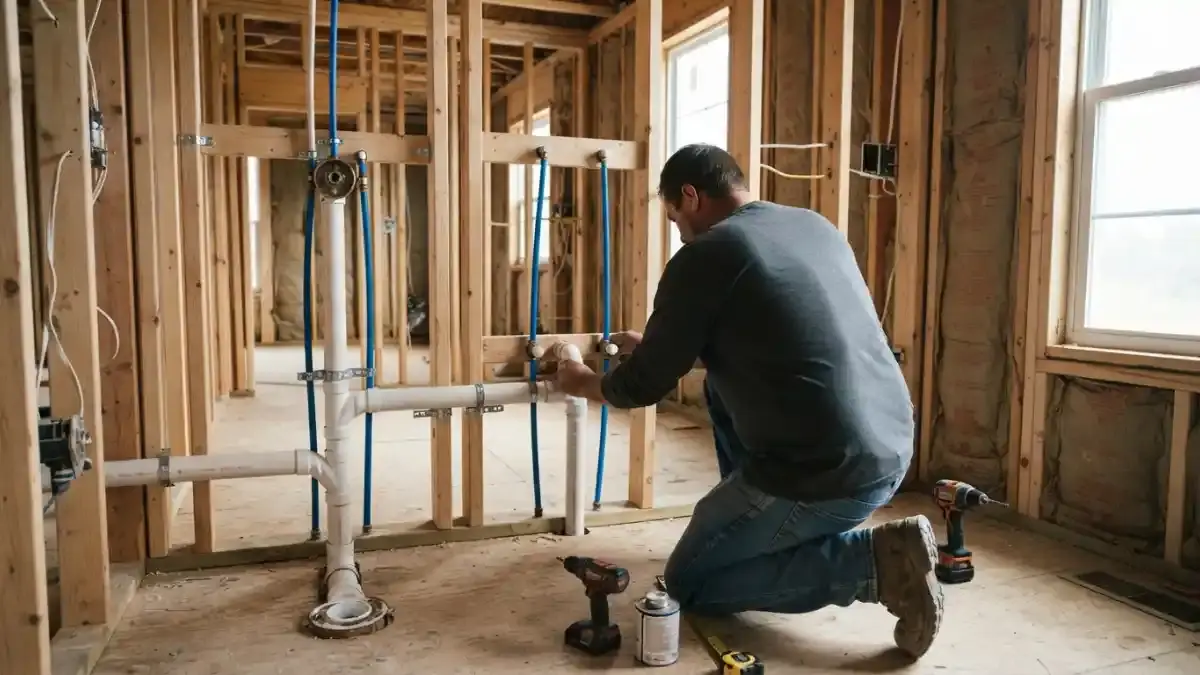
Plumbing installation covers new sinks, toilets, tubs and showers, new supply and drain lines, appliance connections and the rough-in for a building that does not have plumbing yet. It begins with a plan: where the fixtures sit, how the lines run and where they tie into existing pipes.
A good plan keeps drain slopes workable, vents sized, shutoffs reachable and walls open for as short a time as possible. Work is done to the Ohio Plumbing Code, and some jobs need a permit, which we will tell you about. Permit and inspection rules vary by jurisdiction, so ask the township or county building office.
The order a plumbing install follows
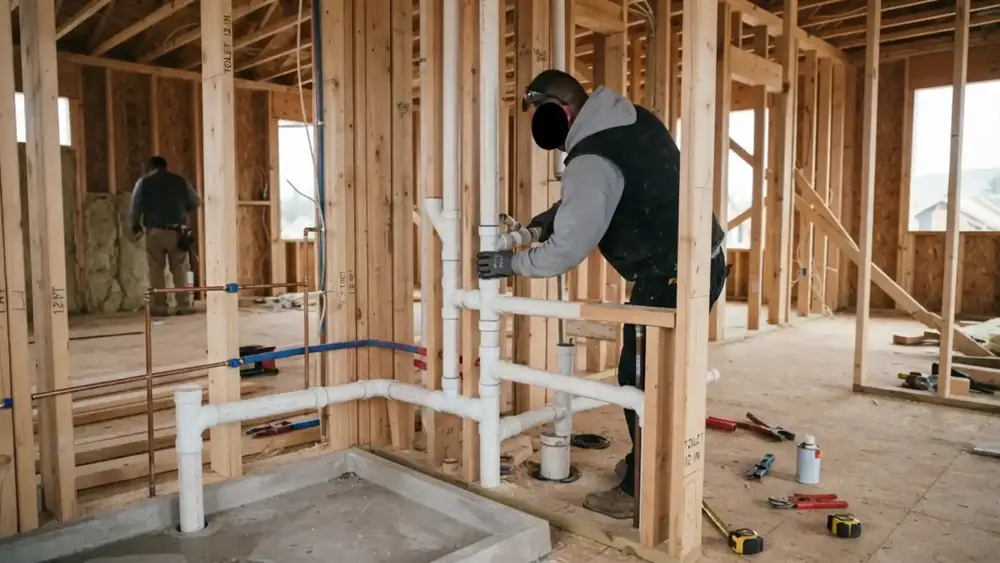
Planned work moves in stages, and the sequence protects both the schedule and the walls.
- 1
Walk the site
We look at the fixtures, the existing lines, the access and the water and drain tie-in points.
- 2
Rough-in
Drain, vent and supply lines are run inside the open walls or floor. In new construction this happens before drywall.
- 3
Pressure and inspection
The system is tested with air or water before it is covered. If a permit applies, the inspector sees it at this stage.
- 4
Set fixtures
Toilets, sinks, tubs and faucets go in once finishes are done. Supply lines and shutoffs are connected.
- 5
Final test
We run every fixture, check for leaks at joints and trap seals, and walk you through the shutoffs.
Planning a remodel or a new build?
Call and describe the project. We can talk through scope and scheduling and set a time for a site visit.
Installation jobs and what they need to be right
| Job | What drives the work | Common surprise |
|---|---|---|
| New bathroom | Drain slope, vent connection, supply access | A floor or wall that cannot take a new drain |
| Kitchen sink and dishwasher | Drain size, air gap or high loop, shutoffs | Old galvanized lines that crumble when touched |
| Laundry hookup | Standpipe height, drain trap, shutoff valves | A drain too small for the machine |
| Basement bath | Below-grade drain, sump or ejector pump | No gravity path to the main line |
| Outdoor spigot | Frost-proof model, shutoff inside | Location sitting above an unheated wall |
| Appliance supply | Material of the connector, shutoff location | A shutoff that no longer closes |
Gas line work: inspect, pipe and connect
Gas piping needs materials rated for it, proper support, correct sizing for the load and a pressure test before any appliance is lit. Installing a new range, dryer or water heater often means adding a drop, a shutoff and a sediment trap.
If you ever suspect a leak, follow the safety steps in the box above, not this section. Gas appliance hookups also involve venting, so see water heater installation where that applies.
New construction plumbing
A builder or owner-builder has more choices than a remodeler, and the early choices shape everything later.
Layout early
Moving a drain after the slab is poured is expensive and disruptive. Fix the fixture locations first.
Material choice
PVC and ABS handle most drains, and PEX or copper handle supply. Local code and your preference settle it.
Access panels
Leave reachable shutoffs and clean-outs. They cost nothing now and a great deal later.
Inspections
Rough-in and final inspections are scheduled around the building timeline. Ask the building office what applies.
Building a new house nearby?
Tell us the stage you are at. We will talk through scope, sequence and the hand-off to the building inspector.
Backflow testing: a planned item to ask about
A backflow preventer stops used water from flowing back into the public supply. Whether yours needs periodic testing depends on the device and the local rules.
- Ask your water utility whether your property needs a backflow device
- Ask who is allowed to test it and how often
- Keep the device accessible and clear of snow, mulch and ice
- Call us if the device leaks, since repair is a plumbing job
- Tell us before an irrigation system or a new building goes in, because a device may be required
Where installation overlaps other services
A new fixture often exposes an old problem. Tying into worn lines can show the need for repiping, and a new bath on a low floor may call for an ejector pump. We would rather tell you that before the walls are closed up.
Fixtures, shutoffs and the details that get skipped
Every fixture should have its own shutoff within reach, because a single valve for the whole bathroom turns a dripping faucet into a house-wide outage. Braided stainless supply lines last longer than thin plastic ones, and a drain trap must hold a water seal to keep sewer gas out of the room.
Dishwashers need either an air gap or a high loop in the drain hose so that dirty water cannot siphon back. Washing machine boxes should sit at a height that lets the standpipe rise above the trap. These are small items on a drawing and large ones when a kitchen floods in the first month.
Which Etna installs need a county permit
The county health department oversees plumbing here, and plumbers must be registered with it. A permit is required to install, extensively alter or repair plumbing, with one exception, and inspections happen at rough-in, covered work and final. We tell you what applies before the first pipe is cut.
Usually no county permit
- Replacing a toilet, faucet or disposal with the same or a similar fixture in the same spot
- Anything else, ask us first, since only a like-for-like fixture swap is excluded
Permit and inspections apply
- A new bathroom or a basement bath
- Moving a sink, tub or toilet to a new location
- New drain, vent or supply lines
- New construction rough-in, which also meets the Ohio Plumbing Code (OAC 4101:3)
Frequently asked questions
New fixtures, supply and drain lines, appliance connections, outdoor spigots and the rough-in for new construction. It is planned work, as distinct from emergency repair.
Some jobs do and some do not. It depends on the work and on your township or county. Ask the local building office, and we will tell you which of our jobs typically involve one.
No. Leave the building, then call your gas utility or 911 from outside. Do not use switches or phones inside. Once the utility has made the area safe, we can inspect piping and appliance connections.
Often yes, but the drain is the question. If the basement is below the main line, the bathroom needs an ejector pump. We look at the slope, the access and the cost drivers during the site visit.
Ask your water utility what applies to your property and who may perform the test. We handle the plumbing side, such as repair or installation of an assembly.
It makes gas hookups a regular part of the work. Census figures show utility gas as the main heating fuel in the township, so ranges, dryers and water heaters often need a drop, a shutoff and a sediment trap. Each connection is pressure tested before it is used. Smell gas at any time and the rule on this page applies first: leave, then call the utility.