
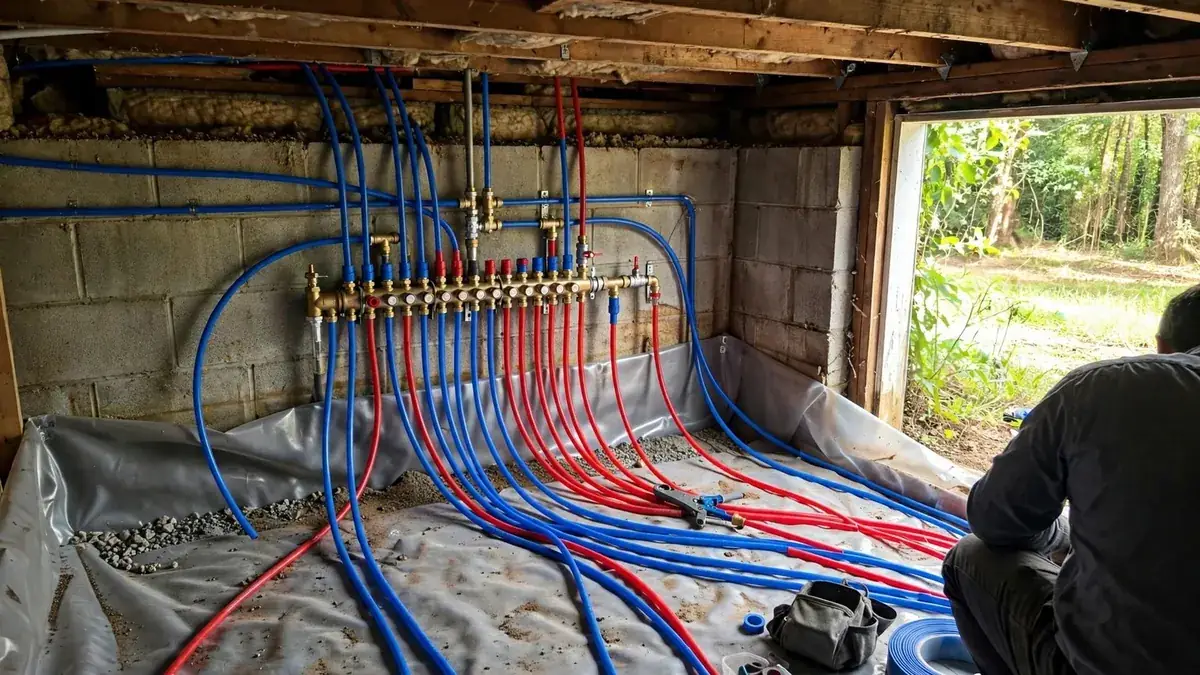
What repiping is, and when it beats patching
Repiping is the replacement of a home's water supply lines, the pipes that carry pressurized water to the faucets, showers and appliances, usually through most or all of the house. It is a larger project than repairing a leak, so it is worth doing only when patching has stopped making sense.
One leak in a sound system is a repair. Repeated leaks, rusty water at every tap and shrinking pressure across the house are signs that the pipe itself has aged out. A plumber can often repair pipe three times in a year and still not be ahead. We will tell you honestly when that point has arrived.
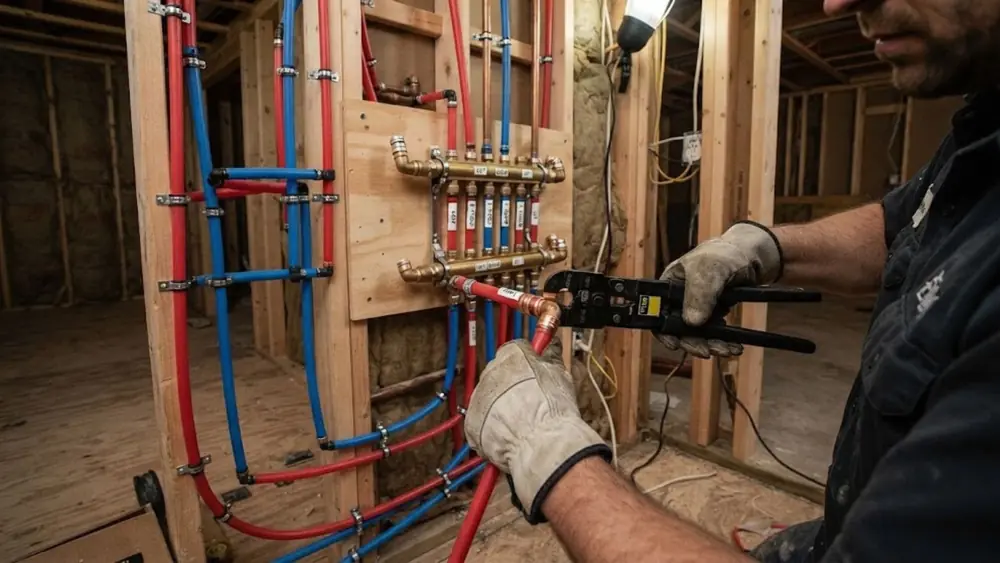
Signs your pipes are due for replacement
Brown or orange water
Rusty water on first use in the morning points to corroding galvanized steel or iron.
Low pressure at every tap
The inside of old galvanized pipe narrows as scale builds up, until a shower is a trickle.
Pinhole leaks in copper
Tiny green-edged pinholes, especially in more than one spot, mean the copper is thinning from within.
Repeated repairs
A second or third leak within a year usually means the next one is already forming.
Polybutylene pipe
Gray plastic pipe found in many homes built between roughly the late 1970s and the mid 1990s is known for failing at fittings.
Stained ceilings
Yellow or brown rings beneath bathrooms can come from a supply line weeping in the wall.
Choosing a replacement material
No pipe is perfect for every house. The options below are common choices in residential work.
| Material | Strengths | Trade-offs |
|---|---|---|
| PEX | Flexible, fewer joints, can be pulled through walls with less demolition | Must be kept out of sunlight, and some people prefer metal |
| Copper | Long track record, rigid, tolerates heat, no plastic | More labor and joints, and some water conditions attack it, so test your tap |
| CPVC | Lower material cost, handles hot water to a point | Can become brittle with age, and is less common for whole-house work |
We recommend a material after looking at your walls, your water and what you want to spend.
How a whole-house repipe is sequenced
A repipe is planned so the water is off for as little time as possible.
- 1
Walk-through and plan
We trace the existing lines, note every fixture and appliance, and decide where new lines will run. The plan includes where walls, ceilings or floors need access.
- 2
Rough-in
New supply lines are run through accessible spaces first, such as attics, basements and crawlspaces, to limit wall openings.
- 3
Wall access
Small openings are cut where new lines must pass or connect, and each is kept as small as we can manage.
- 4
Connect and test
New lines are tied to the fixtures and the water is turned on to pressure-test the system for leaks before anything is closed.
- 5
Old pipe out or capped
Old lines inside walls are often capped and left, and removed when they are in the way.
- 6
Patch and finish
Drywall openings are patched to a paint-ready state. Painting and finish carpentry are separate trades.
Wondering if your pipes are at the end?
Describe the water color, the pressure and the age of the house. We will tell you what we would look at first.
Repair a section or repipe the house
The decision comes down to how much of the system is failing.
Section repair fits when
- The leak is one failure in otherwise clean, sound pipe
- The water is clear and pressure is steady at every fixture
- The pipe is newer or made from a material without a known failure record
A repipe fits when
- Leaks keep appearing in different places
- Galvanized pipe is clogged with scale and rusty water is a regular problem
- The house has polybutylene supply lines that you want to be rid of
Wall access and patching: what is honest to expect
Most repipes open some walls. Using PEX in attics and basements and fishing it through existing cavities reduces the number of openings, but fixtures on interior walls, two-story stacks and finished basements often need access holes. Plan for drywall patches and some painting.
We patch the openings we cut to a paint-ready condition, and we tell you before work starts where the holes will be. Match-painting, tile repair and finish carpentry are outside our scope. If you are remodeling soon, doing the repipe first saves you from opening the same wall twice.
What shapes the scope of a repipe
No two houses are alike. These are the factors that change how much work is involved.
House size and stories
More bathrooms, floors and fixtures mean more pipe and more connections.
Access
An open basement or crawlspace speeds the work, and finished ceilings slow it down.
Existing material
Pulling galvanized out of tight walls takes more effort than replacing copper.
Permits
Some jobs need a permit and an inspection. Rules vary by jurisdiction, so we contact the local building office and tell you what applies. Work is done to the Ohio Plumbing Code.
Want a plan in writing?
Call and we will arrange a walk-through to look at the pipes, then lay out the options and a clear price before work starts.
Before you commit: rule out a single hidden leak
A sudden pressure loss does not always mean the whole system is failing. A leaking service line, a bad pressure regulator or one burst section can mimic the same symptoms, and any of them is cheaper to fix than a repipe. We check these first with leak detection, and look at the buried line on the water service line repair page if that is where the trouble starts.
Reading your Etna house before a repipe
Housing in the township is mixed. Most homes date from 1990 to 2009 (about 4,000), the 1970s come next (about 1,200), and only about 290 predate 1940, which puts the median year built at 1995. These notes turn that into what to look at in yours.
- Built 1990 to 2009: expect copper, CPVC or PEX, with gray polybutylene possible in the early part of that range, so identify the pipe before assuming the whole house is failing
- Built in the 1970s: galvanized steel or early copper may still be in the walls, and rusty first-draw water or weak pressure at the farthest bathroom is the cue to book a walk-through
- Farmhouses near the village: several generations of pipe often share one house, so a map of what runs where is worth more than a quote
- Public water here is nano-filtered and chlorinated, and no hardness figure is published, so test your tap before choosing copper, then read the water softener and filtration page
- The Licking County Health Department plumbing program requires registered plumbers and a permit for extensive alteration of plumbing, with rough-in and final inspections, so ask us what applies to your scope
Frequently asked questions
Brown water, low pressure at every tap, repeated pinhole leaks and gray polybutylene pipe are the main signs. One leak by itself is usually a repair. Several leaks within a year, or visible corrosion where the pipe is exposed, are better reasons to plan a repipe.
It depends on the size of the house, the number of fixtures and how much access the pipes allow. We give you a schedule after the walk-through, and the water is off only while lines are being connected. Larger houses and finished basements take longer, and a permit inspection can add a step.
Both work. PEX is faster to install and needs fewer wall openings, while copper has a longer history and does not use plastic. Some water conditions are hard on copper, so test your tap, or ask your water utility about your water.
Usually some. Attics, basements and crawlspaces carry most of the new runs, but fixtures on finished walls may need small openings. We patch them to a paint-ready state, and we explain where the holes will go beforehand. Painting, tile repair and finish carpentry are separate trades, so plan for those.
Some jobs do, and rules vary by jurisdiction. We contact the office that covers your address and tell you what applies before work starts. If a permit and inspection are required, they become part of the schedule. Work is done to the Ohio Plumbing Code.
Yes. The interior supply lines are the same either way. We also look at the pressure tank connection and the pressure at the first tap, and we tell you if the pump or the tank should be checked separately by a well contractor. Well equipment itself is outside our scope.