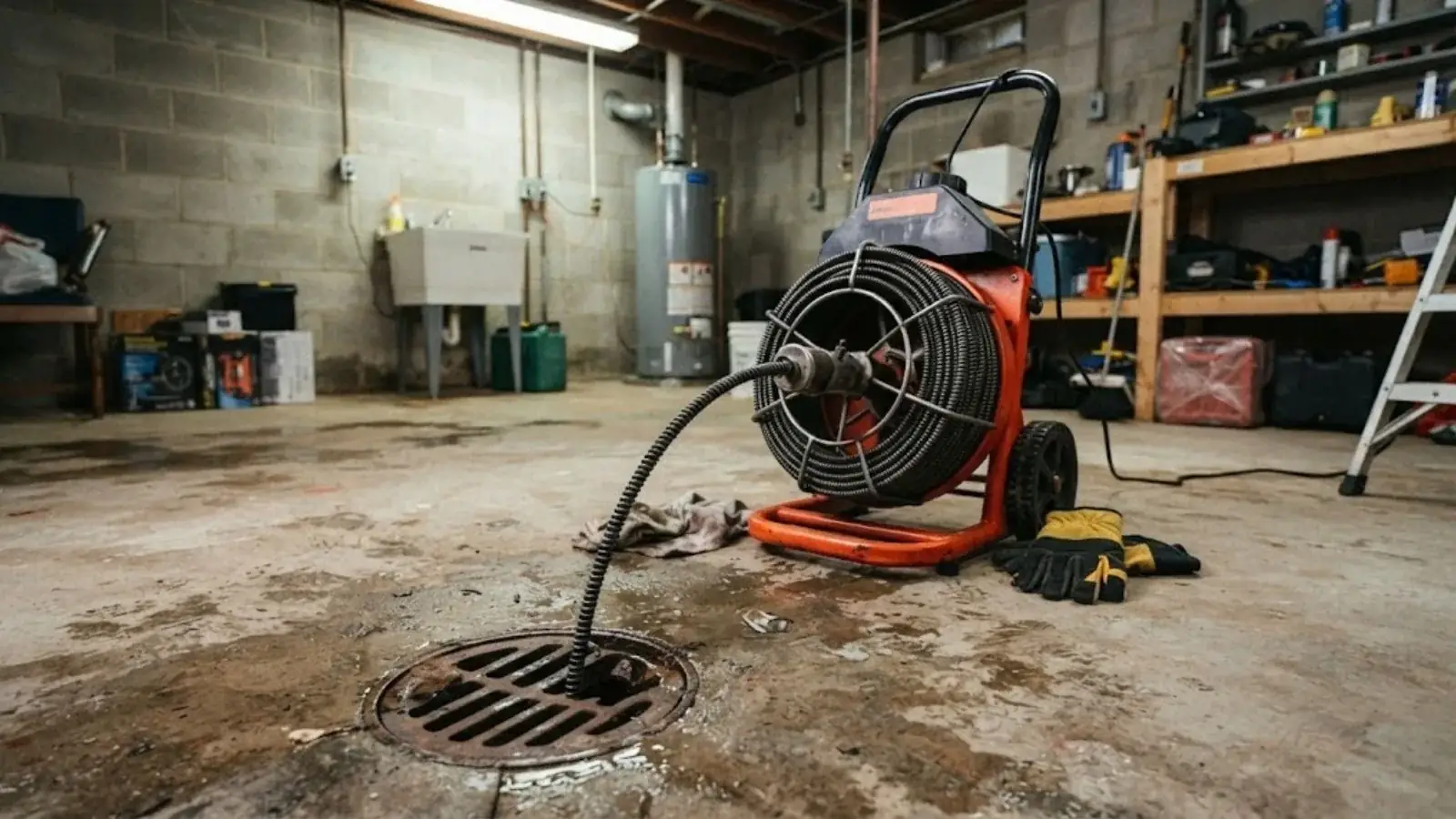
When a clogged drain turns into an emergency
Drain cleaning in Etna means clearing the blockage in a sink, tub, shower, floor drain or main line so water flows away again. When a drain is overflowing or several fixtures are backing up at once, treat it as urgent: a person answers our line 24/7, and you can help while you wait.
Stop running water anywhere in the house. Every flush, shower and washer cycle pushes more water toward the blockage and into the lowest opening, which is usually a basement floor drain or a tub.
Stop the water
No dishwasher, no laundry, no flushing until the line is open again.
Protect the floor
Move rugs and stored boxes away from the floor drain and lowest tub.
Skip the chemicals
A bottle of drain opener sitting in standing water is a burn hazard for whoever opens the line next.
Note what else gurgles
Tell us which fixtures are slow or bubbling. That tells us if the clog is local or deeper.
Cabling, jetting or a camera: which one fits your clog
Different blockages call for different tools. This is how we match the tool to the symptom before any cutting or flushing starts.
| Situation | Usual tool | Why |
|---|---|---|
| One sink or tub is slow | Hand cable or small drum machine | The clog is close to the fixture and a cutter head or retriever tip can reach it. |
| Kitchen line keeps clogging every few weeks | Cable, then hydro jetting | Grease coats the pipe wall, and a cable only bores a hole through it. |
| Several fixtures slow or gurgling together | Larger machine on the main, camera if it returns | The blockage sits downstream of every branch. See sewer line cleaning. |
| Clog clears, then comes back in days | Camera inspection | Roots, a belly or a cracked joint may be snagging waste. See sewer inspection. |
Tool choice is confirmed on site after we see how the drain responds.
Kitchen sink clogs: grease, food and the P-trap
A kitchen drain is a small-diameter pipe (usually 1.5 inches) that takes warm grease, coffee grounds and starch. The grease cools a few feet downstream and sticks to the pipe wall. Each rinse adds a layer, and the opening shrinks until a spaghetti-sized stream is all that gets through.
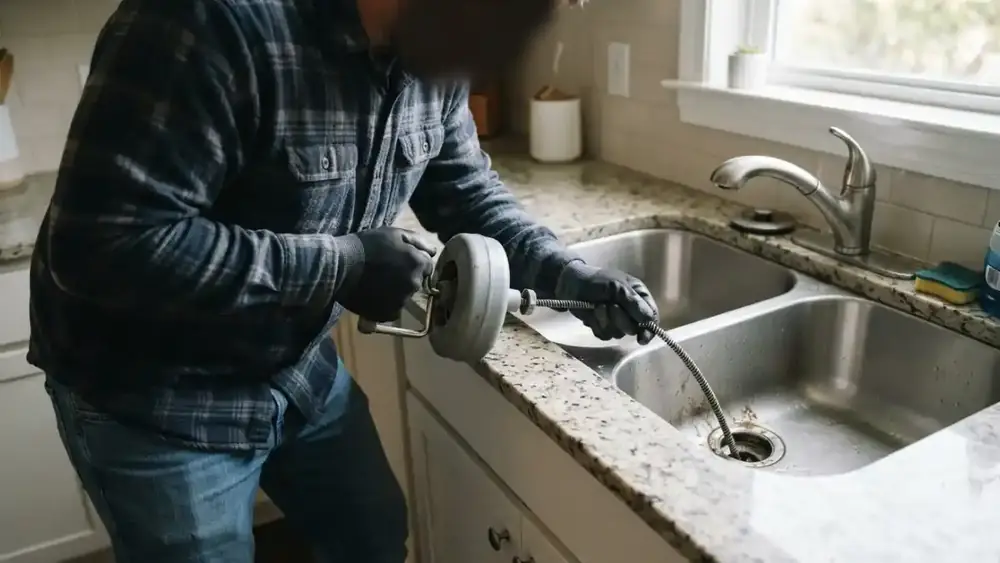
We start at the trap under the sink, since a bad trap or a packed disposal outlet looks exactly like a deep clog. If the trap is clear, we run a cable through the wall line and bring back what is on the cutter. A greasy sludge on the cable tells us a jetting pass would hold longer than another cabling.
Disposals add their own trouble. If the sink backs up into the second basin of a double sink, the clog is past the tailpiece. If the disposal hums but the water will not drain, see garbage disposal repair before assuming it is the line.
Is it one drain or the main line?
Location of the symptoms tells you more than how bad they are.
Only one fixture is slow
The clog is in that fixture's trap or branch line. This is the cheapest and quickest case to clear.
Tub gurgles when the toilet flushes
Two fixtures share a branch, or air cannot pass a blockage downstream. Expect the clog to be past the branch junction.
Basement floor drain bubbles or overflows
Water is looking for the lowest exit because the main line is restricted. Stop using water and tell us this first.
Washer drain spills out of the standpipe
A laundry standpipe takes a lot of water fast. A partial blockage downstream cannot keep up with the discharge.
How we clear a drain
The order matters, because pushing a cable into a pipe you have not looked at can make a bad situation worse.
- 1
Ask and trace
We find out which fixtures are affected and which ones still work, which narrows the clog to a branch or the main.
- 2
Open the nearest access
That might be a trap, a cleanout cap or a pulled toilet. A cleanout gives the cable a straighter path and spares the fixture.
- 3
Cable the line
We feed a cable with the right cutter head for the pipe size and material, working slowly so we feel the clog and the bends.
- 4
Flush and test
Once the cable runs free, we run water at full flow through the line and confirm every connected fixture drains without gurgling.
- 5
Camera when it returns
If a drain has been cleared before and has clogged again, a camera shows what keeps catching waste.
Drain backing up now?
Describe which fixtures are slow or overflowing and we will tell you what to do while the appointment is lined up.
What to try yourself and what to leave alone
A plunger and a trap cleanout are reasonable. A rented machine or a gallon of drain opener usually is not.
Reasonable at home
- Plunge a sink with the overflow hole blocked with a wet rag, so pressure goes down the pipe
- Unscrew and empty a P-trap into a bucket (plastic slip nuts hand-tighten back)
- Pour hot tap water, not boiling, after dish soap if the clog is grease
- Pull hair from a tub stopper or shower strainer with a plastic barbed strip
Better left to a plumber
- Feeding a rented cable into a main line you have not located
- Using caustic drain openers on a pipe that may need to be opened afterward
- Snaking through a toilet without knowing whether the flange or the main is the problem
- Repeating a fix that only works for a week, since the cause is still in the pipe
Shower, tub and drain line leaks
Tub and shower drains clog with hair and soap scum at the strainer, in the trap or at the tee behind the wall. A shower that pools at your ankles is usually hair in the first foot of pipe. A tub that drains slowly only after a toilet flush points deeper.
A drain that leaks is a different job from a drain that clogs. A damp ceiling under a bathroom, a stained subfloor or a sewer smell in a crawlspace can mean a cracked drain pipe or a loose joint. We find the wet joint before we cut anything open, and we may use leak detection when water appears far from its source.
What not to pour or flush down your drains
These items cause most of the repeat clogs we are called to.
- Cooking grease and oil: wipe pans with a paper towel and bin it
- Coffee grounds and eggshells, which settle in the trap and pack down
- Flushable wipes, which do not break up the way toilet paper does
- Paper towels, cotton swabs and dental floss
- Pasta, rice and potato peels in a disposal, which swell into paste
- Cat litter and drywall dust, which set up like cement in a trap arm
What Etna drain calls usually come down to
Etna Township sits in southwestern Licking County, and most of its homes (about 4,000 of 7,100 occupied) were built between 1990 and 2009. That mix explains a lot of the clogs we are asked about.
Newer houses, smooth pipe
With a median build year of 1995, most branch drains here are smooth plastic. When one of them clogs twice, suspect a grease habit, a sag in a long horizontal run or a rough joint, and ask for a camera look after the second clog.
A few farmhouses
Only about 290 homes in the township predate 1940, and the older ones cluster near the village. Cast iron and clay lines roughen with age, so those clogs return until the pipe itself is dealt with.
Yard and downspout drains
The township maintains storm sewers in the public right-of-way, but pipes and ditches on private property belong to the owner. A slow yard drain is yours to clear, and it is a separate line from the house drain.
Sewer or septic
Your street may or may not be sewered, and the Licking Regional Water District can tell you. If not, the house is on a septic system, and we clear the house-side drains only. The same advice holds in Pataskala, Kirkersville and Reynoldsburg.
Frequently asked questions
Overflowing drains do not keep office hours, and neither does our line: a person picks up at any hour, nights and weekends included. We book the first same-day or night visit that opens up.
Until then, shut off the dishwasher and washer, keep the family clear of the floor drain, and leave the cabling to us.
A cable cuts a hole through grease but leaves the coating on the pipe wall. The buildup narrows again as soon as warm grease and food scraps pass through. Jetting scours the wall, and a camera can show if a sag or damaged section is holding the sludge in place.
Look at the lowest fixtures first. If a basement floor drain or a first-floor tub gurgles when you flush or run the washer, the blockage is probably downstream of the branches. A single slow sink is nearly always a local clog.
Cutting heads are chosen to match the pipe size and material, and we go slowly on old cast iron, clay and thin plastic. If a cable catches on something that feels like a break rather than a clog, we stop and run a camera before pushing further.
The house-side drains work the same way. We clear clogs in the plumbing between your fixtures and the tank, but we do not pump or repair septic tanks, so call a septic service if the tank itself is full.
Clearing a clog needs no permit. Licking County's plumbing program requires one to install, extensively alter or repair plumbing, with rough-in and final inspections, but replacing a fixture with the same or a similar fixture in the same location is the exception. If a clog turns into a pipe replacement, we tell you before the work starts, and the county health department can confirm what applies.