
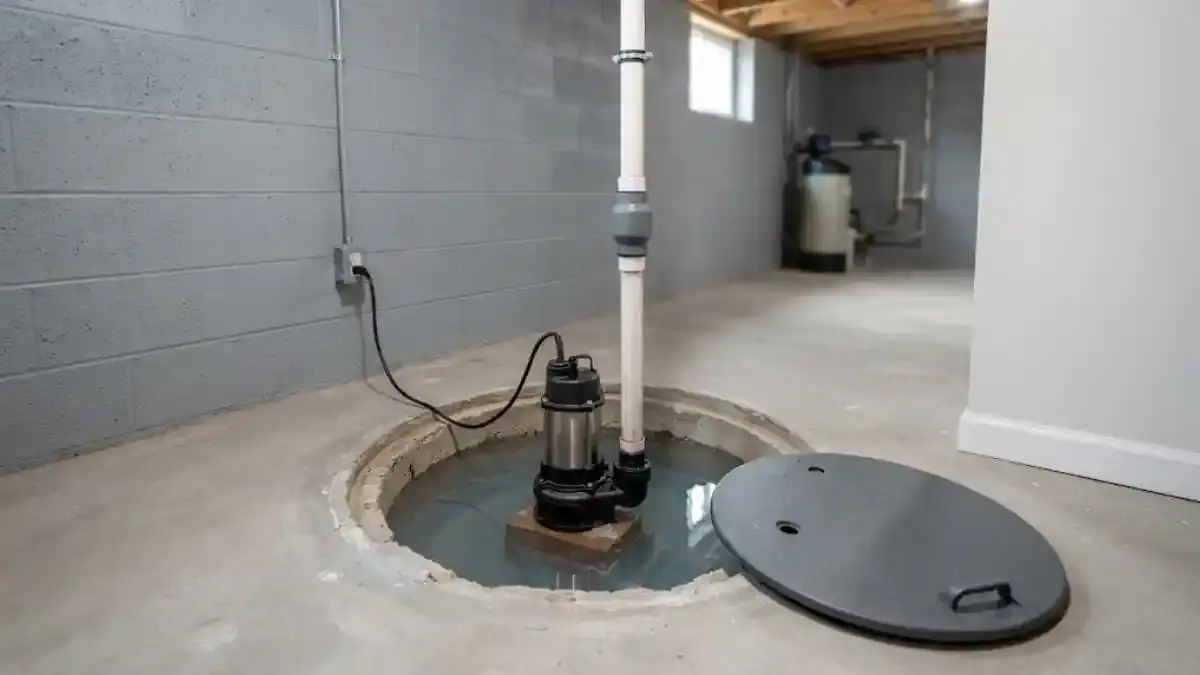
Sump pump failed during a storm
A pit filling with water and a silent pump is an emergency, because a basement can start taking water within hours of a heavy rain. A live person picks up 24/7 in Etna. Do not wait for the water to reach the floor, because lifting boxes and stored items off the slab now is the cheapest protection you have.
A sump pump is a small electric pump set in a pit below the basement floor. It moves groundwater out and away from the house before it can rise onto the slab.
If the pump is humming but not moving water, or the pit is rising, call us. Keep your hands out of the pit, and unplug the pump only if the floor around the outlet is dry. If the power is out, the pump cannot run, and a battery backup is the only thing that will.
Check the power
Make sure the pump is plugged into a working outlet and the GFCI has not tripped. A tripped breaker is a common cause.
Look at the float
Lift the float by hand if you can reach it safely. A pump that starts when lifted points to a stuck float or tangled switch.
Move belongings up
Get electronics, boxes and furniture off the lowest floor, and keep the water heater and furnace area clear.
How sump pumps fail
Most failures are mechanical and slow, and they show up during the first big rain after a dry spell.
Stuck float switch
The float rises with the water to start the pump. If it wedges against the pit wall or its tether tangles, the pump never starts. It is a common failure.
Burned-out motor
A pump that runs constantly, or cycles on and off every few seconds, may be at the end of its life. A smell of hot plastic is another warning.
Failed check valve
The valve in the discharge pipe stops water from flowing back into the pit. If it fails, the pump short-cycles, and you may hear a thump when it shuts off.
Clogged intake or frozen discharge
Silt can block the intake, and a discharge line that freezes outdoors can trap the water in the pipe.
Test your sump pump by pouring in water
Do this in spring and again in fall, and any time before a forecast storm.
- 1
Look at the pit
Check that the lid is on, the pit is free of debris and the pump sits upright.
- 2
Pour in water
Fill the pit with a few buckets until the float rises. A healthy pump starts, empties the pit, then shuts off.
- 3
Watch the discharge
Go outside while it runs and make sure water leaves the discharge pipe and drains away from the house.
- 4
Listen for trouble
Grinding, rattling or a pump that runs after the pit is empty should be checked.
- 5
Test the backup
If you have a battery backup, unplug the main pump and repeat. Check the battery's age and charge.
Pit rising and the pump will not start?
Call and a person will help you triage what to do first. We can arrange repair or replacement.
Backup pump options compared
A backup matters most when the power goes out in the same storm that raises the water table.
| Backup type | How it works | Trade-offs |
|---|---|---|
| Battery backup pump | A second pump runs from a deep-cycle battery when the main pump or power fails | Battery needs checking and replacing over time, and run time is limited |
| Water-powered backup | Uses household water pressure to push pit water out through a jet | Needs pressurized municipal water, and is generally a poor fit for a home on a private well |
| Second AC pump | A second mains-powered pump in the same pit, with its own float | Covers pump failure but not a power outage |
| Generator circuit | Runs the pump from a whole-house or portable generator | Depends on someone being home and the generator working |
We recommend a backup based on how often your pit runs and how much water arrives in a storm.
Check valve, discharge line and pit size
The check valve sits on the discharge pipe just above the pump, and the arrow on its body shows the direction of flow. The discharge line should carry water outdoors and away from the foundation. Do not connect it to the house sewer drain, and check what local rules say about where the water may go.
A pit that is too small makes a pump start and stop constantly, which wears it out. The right pit size depends on how much water arrives, and a deeper, wider pit gives the pump more room to work. A larger pit gives the pump longer runs and cooler motor temperatures.
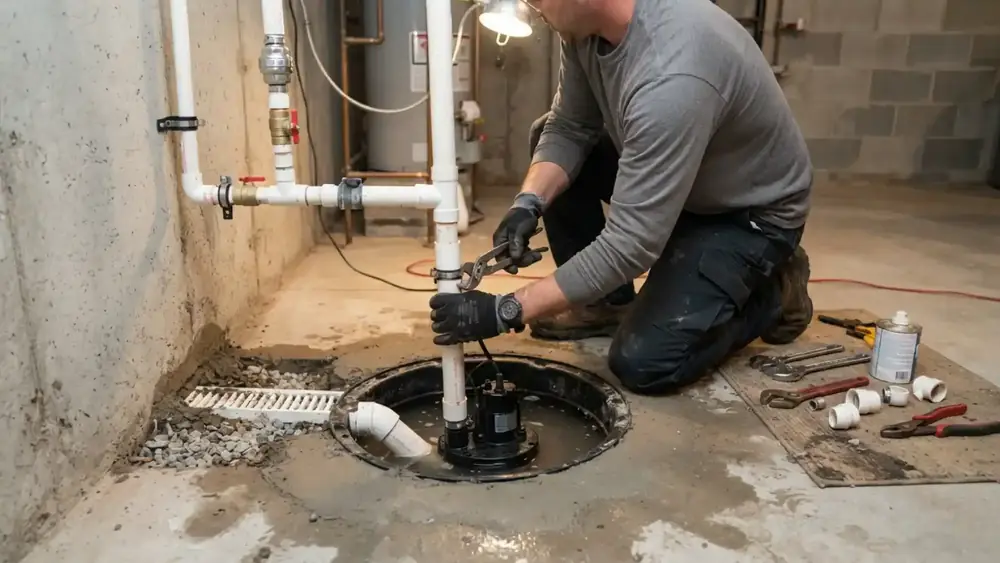
Ejector pumps for basement bathrooms
A sump pump handles groundwater. An ejector pump is a different machine that lifts wastewater from a basement toilet, shower or laundry up to the sewer line, because those fixtures sit below it. The pit is sealed, and the pump handles solids.
If the basin alarm sounds, the pump has failed or the float is stuck. Stop using the fixtures that drain to it, and call us. Signs of trouble include slow drains in the basement bath or a sewer smell near the lid. For a problem on the house sewer line instead, see sewer line cleaning.
Repair the pump or replace it
Many pumps can be fixed, but there is a point where a repair is a waste.
Repair makes sense when
- The pump is under a few years old and failed from a stuck float or clogged intake
- The check valve or discharge pipe is the culprit
- The motor runs quietly and the impeller turns freely
Replace when
- The motor is burned out or the housing is cracked
- The pump is rusted or has run through many storm seasons
- The unit is too small for the pit's inflow or short-cycles constantly
What Etna-area storms have done, and what to do with your pump
NOAA's storm record near the township shows when water has been a real problem. Each entry is a reason to test the pit before the next one.
| Date | Recorded event | Pump lesson |
|---|---|---|
| 6 May 2003 | Flood with high water on State Route 310 | Spring rain is the obvious test, so pour in water in April |
| 20 June 2015 | Purity Road closed by high water | A summer cloudburst counts too, and a spring-only check misses it |
| 13 July 2017 | Sycamore Creek out of its banks near Etna | Charge-check the backup battery in midsummer |
| 28 Mar 2020 | Flood | Late-winter melt can send ice to the discharge line, so clear it |
| 17 Feb 2022 | Watkins Road SW near Creek Road SW closed | Winter water arrives when the discharge can freeze |
| 27 Feb 2023 | EF0 tornado along Watkins Road SW | Storms can drop power, and a pump cannot run without it |
| 25 June 2025 | High water over York Road | The most recent reminder that backups should be tested |
Seepage through a wall or the floor joint is a drainage question for basement waterproofing, not a pump problem.
Storm on the way?
Ask about a backup pump before the next forecast, or phone mid-storm if the pit is already climbing.
Frequently asked questions
Overnight, weekend and holiday calls go to a person. Say whether the pump hums, runs without lowering the pit, or does nothing at all, because that usually separates a power problem from a float or motor problem and tells you what to try before anyone arrives. Same-day visits are offered when the schedule allows. Keep out of any area where water is near electrical equipment.
At least twice a year, in spring and fall, and again before a forecast of heavy rain. Pour a few buckets of water into the pit and watch the pump start, empty the pit and shut off. Listen for grinding, and look at the discharge outside to confirm water is leaving. A pump that has sat idle through a dry summer is the one most likely to stick.
Many pumps run for several years, and heavy use in a wet area shortens that. A motor that runs constantly, rattles, or short-cycles is near the end. Replace a pump that has run for a long time and is critical to a finished basement, instead of waiting for it to fail.
A high water table after weeks of wet weather, a leaking irrigation line, or a discharge line that drains back into the pit can all keep it running. A failed check valve lets water fall back and re-trigger the pump. If it runs constantly in dry weather, we can check for a leak, which is covered under leak detection.
If a flooded basement would be costly or the power goes out in storms, a backup is a sensible addition. A battery unit works anywhere, and a water-powered one needs municipal water pressure. We help match the backup to your pit.
It helps. FEMA revised the Etna South Tributary map effective 18 July 2023, and Licking County posts a floodplain map viewer for looking up a lot. If yours sits near a mapped area, put a backup pump and a well-aimed discharge first on the list. A lot outside the map can still take water in a storm, so the pour-in test applies either way.
Yes, in many cases. A pit can be cut into the slab, a liner set, and the pump and discharge installed. That requires breaking concrete, and some jobs need a permit. If your basement does not take water, you may not need a pump at all.