
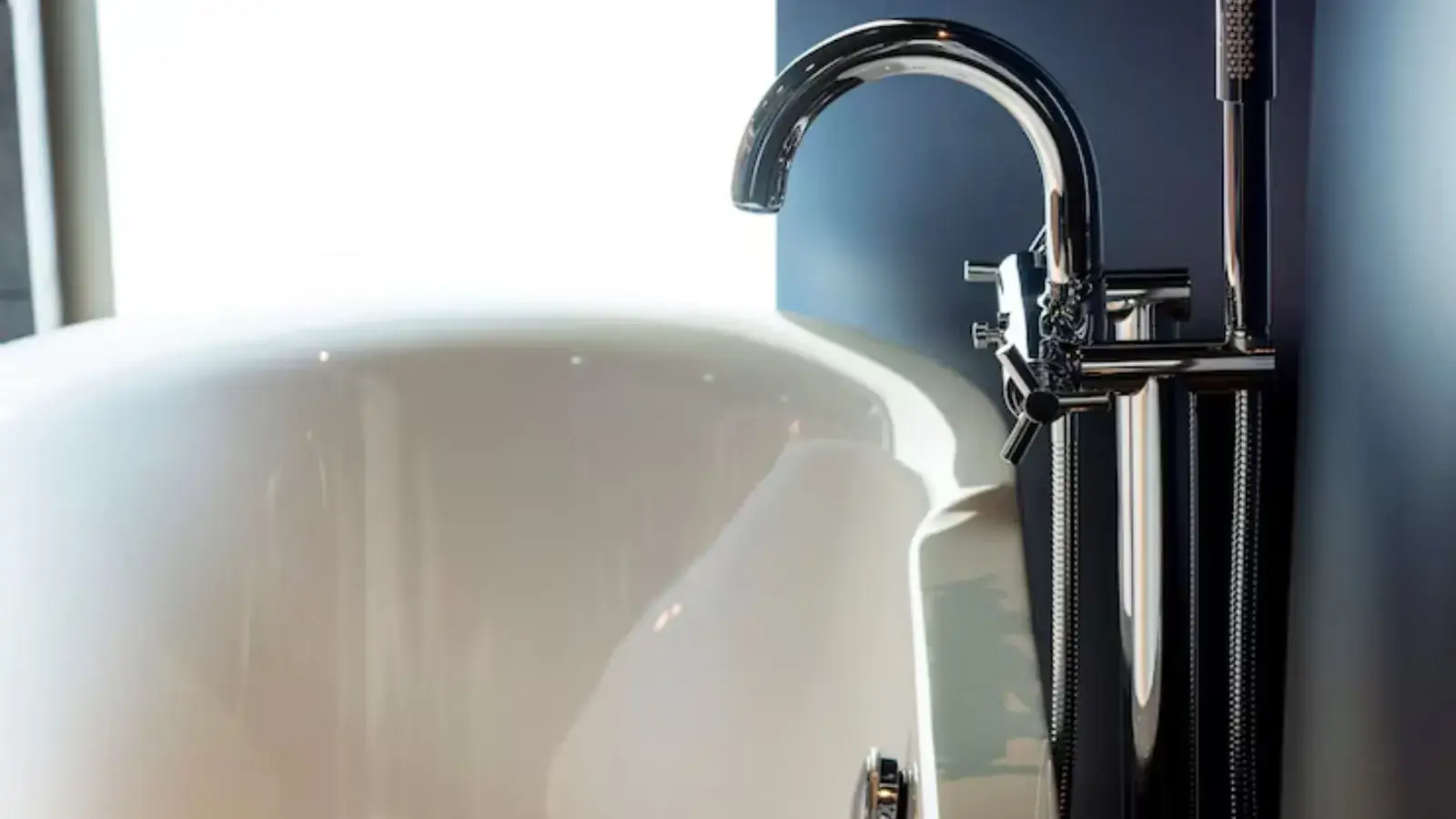
What a dripping tub faucet actually is
A bathtub faucet drip is water slipping past a worn seal inside the valve, most often a cartridge, a rubber washer sitting on a brass seat, or the diverter that sends water up to the shower. The seal wears, the valve no longer closes fully, and a few drops a minute escape from the spout or the showerhead.
Think of the handle as a switch and the seal as the part that actually stops the water. Turning the handle only moves the seal out of the way. Over years of hot and cold cycles the rubber hardens, the plastic scores, and minerals pack into the gap.
A drip looks small, but a stream the width of a pencil lead can waste thousands of gallons over a year, and it stains the porcelain along the same line every day. The good news is that most drips come from one inexpensive part. The harder question is which part, and the sections below show how to tell.
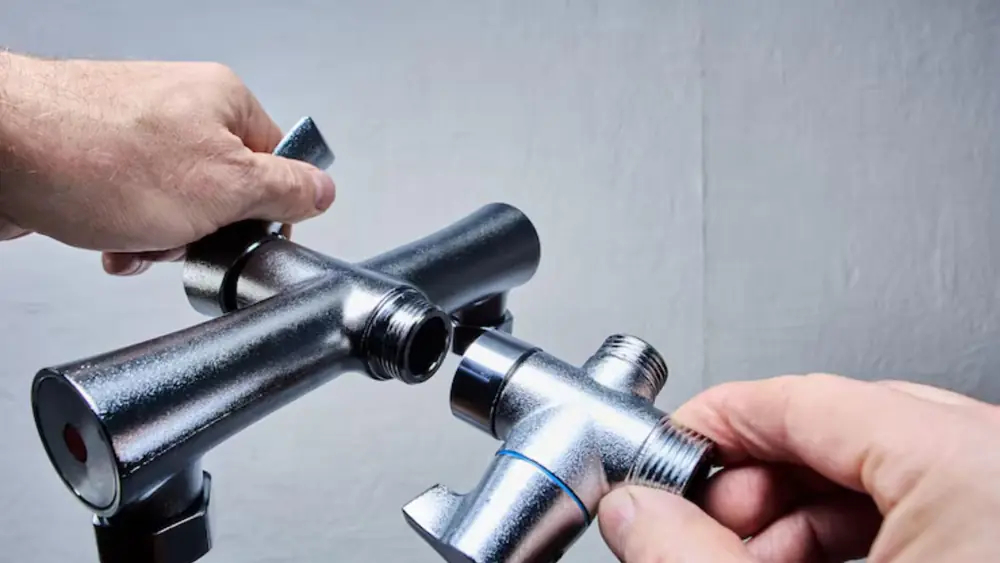
Which part is failing: a quick decision table
Match what you see to the likely cause before you buy anything. Many tubs have one handle for hot and cold, others have two or three handles, and the clues differ slightly.
| What you see | Most likely part | Homeowner fix | Call a plumber when |
|---|---|---|---|
| Drip from the tub spout, handle off | Cartridge (single handle) or washer and seat (two handle) | Shut off water, replace cartridge or washer with an exact match | The new part still drips, or the seat is pitted |
| Drip from the showerhead after you shower | Diverter or a worn cartridge | Replace the diverter spout or cartridge | Water still sprays from the head when the tub runs |
| Water leaks around the handle when on | Packing nut, stem O-ring or cartridge O-ring | Tighten packing nut slightly, replace O-rings | Water appears behind the wall or ceiling below |
| Water runs from the spout at the wall joint | Failed spout seal or loose spout | Tighten set screw, re-caulk, or replace the spout | The pipe stub behind is loose or corroded |
| Handle will not shut off all the way | Stem or cartridge worn, or valve seat damaged | Replace cartridge or stem and seat | Cold or hot water keeps running after a new part |
| Drip only on hot, not cold | Hot side washer or one side of a mixing cartridge | Replace the hot washer or the whole cartridge | Hot water arrives weak or discolored |
A table cannot replace looking at the actual valve, but it narrows the guess to one or two parts.
Cartridge, washer or diverter: how they differ
A cartridge is a cylindrical plastic or brass insert that slides or rotates inside the valve body. It controls flow and mixing in one piece, so when it fails the whole cartridge is replaced. Single-handle tubs and many newer two-handle tubs use them.
A compression valve uses a rubber washer pressed down on a brass seat by a threaded stem. The washer wears flat and the seat can develop a rough edge, which is why a new washer sometimes fixes the drip for a month and then it returns. Older two-handle and three-handle tubs often work this way.
The diverter is the third suspect. On a tub spout it is a pull-up knob on the top of the spout, or an internal flap, that redirects water to the shower arm. When it fails, water keeps coming out of the showerhead after the tub fills, or the shower is weak and the spout keeps running.
Tub spout leak or shower arm leak? Read the water
Where the drip appears points to the part. Run the tub for a minute, then watch carefully when you shut it off.
Drips from the spout only
The valve is passing water. Look at the cartridge or washer first. A diverter that lifts and seals fully will not cause this.
Drips from the showerhead only
The diverter is not seating, or the cartridge leaks and water is finding the shower path. Check the diverter first because it is the cheaper part.
Water at the spout wall joint
The spout connection is the leak, not the valve. A loose or cracked spout lets water run down the wall instead of out the spout.
Water at the shower arm wall joint
The arm threads into a fitting behind the wall. A weeping joint there needs re-sealing with the arm unscrewed and fresh thread tape or paste.
Drip at the handle
Packing or O-ring leak, usually worse while the water is running. It rarely appears when the valve is off.
Stain on the ceiling below
A leak inside the wall. Stop using the tub and have the line checked, because the cause is not the handle trim.
How to replace a cartridge or washer
This is the common homeowner repair for a tub with a visible handle and no access panel trouble. Stop if anything feels corroded, round-edged or stuck, and call.
- 1
Shut off the water
Close the fixture shutoff if the tub has one, or the home's main shutoff. Open the tub tap to drain the line and confirm the water has stopped before touching the valve.
- 2
Plug the drain and protect the tub
Drop a rag in the drain so a small screw cannot fall in. Lay a towel on the tub floor so a dropped tool does not chip the finish.
- 3
Remove the handle and trim
Pry off the cap, take out the handle screw, then unscrew the escutcheon plate. Photograph each step so you can put it back in the same order.
- 4
Pull the cartridge or stem
A cartridge usually has a retaining clip or nut and pulls straight out, sometimes with a puller tool. A stem on a compression valve unscrews with a deep socket.
- 5
Match the part exactly
Bring the old cartridge or washer to the supplier. A close match is not a match, because stems differ in length and spline count.
- 6
Reassemble and test
Grease the O-rings with plumber's silicone, seat the new part fully, and restore the water slowly. Check for drips at the handle and the spout for several minutes.
Not sure which part you have?
A person answers 24/7. Describe where the water comes from and we can tell you whether a cartridge, a diverter or something deeper is likely.
Parts and tools to have on the bench
You can do most tub faucet work with a short list. A screwdriver set with both Phillips and flat heads, an adjustable wrench, a cartridge puller or large channel locks, plumber's grease, thread seal tape, a small flashlight and a handful of towels will cover it.
The part itself is the hard purchase. A cartridge is brand and model specific, and a universal one rarely fits. If you do not know the maker, look for a name stamped on the escutcheon or the handle, or take the old cartridge in a bag so the counter staff can compare ends and lengths.
Avoid plumber's putty or silicone on threaded water connections, because they can fail and they clog the valve. Use thread tape on tapered pipe threads and the right gasket or O-ring on seals. Replace the stem O-rings at the same time as the cartridge, since they cost almost nothing and they wear together.
DIY or pro: where the line usually sits
The repair itself is manageable for many homeowners. Judgment about what you find behind the trim is where experience pays off.
Reasonable to try
- Replacing a single cartridge on a valve that shuts off cleanly
- Swapping a diverter spout that screws on
- Replacing handle O-rings or a visible packing seal
- Re-caulking a tub spout joint after tightening it
Call a plumber
- The shutoff valves do not hold, so the water cannot be turned off at the tub
- The valve body is loose, cracked or corroded behind the wall
- Water is staining the wall or ceiling below the tub
- The drip returns after a correct new cartridge, which points to the seat or the body
When the valve body is the problem
The valve body is the brass or plastic housing in the wall that holds the cartridge. Cartridges are meant to be replaced, but the body is part of the plumbing. If the seating surface inside is scored or the body is cracked, a new cartridge cannot seal against it.
Warning signs include a new cartridge that leaks within days, mineral crust that will not clean out of the cavity, a body that turns when you remove the retaining nut, or green and white corrosion on the brass. Any of these means the next step is replacing the valve, which often needs wall access from behind or a cut in the tile.
That is a bigger repair, and it is the point to stop trying one more cartridge. When the leak is behind the wall, our faucet and valve repair work covers valve replacement, and our leak detection methods help find a slow wall leak before it ruins drywall.
Common mistakes that make a drip worse
The most frequent error is overtightening. Cranking the handle shut to stop a drip compresses the washer and scores the seat, so the next drip comes sooner. If the handle needs real force to stop the water, the part is worn and should be replaced.
Another is working without a confirmed shutoff. A tub valve with the cartridge removed is an open pipe at full pressure, usually somewhere between 40 and 80 psi, and a failed fixture stop turns a small repair into a wet bathroom. Test the shutoff by running the tap, and if water keeps coming, stop and call.
Last, do not ignore the second symptom. A drip that is hot only, or a shower that stays warm after you turn it off, can mean a hot-side leak. If you cannot stop it, or you see damp drywall, our team is reachable at any hour, and we serve Etna alongside neighbors in Pataskala and Reynoldsburg.
A leak behind the tub wall?
Stop using the tub and call. A person answers around the clock, and we will talk through the safest way to hold the leak until the valve can be replaced.
Frequently asked questions
Start with the diverter. If the pull-up knob on the spout does not seal, water takes the easy path up the shower arm. Replace the diverter spout or its gasket first because it is the simpler part, and if the drip continues you are looking at the cartridge or valve.
Only if the tub has its own fixture stops or an access panel with shutoffs. Many tubs do not, so you shut off the main valve instead. Always open the tap afterward to prove the flow has stopped before you remove any part.
There is no fixed number. Most last many years, and use, water chemistry and how hard people close the handle all change it. A cartridge that grinds, sticks or drips has done its job and should be replaced rather than coaxed along.
Hot water expands rubber and plastic parts differently, so a marginal seal can fail only on the hot side. On a single-handle valve the same cartridge handles both, so a full replacement usually clears it. A hot-only drip on a two-handle tub points to the hot-side washer or seat.
The Licking County Health Department regulates plumbing here. Its rules require a permit for most repair work but exempt replacing a fixture with the same or a similar fixture in the same location, which a like-for-like cartridge swap generally is. Moving a valve or opening a wall is different, so ask the department first. Plumbers working in the county must be registered with it.
Replace when the trim is pitted or discolored, when parts for your model are no longer made, or when the valve body is the leaking part. A repair makes sense when the valve shuts off cleanly and the only fault is a worn seal.