
What counts as safe DIY water heater repair
DIY water heater repair means the checks and small fixes a careful homeowner can do without opening a gas line, touching a vent or working on a live circuit. Examples are resetting a tripped limit switch, adjusting a thermostat and testing electric elements with the power off. Flushing sediment, looking at the anode rod and testing the temperature-and-pressure relief valve belong on the list too.
A water heater combines three hazards in one box: hot water that can scald, electricity or gas feeding it, and a tank under pressure. That is why this list is short on purpose. Anything beyond it, and anything that smells like gas or looks like a leak from the tank, is a call.
What you can do and what to leave to a pro
Stop at the line and call if you are unsure. Stopping costs nothing.
Reasonable for a careful homeowner
- Check the breaker and the reset button with the power off first
- Adjust the thermostat setting
- Test elements and thermostats with a meter on a dead circuit
- Flush the tank and inspect the anode
- Test the relief valve with the discharge pipe in place
- Relight a standing pilot following the label on the heater
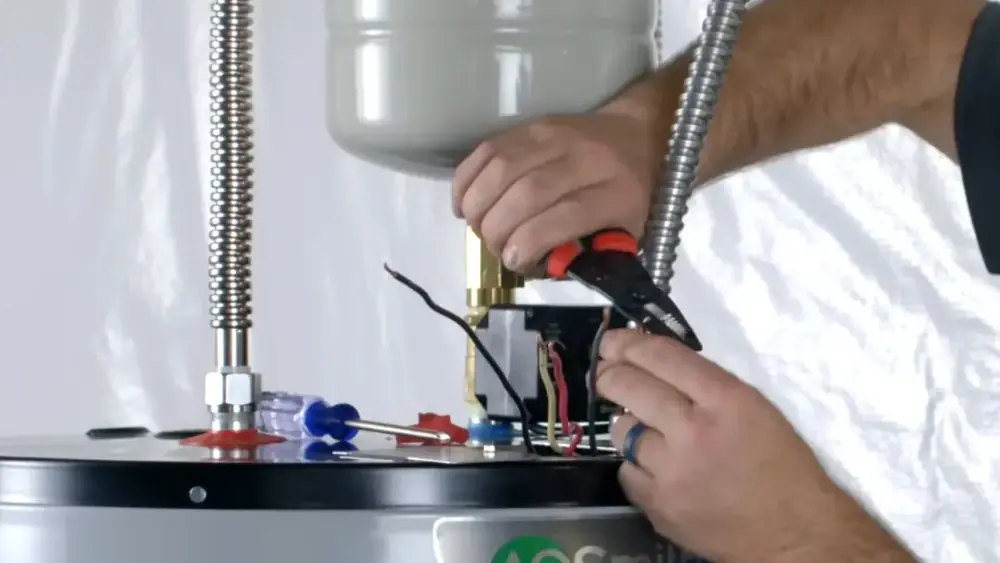
Leave to a professional
- Anything on the gas supply, gas control, or burner assembly
- Venting, flue, or combustion air problems, and any soot or scorch marks
- Water leaking from the tank body or from underneath the tank
- Repeated breaker trips, burning smells, or damaged wiring
- A relief valve that keeps discharging after a test
- Replacing the tank itself, covered under water heater replacement
Electric or gas: what you can touch
Fuel changes the safety picture more than almost anything else.
| Task | Electric heater | Gas heater |
|---|---|---|
| No hot water at all | Check breaker, then the high-limit reset button with power off | Check that the pilot is lit and the gas control is on, but never chase a gas smell |
| Lukewarm water | Test upper and lower elements and thermostats | Often sediment or a weak burner, so flush and call if it persists |
| Popping or rumbling | Sediment on the elements, so flush | Sediment under the burner, so flush |
| Temperature too hot or cold | Adjust thermostats | Adjust the gas control dial |
| Water near the base | Shut off power and water, then call | Shut off gas and water, then call |
| Smell of rotten eggs or gas | Not applicable | Leave the house, call the gas utility or 911 first, and call us afterward |
A smell of gas is never a repair job. Get out, and use a phone away from the house.
Electric heater with no hot water: the sequence
Do these in order and turn the power off at the breaker before opening any panel.
- 1
Check the breaker
A tripped double-pole breaker is the commonest cause of a cold tank. Flip it fully off and on once. If it trips again, stop.
- 2
Press the reset button
Turn the breaker off, remove the upper access panel and insulation, and press the red reset button on the upper thermostat. If it clicks and the heater works, find out why it tripped, because it tripped for a reason.
- 3
Check the thermostat setting
Many installers set tanks around 120 degrees Fahrenheit, and settings much above that raise the scald risk and the wear. A thermostat set far below that can make a tank seem lukewarm.
- 4
Test the elements
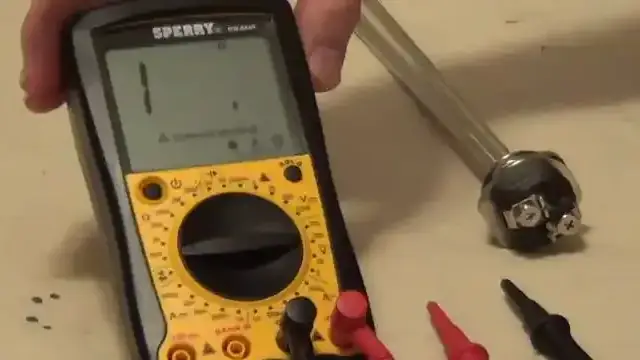
With the power off and confirmed dead at the terminals, disconnect one lead at a time and test each element with a multimeter on resistance. An open reading means a burned-out element. Do not test with the power on.
- 5
Replace or call
A failed element is a manageable replacement for someone who can drain the tank, use an element wrench, and wire it correctly. If any of that is unfamiliar, water heater repair is the safer route.
Never turn an electric heater on with an empty tank
Heating elements are made to be underwater. Switching the power on while the tank is empty or partly drained burns an element out in moments. After any draining, open a hot tap upstairs and run it until water flows steadily, then restore the power.
This one mistake destroys more new elements than any bad part does.
Flushing and the anode rod
A tank flush clears the sediment that settles at the bottom, which can muffle heat and cause popping. Turn off the power at the breaker, or set a gas unit's control to pilot, close the cold supply, and attach a hose to the drain valve. Open a hot tap upstairs, drain until the water runs clear, then close everything and refill.
The anode rod is a sacrificial metal rod that corrodes so the tank does not. Check it every few years by unscrewing it from the top of the tank and looking at what is left. If it is mostly bare steel core or heavily eaten, replace it. A stuck rod can need a long breaker bar, so do not force it if it will not move.
Flushing helps most when sediment is the problem, and does less for a tank that is simply old. If the drain valve clogs or will not close, stop. A drain valve that leaks after a flush is a minor fix, but do not leave it dripping.
No hot water and not sure why?
Call. A person answers around the clock, and you can tell us what you have already checked. Keep the power or gas off if you smell anything unusual.
Testing the temperature-and-pressure relief valve
The T&P valve is the safety device that opens if the tank gets too hot or too pressurized. Put a bucket under the discharge pipe, lift the test lever for a second or two, and let it snap back. Water should flow, then stop completely.
The water will be hot, so keep your hands and face clear of the discharge. If it dribbles afterward, the valve has not reseated and likely needs replacing. Never cap a relief valve or plug its discharge pipe, and if the valve discharges on its own at random, call us, because that can mean a pressure problem in the plumbing.
When repair is a waste
A heater that has leaked from the tank body is done. Water escaping from a seam, from the bottom, or from rust staining around the base means the steel has failed, and no part will fix it. Shut off the water and power or gas, and plan for a replacement.
Repair also stops making sense on an old unit that has collected several faults, such as a failed element, a corroded anode, and heavy sediment at once. The question is whether the next failure is close behind the one you just fixed. A newer tank with a bad element or thermostat is a good repair, while an old tank with a corroded base is not.
Ask a plumber what the repair costs against how long the tank is likely to last, and listen for a straight answer. We will tell you if a repair is not worth doing, including when that means no sale for us. If you are in Pataskala or Kirkersville, the same advice applies.
Tank leaking or smelling wrong?
Shut off the water supply and the power or gas, then call. We handle water heater repair and replacement across Etna and nearby towns, and we will line up the next appointment when one is available.
Frequently asked questions
Many gas heaters have relighting instructions printed on the label, and following them exactly is a routine homeowner task. If you smell gas at any point, leave the house, call the gas utility or 911 from outside, and do not try again.
If the pilot will not stay lit, the cause is usually a thermocouple or gas control fault, which is a repair for a professional.
A setting around 120 degrees Fahrenheit is commonly recommended as a balance between comfort and scald risk. Higher settings can burn skin quickly, which matters in homes with children or older adults.
Measure at the tap with a thermometer instead of trusting the dial, and adjust in small steps.
Usually sediment on the bottom of the tank. Water trapped under the sediment boils and bubbles, which makes the noise. A flush often helps, and an old tank with heavy buildup may not recover fully.
If the sound is a loud bang or comes with leaking, shut it down and call.
Licking County Health Department requires residential plumbers to register with it before doing business in the county, and the department publishes a list of registered contractors. You can also call the department to confirm.
For state-level contractor licensing, Ohio's Construction Industry Licensing Board has a licensee lookup. Check before you hire, not after the work is done.
Replacing a tank involves water, power or gas, venting, and a relief valve and drain, and a mistake in any of them is a safety risk. For gas units especially, the gas connection and venting are not DIY work.
A second set of hands matters too, because tanks are heavy and awkward to move.
A drip from the discharge pipe means the valve has opened or has not seated. Test it with the lever. If it keeps dripping afterward, replace the valve with the right rating.
If it drips because pressure or temperature is too high, that is a plumbing or heater problem, and a plumber should look at it.