
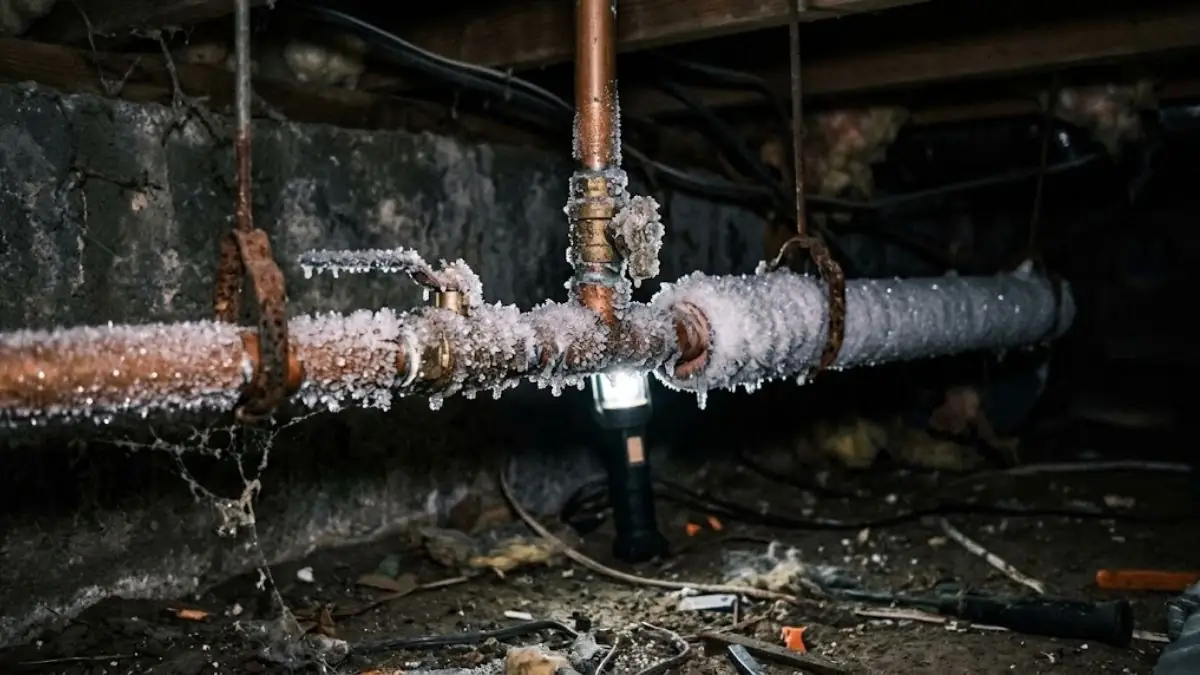
Pipe frozen or split right now?
A frozen pipe is a water line where the water inside has turned to ice, blocking flow and building pressure that can split the pipe. If a tap gives only a trickle in freezing weather, treat it as a frozen pipe until proven otherwise. A person answers our line around the clock if a pipe has already split.
The steps below depend on whether the pipe is only frozen or has already split.
Open the tap
Open the faucet on the affected line so melting water and steam have somewhere to go.
Find the main shutoff
Know where the main valve is before you need it. If you see water, close it at once.
Keep clear of wet electricity
Stay away from outlets, panels and appliances in a wet area, and switch off power at the breaker only if you can reach it dry.
How to thaw a frozen pipe safely
Slow, gentle warmth is the whole technique. Rushing it with a flame is how fires and splits happen.
- 1
Open the faucet
Leave the affected tap open. As the ice melts, water will start to flow and relieve pressure in the line.
- 2
Find the frozen section
Follow the pipe from the tap toward the cold spot, such as an exterior wall, crawlspace or garage. Frost on the pipe or a section that feels icy marks the blockage.
- 3
Apply warm air
Use a hair dryer, a heating pad wrapped around the pipe or a fan-driven space heater set a safe distance away. Start near the tap and work back toward the frozen part.
- 4
Never use an open flame
Do not use a propane torch, a camp stove, a kerosene heater or a lighter. Open flame ignites framing and insulation and can boil water in a pipe into a burst.
- 5
Keep warming until flow returns
When full flow comes back, leave the tap running a few minutes and check every joint for drips.
- 6
Call a plumber if you cannot reach it
If the frozen section is behind a wall or under a floor, or if you see any crack, stop and call instead of cutting into the house.
Where pipes freeze and what helps
Freezing happens where cold air reaches a pipe and heat does not. These are the usual spots in a house.
| Location | Why it freezes | What helps |
|---|---|---|
| Exterior wall | Cold air leaks in around outlets and rim joists | Open cabinet doors to the room, seal gaps, add insulation to the cavity |
| Crawlspace or unheated basement corner | Little heat, plenty of drafts | Pipe sleeves, sealing vents for winter, a small heat source set safely |
| Garage or utility room | Doors open often and the space is unheated | Insulate supply lines and keep the door shut |
| Outdoor spigot and its supply | Water left in the line | Disconnect hoses, close the indoor shutoff for the spigot and drain it |
| Attic and soffit runs | Cold air moves along the roofline | Foam insulation and air sealing near the pipe |
Insulation slows freezing. It does not stop it where the air is cold enough for long enough.
Pipe will not thaw, or something has split?
Call and tell us where the pipe is and whether you can see water. We will help you stay safe until help arrives.
Prevent freezing before the cold arrives
Do these in fall and you reduce the odds of a call in January.
- Disconnect garden hoses, close the interior shutoff for outdoor spigots and drain the lines.
- Wrap exposed pipes in foam sleeves or insulation, especially in the garage, crawlspace and along exterior walls.
- Seal air leaks around pipes where they enter the house, using caulk or expanding foam.
- Open under-sink cabinet doors on exterior walls during a hard freeze so room warmth reaches the pipes.
- Let a faucet drip on the coldest nights, choosing the tap farthest from where the main enters.
- Know where your main shutoff valve is and that the handle turns.
Drip the faucet or leave it alone
Dripping works because moving water is harder to freeze and relieves pressure between the ice and the tap. It is not a guarantee.
Dripping helps when
- The night is forecast to stay far below freezing.
- The pipe runs along an exterior wall or through an unheated space.
- You already had a freeze on that line before.
Dripping is not enough when
- The pipe is uninsulated and exposed to wind.
- The house will be empty and heat could fail.
- A pipe is already frozen and you need to thaw it.
Vacation and vacant homes
A house that sits empty in winter has no one to notice a cold spot or a failed furnace. Keep the heat on rather than turning it off, set to a temperature well above freezing, and have someone check the house during a cold snap. If you shut off the main water supply before you leave and drain the lines, you cut the risk of a pipe splitting while no one is home.
A burst line in a vacant home can run for days. Water-use alerts from your meter, or a trusted neighbor with a key, are cheap protection against a long-running flood.
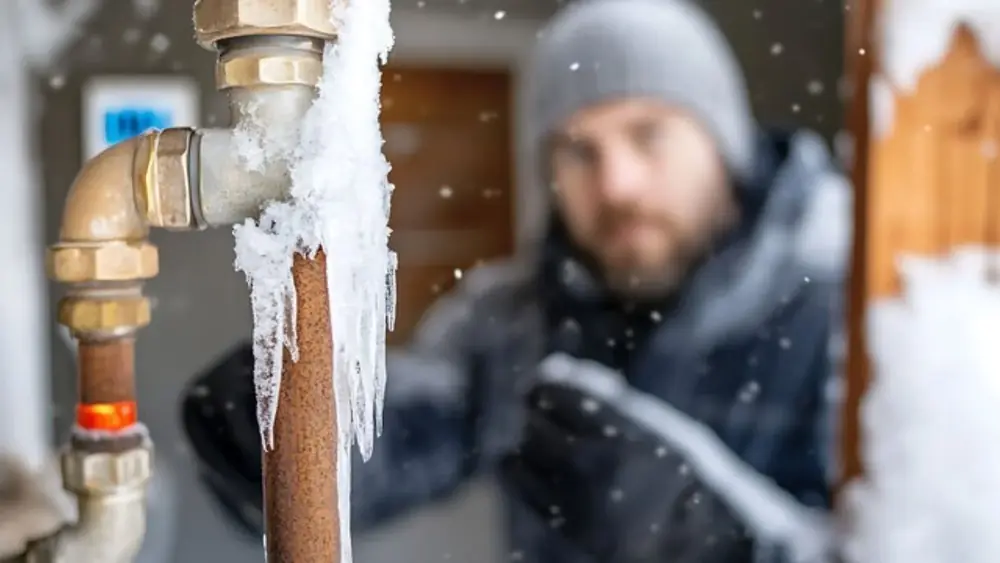
If a pipe splits: do this in order
Close the main shutoff valve right away, then open a tap at the lowest point to drain the line. Switch off the water heater at the breaker, or turn a gas unit to its off setting, because a heater running on an emptied tank can be damaged. Take photos and video before you clean or move anything. Then call a plumber for burst pipe repair, and see faucet repair if a tap or valve is damaged.
For your insurer, document first and repair second: wide shots of the affected rooms, close-ups of the split pipe, ruined belongings and any readings from a moisture meter. Keep receipts for emergency measures and hold on to the failed section of pipe if you can. Check your policy, since coverage varies, and ask your agent what proof they need before you throw anything away.
Nearby towns and what stays the same
The same freezing rules apply across Kirkersville and the Franklin County side near Reynoldsburg. Cold does not stop at a township line, and neither does a pipe that was left uninsulated.
If you are unsure what is exposed in your house, a quick walk through the basement and garage with a flashlight is a good start. Look for bare pipes on exterior walls, gaps around penetrations and any valve that you cannot reach. Fix those before the cold, and keep our number handy.
Cold snap coming?
Call to talk through what is exposed in your home, or if a pipe has already frozen.
Frequently asked questions
It depends on pipe material, insulation, wind and how long the temperature stays below freezing. Pipes in exterior walls or unheated spaces can freeze after several hours of hard cold, while insulated pipes in warm rooms may never freeze. The risk rises with a long cold stretch rather than one brief dip.
Yes. A pipe often splits where the ice formed, but water only flows once it thaws, which is when you may first see a leak or stain. Check the pipes after a cold snap even if the taps run normally, especially in the crawlspace, garage and exterior walls.
A heat gun can be used carefully but is easy to overdo, and it can scorch plastic or soften soldered joints. A hair dryer or heating pad is safer. Keep the heat moving, never concentrate it on one spot and never leave it unattended near wood framing.
Yes, keep it on. Set the thermostat well above freezing, open cabinet doors to exterior walls, and have someone check the house during a cold snap. Shutting off the main water supply and draining the lines is another good step if you will be away for a longer time.
We use Columbus-area figures, measured at Columbus airport, not at Etna itself. They show about 34 days a year at or below 20 F and about 103 days at or below 32 F. Etna may differ, so insulate exposed pipes and plan for a hard-freeze stretch each winter.
Take wide shots of each affected room, close-ups of the split section, damaged belongings and any water stains on ceilings or floors. Note the date and time you found the damage, and keep receipts for emergency repairs. Take pictures before cleanup or repairs, and save the damaged pipe piece if you can.