
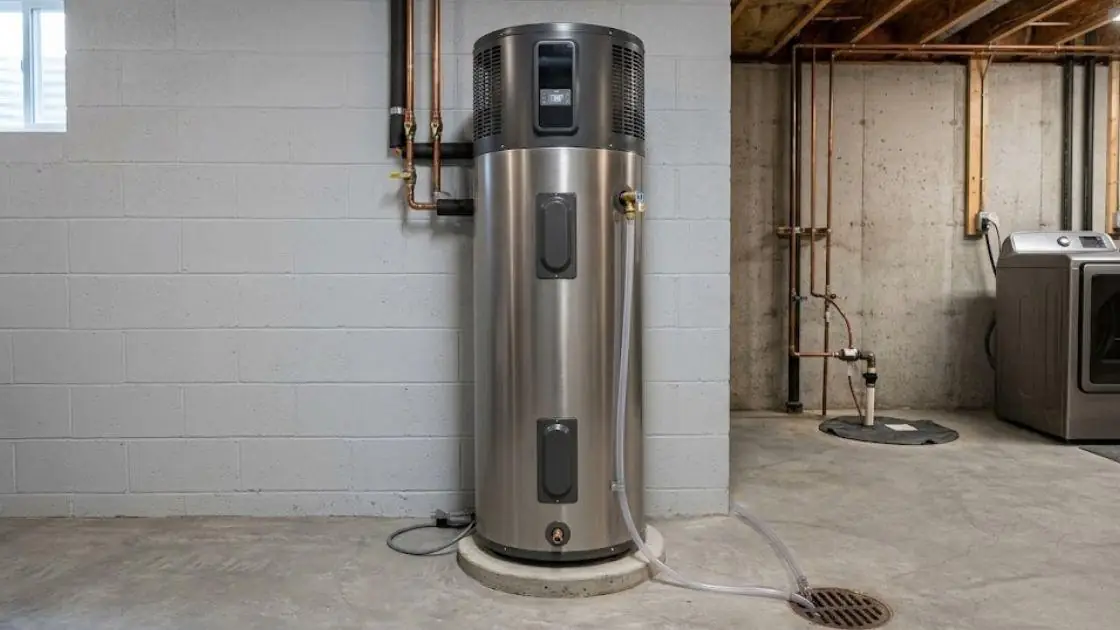
What a hybrid heat pump water heater is
A hybrid heat pump water heater is an electric storage tank that uses a small heat pump on top to pull warmth from the surrounding air and move it into the water, with conventional electric heating elements as backup. It looks like a regular tank with a bulky cap. The word hybrid refers to that mix of heat pump and elements.
A standard electric tank makes heat directly with resistance elements, which turns each unit of electricity into one unit of heat. A heat pump moves heat that already exists in the room, so it can deliver more heat than the electricity it uses. That is why these units are efficient and why they behave differently from anything you have owned before.
The trade is space, air and noise, and the sections below spell out what each one means in a real house.
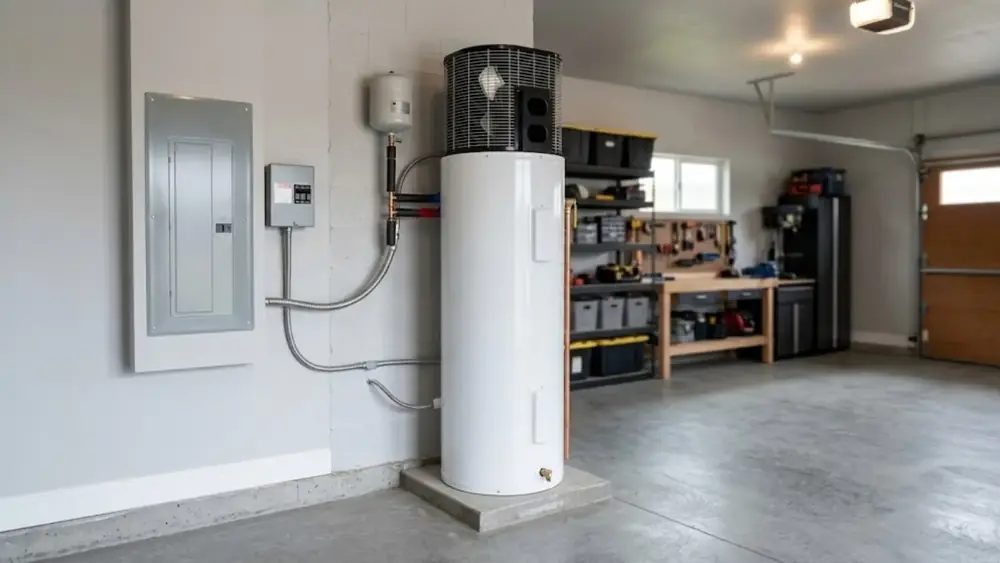
How it works, step by step
The process is the same principle as a refrigerator running in reverse.
- 1
Fan pulls in room air
A fan on top draws air across an evaporator coil. The refrigerant inside is colder than the air, so it absorbs heat.
- 2
Compressor raises the temperature
The refrigerant vapor is compressed, which concentrates the heat and makes it hotter than the water in the tank.
- 3
Condenser coil hands off the heat
The hot refrigerant passes through a coil wrapped around the tank and warms the water.
- 4
Cooled air leaves the unit
The air blown out is cooler and drier than the air that came in. That is the source of the cooling effect people notice nearby.
- 5
Elements step in when needed
In high-demand modes, or if the room is too cold, the electric elements heat the water. This costs more to run and the unit selects it automatically.
- 6
Condensate drips out
As the evaporator pulls moisture from the air, water condenses on the coil and must drain away through a line.
Heat pump, standard tank and tankless compared
No single type wins in every house. This table compares what changes for a homeowner, not exact efficiency numbers.
| Feature | Hybrid heat pump | Standard tank (gas or electric) | Tankless |
|---|---|---|---|
| How it makes heat | Moves heat from room air, elements as backup | Burner or elements heat stored water | Heats water as it flows |
| Space needed | More, plus clear air around it | Modest, depends on vent for gas | Compact, wall mounted |
| Noise | Fan and compressor, like a dehumidifier | Quiet, a burner hum on gas | Gas units hum, water noise during use |
| Condensate drain | Required | Not required for standard vents | Condensing models need one |
| Effect on the room | Cools and dries the air near it | Slight heat loss to the room | Little effect |
| Recovery after heavy use | Slower in heat pump mode, faster with elements | Standard recovery | Continuous, limited by flow rate |
| Best fit | Large, unconditioned or ventilated space, electric homes | Simple replacement, any layout | Tight spaces, steady demand |
Efficiency is real for the heat pump, but it depends on a room that suits it.
What the room and the install need
Siting is where most hybrid installs succeed or fail. Check these before choosing one.
Air volume
Most manufacturers ask for a few hundred cubic feet of open air around the unit, so a small closet is usually too tight. A basement, garage or utility room works. Read the installation manual for the exact figure.
Clear space on all sides
The unit needs room above for the fan and filter, and room in front for service. Plan for more height than a regular tank.
Intake air temperature
The heat pump has a working temperature range printed in the manual. Below it, the unit falls back to the elements, which erases most of the savings.
Condensate drain
A drain line or a condensate pump must carry water to a floor drain or sump. A gravity run to a floor drain is simplest.
Electrical supply
Most are 240 volt and need a dedicated circuit, a task for a licensed electrician in many cases.
Floor and doorway
The units are tall and heavy when full, so check door width and floor strength.
Wondering if your room qualifies?
Tell us about the space and the current heater. A person answers 24/7 and we will talk through whether it suits a heat pump unit or a different type.
Noise, cooler air and condensate
Expect a fan and a compressor running. The sound is comparable to a dehumidifier or a quiet window air conditioner, enough to hear in a nearby bedroom. Put the heater in a basement, garage or utility room away from sleeping spaces and the noise rarely matters.
The cooler air is a real effect. In summer, a basement can feel pleasantly cooler. In winter, the unit chills a heated basement and the furnace makes up the difference, which cuts into the savings. A cold room also forces more element heating.
Condensate is routine but easy to overlook. The coil can produce a couple of gallons a day in humid weather, and a blocked drain line can overflow the pan. A float switch or a clean drain path protects the floor, and we check it during any water heater installation.
Sizing a hybrid water heater
Tank size is chosen by the number of people, the number of bathrooms and how much hot water runs at the same time. A household with two adults and a kid usually looks at a 50 gallon unit, while larger families go to 65 or 80 gallons. Hybrid models come in similar sizes to regular tanks.
The key number is the first-hour rating, which tells you how much hot water the heater delivers in an hour of heavy use starting with a full tank. Compare it against your busiest hour, such as two showers and a dishwasher running together. Because the heat pump recovers slowly, many households size up one step or run the unit in a mode that allows elements to assist.
Our water heater replacement team will work through that arithmetic with you, based on your fixtures rather than a rule of thumb.
Reasons to choose one, and reasons not to
A hybrid unit is a good fit for some homes and a poor one for others. Here is a plain look at both sides.
Good reasons
- You heat water with electricity now and want to use less of it
- You have a large basement, garage or utility space with clear air
- You can run a condensate line to a floor drain
- A dehumidifying effect in the room is a benefit, not a nuisance
Reasons to look elsewhere
- Your only space is a small closet or a tight alcove
- The room stays very cold in winter and the unit would run on elements
- You need fast recovery for very high hot water demand
- You have natural gas and a gas tank fits the budget and the layout better
Maintenance and what can go wrong
A hybrid unit needs more attention than a standard tank. The air filter on the intake should be cleaned every few months, since a dusty basement clogs it quickly. The condensate drain should be checked a couple of times a year, and the tank anode rod is inspected like any tank.
Common faults include a tripped condensate float switch, a dirty filter that lowers output, and error codes that trace to a sensor or compressor. Refrigerant work requires special certification, so a failing heat pump section is not a DIY item. A broken heat pump section often lets the unit continue to heat with the elements, which keeps hot water available while a repair is arranged.
If you want the old tank replaced with something else, our tankless water heater page covers that option, and we serve Etna alongside Pataskala and Reynoldsburg.
Ready to compare options for your home?
Call and describe your current heater, fuel and the space you have. We will give you straight answers about trade-offs before anything is ordered.
Frequently asked questions
It works, but less efficiently. Every unit has a minimum air temperature range in its manual. Below it, the heat pump quits and the electric elements do the work, which uses more power. A heated or mild basement keeps the unit running as designed.
They hum with a fan and compressor, about like a dehumidifier. In a basement or garage it fades into the background. Avoid mounting one in a closet that shares a wall with a bedroom.
Most hybrid units fall back to the electric elements and keep making hot water, so you are not left cold. The repair is a separate matter and usually needs a certified refrigerant technician, but you can plan it instead of reacting to a cold shower.
Yes. The coil removes moisture from the air and that water has to go somewhere. A floor drain is easiest, a condensate pump works where there is no drain, and a bucket is a poor long-term answer.
It can, but it is a closer call. The Census estimates show most Etna Township homes are on utility gas, so a gas tank is the common comparison. A heat pump unit is attractive when you want to retire the gas appliance, add solar, or have no gas line. We can lay out the trade-offs on your actual layout, not a formula.
It cools the air near the unit, which in winter takes a small bite out of a heated basement. If your furnace is nearby, the effect is slight. In a garage or unfinished space you will not notice it.