
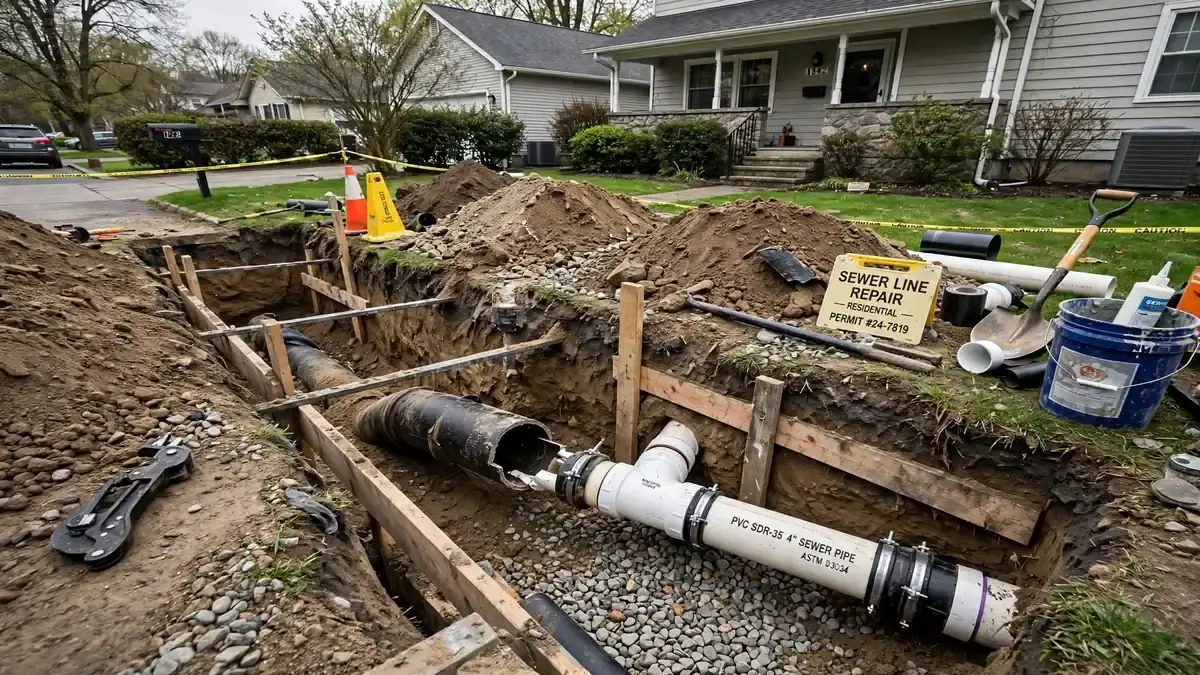
A main sewer line repair fixes the damaged section of pipe that carries wastewater from your house to the public sewer or the septic tank, and it is done in one of four ways: spot repair, pipe lining, pipe bursting or full replacement. The right choice depends on what is wrong, where it is and what sits above it.
No method is best everywhere. This post lays out how each one works, where each falls short and what to ask before you approve any of them. It assumes a cleaning has already shown that the pipe itself, not a simple clog, is the problem.
Start with a camera, not a guess
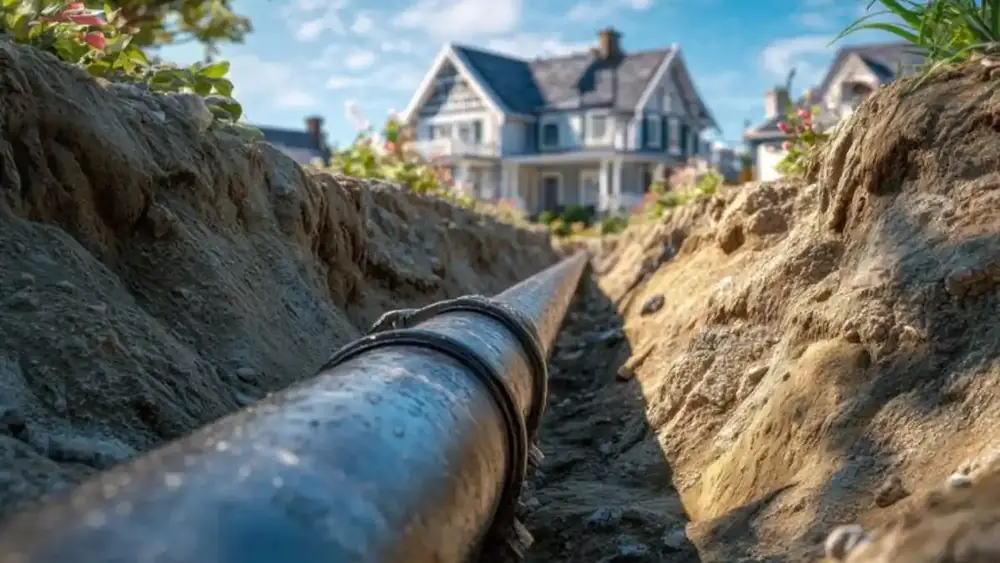
A sewer camera inspection shows the pipe's material, its joints, any cracks or offsets, the roots, and whether the line sags. A locator tool paired with the camera marks the depth and position of each problem on the surface, so a repair crew digs where the damage actually is.
The line usually has to be cleaned first, because grease and roots hide the wall. Sewer line cleaning is often the first visit for that reason. Cameras have limits of their own, since a total collapse blocks them and a pool in a sag can blur the picture.
Footage turns the decision into a matter of evidence. A single cracked joint calls for a different fix than a hundred feet of crushed pipe, and you can see the difference on the screen.
Repair methods side by side
Cost depends on length, depth, access and restoration, so we leave numbers to the quote. This table compares what each method does.
| Method | How it works | Fits best when | Main trade-offs |
|---|---|---|---|
| Spot repair | Dig down to the damaged section and replace that length of pipe | One or two short problems in an otherwise sound line | Needs excavation at each spot, and the remaining old pipe can fail elsewhere |
| Pipe lining | Insert a resin-soaked liner that hardens inside the existing pipe, forming a new pipe within the old | Cracks, joint leaks and root entry in a pipe that is still round and aligned | Cannot straighten a sag or fix a collapse, and the line must be clean and accessible at both ends |
| Pipe bursting | Pull a bursting head through the old pipe to crack it outward while drawing in new pipe | A long run of failing pipe with room for entry and exit pits | Needs access pits, risks nearby utilities, and does not suit every soil or pipe condition |
| Full replacement (open trench) | Excavate the whole run, lay new pipe at the correct grade and backfill | Collapsed, bellied or mismatched pipe, or a line that needs a new path | Most disruption to lawn, drive and landscaping, with the most restoration work |
Material, depth, slope, nearby trees and your property layout all change which method is realistic.
Spot repair: replace only what failed
A spot repair makes sense when the camera finds one or two bad places and the rest of the pipe is sound. Crews dig down to the defect, cut out the damaged length and install new pipe with proper couplings.
The catch is the rest of the line. Old clay or fiber pipe often has more defects than the one you found, and a repair can leave you back in the same trench in a few years. Ask the plumber what the footage shows between the spots, not just at them.
Pipe lining: a new pipe inside the old one
Lining works through small access points, so it spares most of the yard. The old pipe is cleaned, a resin-saturated liner is pulled in, and it is cured to form a smooth continuous pipe. Cracks, leaking joints and root entry points get sealed in one pass.
It has real limits. The host pipe has to hold its shape, so a belly that holds water will still hold water after lining, and a crushed section needs digging first. A liner also slightly reduces the pipe's inside diameter, and connections at the house and the main need attention. A camera check afterward confirms the result.
Pipe bursting: pull the old pipe out of the way
Bursting replaces a failing line along its existing path with a minimum of digging. A bursting head is pulled through the old pipe, breaks it outward into the surrounding soil, and drags the new pipe in behind it.
It is not a fit for everything. Crews need entry and exit pits, other utilities close to the path have to be located and protected, and certain pipe materials or soil conditions make it a poor choice. A site visit with a locator shows whether the path is clear enough.
Full replacement: the open-trench answer
Open-trench replacement is the most disruptive method and, in some cases, the only sound one. A collapsed section, a severe sag or pipe that has separated cannot be lined or burst reliably. Digging lets the crew set new pipe at the right slope on a prepared bed.
Because every foot of the path is exposed, the crew can fix grade, replace fittings and reconnect the house and the main properly. Landscaping, concrete and fencing in the way need a plan for restoration, and you should ask what is included before work starts.
Need the camera footage explained?
We can walk you through what the pipe looks like and which of these options match it.
Mistakes that make homeowners pay twice
Most expensive second visits trace back to one of these.
Skipping the camera
Choosing a method without seeing the pipe is guessing, and the wrong guess can cost you the repair and a second visit.
Lining a sag
A liner follows the pipe it goes into. If the pipe holds water in a belly, the liner will too.
Patching one joint of many
A repaired joint next to five more weak joints just moves the next failure down the line.
Ignoring the tree
Roots that caused the damage will find the new joints too. Pipe type, joint style and tree location matter.
Forgetting the connections
The tie-in at the house and at the main is where many repairs leak. Ask how it will be done and checked.
Digging safely: Ohio 811 and permits
Anyone who digs in Ohio must notify the underground utility protection service, Ohio 811, at least two working days before excavating, not counting the day of the notice. Crews mark public lines with paint and flags so they do not hit gas, electric or telecom lines.
Utilities mark only their own lines. Private lines, such as an irrigation system, a well line or electric to an outbuilding, are usually not marked, so tell the crew what you know. Permit rules vary by job and jurisdiction, and we tell you what applies before work begins.
Questions to ask before you approve a method
A clear contractor can answer every one of these from the footage.
- What does the camera footage show, and can I see it?
- Why does this method fit this pipe better than the others?
- What pipe material is going in, and how will the ends connect at the house and at the main?
- Which permit applies, and when are the inspections?
- What will the yard, driveway or landscaping look like afterward?
- How will the finished line be checked, and will I see a camera pass?
Where we fit in
Our sewer line repair work starts with the camera and the cleaning, then moves to the option that suits the pipe. We handle house-side lines. We do not pump or repair septic tanks, so a failing tank or field needs a septic company.
Homes in Etna, Reynoldsburg and Kirkersville face the same questions, and the answer comes from the pipe in your yard, not the zip code.
Ready to see what the pipe looks like?
A camera pass is the first step toward the right repair, and it can happen before you decide anything.
Frequently asked questions
Neither is better in general. Lining is gentler on the yard and fits cracks, leaking joints and root entry in a pipe that has kept its round shape. Digging is the answer for collapsed, bellied or separated pipe. The camera footage decides, and a trustworthy contractor will show it to you.
Not effectively. A liner takes the shape of the pipe it goes into, so a low spot that holds water keeps holding it. A belly usually needs the section dug out and re-laid at the correct slope. A camera pass with standing water noted at the dip is how it gets identified.
Clear the line and look. If the pipe wall is intact and the blockage was grease or paper, you need a cleaning and maybe a change in habits. Cracks, offsets, holes, roots that return quickly or standing water in a dip point to a repair.
The person doing the excavation notifies Ohio 811, at least two working days before digging. When we dig, we handle that notice. Tell us about any private lines in the area, because the utility marking covers public utilities and usually leaves private ones unmarked.
That depends on the method. Lining and bursting use small access points, while open trenching exposes the whole path. We explain what will be disturbed and what restoration is included before the work starts, and we ask you to point out sprinklers, fences and plantings.
The Licking County Health Department keeps a list of registered plumbing contractors and will check a registration by phone in the morning hours. The state licensing board has its own lookup for contractor licenses. Ask any contractor for their registration and permit number before work begins.