
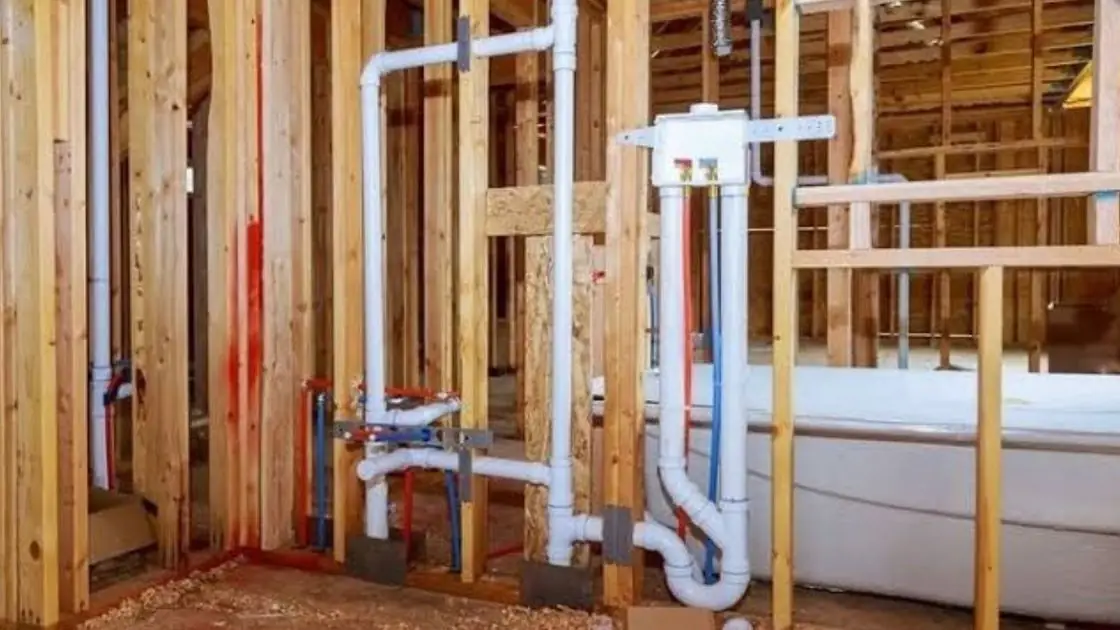
What a plumbing vent pipe is and why it exists
A plumbing vent pipe is an open-ended pipe that runs from your drain lines up through the roof, letting air into the system so wastewater can flow and sewer gas can escape outside. Every drain needs it. Without air behind the water, a draining sink pulls like a straw, and the water in the trap gets sucked away.
Each fixture has a trap, the curved section under the drain that holds a small plug of water. That water seal blocks sewer gas from entering the room. A vent keeps the pressure on both sides of the trap close to atmospheric, so draining water does not siphon the seal out.
Most homeowners never think about vents until something gurgles. That is the usual first sign, and it is also why knowing where yours are makes troubleshooting much faster.
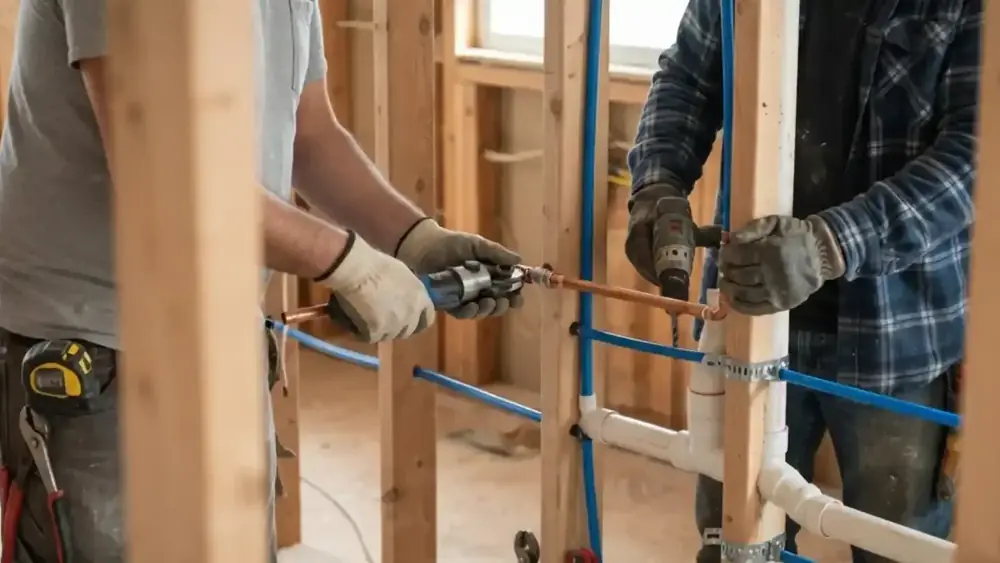
Where to find the vent pipes in your house
You can usually locate vents in a few minutes with a flashlight and a view of the roof from the yard. Work from the top of the house down.
- 1
Look at the roof from the ground
Vent stacks are round pipes poking through the roof, usually 1.5 to 4 inches across, often with a rubber boot or metal flashing at the base. Binoculars help if the roof pitch is steep. Do not climb up to check.
- 2
Check the attic
In the attic, vent pipes appear as vertical pipes passing from below through the roof deck. Several fixture vents often join into one larger stack here before exiting.
- 3
Find the main stack
The largest vertical pipe, typically 3 or 4 inches, runs from the main drain below the house up through the roof. It often sits behind the toilet wall or in a wall chase near the bathrooms.
- 4
Trace the fixture vents
Each sink, tub and toilet connects to a vent pipe behind the wall that rises and ties into the stack. You rarely see these, but a cleanout or access panel may show part of the run.
- 5
Look in the basement or crawlspace
Drain lines lead to the main stack at the bottom. A cleanout with a cap near the base of the stack is where service access is gained.
- 6
Note any air admittance valves
Some fixtures use a small mechanical valve under the sink instead of running a line to the roof. They look like a short plastic cylinder with a cap, and they have a limited life.
Types of vents and where they run
Not every vent goes straight up to the roof. The layout depends on when the house was built and how the fixtures are grouped.
| Vent type | Where it runs | What it serves | Common trouble |
|---|---|---|---|
| Main stack | Straight up through the roof, often near a bathroom wall | The whole drain system | Debris, nests, snow or a collapsed section |
| Individual vent | Up from one fixture to the stack or roof | A single sink, tub or toilet | Kinked or crushed pipe in a wall |
| Common vent | One pipe shared by two fixtures on opposite sides of a wall | A pair, often back-to-back sinks | Slow drain on both fixtures at once |
| Wet vent | A pipe that carries drain water and air together | A group such as a bathroom set | Partial blockage that mimics a clog |
| Island or loop vent | Looped under the counter, then up | A kitchen island sink | Gurgling after the dishwasher drains |
| Air admittance valve | Under the sink, no roof run | One fixture, often a remodel | Valve fails and releases sewer smell |
Which type you have changes where you look. Older houses lean toward a single large stack, newer ones often combine runs.
Signs of a blocked or failing vent
A vent problem looks like a drain problem, which is why the two are confused. The difference is that vent symptoms show up at several fixtures and come and go.
Gurgling drains
Air is being pulled through the trap seal because the vent cannot supply it. The sound often appears after a toilet flushes or a washing machine drains.
Slow draining at more than one fixture
A single sink slowing down points to a local clog. Several slow fixtures at once, especially upstairs, can mean the main vent or stack is restricted.
Sewer smell
A dry or siphoned trap, or a vent that vents inside the house instead of the roof, lets sewer gas into the room. A smell with no standing water in a trap needs checking.
Bubbling in a toilet
The toilet bowl burps when another fixture drains. This is air finding the weakest water seal.
Toilet flushes weakly
A restricted vent slows the flush and leaves the bowl refilling with a sucking sound.
Water in the trap disappears
A shower or floor drain that goes dry repeatedly has been siphoned, and a vent problem is a common reason.
Gurgling in more than one drain?
That pattern deserves a proper look. A person answers 24/7, and we can talk through what you are hearing and what to try first.
What blocks a vent, and what you can do about it
Blockages come from above and from inside the pipe. Birds and squirrels build nests in open stacks, leaves and pine needles pack into the top, and a hard freeze can close a small opening with frost. Inside the pipe, grease vapors and lint rarely accumulate, but a collapsed section or a pipe sagging in a wall can hold water.
A simple check helps: have someone run a hose into the vent from the roof while you watch fixtures drain. That requires roof access, which is the part to treat carefully. If you can see the opening from a safe distance and spot a nest or a pile of debris, that confirms the diagnosis without a climb.
Most removable blockages are cleared by a professional using a small auger or a camera and a vacuum tool. We cover the drain side of the system with drain cleaning, and new or relocated vents on remodels are part of plumbing installation.
Roof safety comes first
Falls from ladders and roofs cause serious injuries every year. Do not go onto a roof when it is wet, frosty, steep or windy, and never alone. If the vent opening cannot be seen from the ground or a stable ladder landing, leave it to someone with fall protection.
A clogged vent is annoying, not urgent. Waiting a day for a safer approach costs nothing compared with a fall.
What you can check yourself and what to leave alone
Plenty of vent troubleshooting starts at ground level. The riskier steps involve height, tools in the pipe and cutting into walls.
Safe at ground level
- Walking the yard with binoculars to spot the stack openings
- Listening for gurgling after each fixture drains
- Checking that traps under rarely used sinks and floor drains hold water
- Looking for nests or debris at the top of a visible stack
Leave to a plumber
- Climbing onto the roof to clear a stack or replace flashing
- Running an auger down a vent pipe
- Opening a wall to find a kinked or sagging vent
- Cutting a new vent line through the attic or roof
Why vent problems are rarely the first thing people suspect
When a drain runs slowly, the natural move is a plunger or a drain cleaner. If the problem is a vent, those make no real difference, and strong chemicals can sit in the trap and damage fittings. That wasted effort is why a pattern matters: one slow sink is a clog, but gurgling at several fixtures at once is air.
A vent problem can also be mistaken for a main sewer line problem, since both cause multiple fixtures to misbehave. A key difference is timing. A main line blockage tends to back up the lowest drain first, such as a basement floor drain or shower, while a vent problem produces noise and slow flow without water coming up.
If both could be true, a camera inspection of the main line rules one in or out. Our sewer line cleaning page explains when the main line is the suspect.
When to call, and what we look at
Call when more than one fixture misbehaves, when a sewer smell lingers after the traps are refilled, or when you cannot see the vent openings safely. Our plumbers start with the symptoms you describe, then check traps, test flow at each fixture and, when needed, run a camera down the drain to see the main line.
If the stack needs attention at the roof, we tell you plainly what that involves and whether a roofer should handle flashing. We serve homes in Etna and nearby communities such as Pataskala and Kirkersville, and a person answers the phone around the clock.
If you smell sewer gas indoors, open windows and keep the area ventilated. A strong rotten egg smell combined with any gas appliance is a reason to leave the building and call the gas utility from outside, ahead of any plumber.
Sewer smell you cannot trace?
Call and describe it. We will help decide whether it is a dry trap, a vent, or something that needs a camera.
Frequently asked questions
Most homes have a vertical pipe poking through the roof near the bathrooms, often 3 or 4 inches across. Inside, it follows the wall behind the toilet or a plumbing wall from the main drain up through the attic. Smaller vent branches tie in at each fixture.
Yes. When air cannot get into the line, water drains slowly and the system gurgles. The tell is that several fixtures are affected, not just one, and that the noise is worse right after another fixture drains.
No. A dry trap is the most common cause, especially under a rarely used sink or floor drain. Pour water down it to refill the seal. If the smell returns or you have gurgling too, a vent or a sewer line problem is more likely.
Every fixture drain must be vented in some way, either by its own pipe, a shared pipe, a wet vent arrangement or an air admittance valve where local rules allow it. Rules differ by jurisdiction, so ask the township or county building office before moving or adding one.
A ground-level look is enough for most storms. Check that the stack is upright, the flashing has not lifted and no branch is resting on the pipe. Etna has had a documented tornado (EF0, 2023), so debris on a roof here is not far-fetched. If anything looks bent or loose, call rather than climbing.
In a hard freeze, frost can build up around the opening of a small vent and narrow it. A deep snow drift can also cover a low stack. You cannot clear a roof from the ground, so wait for a thaw and call if gurgling persists.