A sewer line clog is a blockage in the main drain pipe that carries all the wastewater from your house toward the public sewer connection or the septic tank. Because every fixture drains into that one pipe, a clog there shows up in several places at once instead of in a single sink.
This post helps you tell a main-line clog from a local one, use the cleanout safely, understand the tools a plumber brings, and recognize the point where a clog is really a damaged pipe. It also draws the line on septic systems, which we do not pump or repair.
Signs the clog is in the main line
One slow sink is usually a local problem. These patterns point down the line.
More than one fixture is affected
A tub that drains slowly while the toilet gurgles, or a washing machine that backs into a basement shower, means the shared pipe is restricted. The lowest fixtures in the house show it first.
Gurgling and bubbling
Air trapped by a blockage has to go somewhere. You hear it as glugging in a toilet when the washer drains, or see bubbles rise in a tub when a sink empties.
A floor drain backing up
A floor drain sits close to the main line, so dirty water rising there is a strong sign the main is blocked. Do not run more water to test it.
Clogs that return after cabling
If a drain clears for a week or two and then slows again, the cause may be roots, grease buildup or a damaged section further along.
Odor or wet ground outside
A sewage smell near the cleanout or a soggy patch in the yard can mean the line is backing up or leaking underground.
Where the cleanout is and how to use it
A cleanout is a capped fitting on the main line, usually three or four inches across. Look in the basement or crawlspace near where the pipe leaves the house, or outside close to the foundation. It gives a plumber, and sometimes a careful homeowner, direct access to the line.
Reading the cleanout tells you where the blockage sits. If the pipe stays dry after you open it and fixtures still back up, the clog is likely between the fixtures and the cleanout. If wastewater rises in the cleanout, the blockage is downstream, out toward the street or tank.
Do this carefully. Wear gloves and eye protection, keep a bucket and towels ready, loosen the cap slowly and stand to one side. If the pipe is full, stop and leave the cap on, because uncapping releases sewage and sewer gas, and a hose cannot fix a clog you cannot reach.
Cabling, hydro jetting and camera: what each one does
Plumbers choose from three main tools, and they often use them in sequence.
| Method | What it does | Best for | Limits |
|---|---|---|---|
| Cabling (auger) | Spins a cable with a cutting head through the pipe to break up or pull out the blockage | Soft clogs, paper, roots in fresh growth, getting water moving again | Can leave grease on the pipe walls and may only punch a hole through a thick clog |
| Hydro jetting | Sends high-pressure water through a nozzle that scours the pipe walls | Grease, scale, heavy buildup and root hairs on sound pipe | Wrong tool for a collapsed or badly cracked pipe, so a camera check comes first |
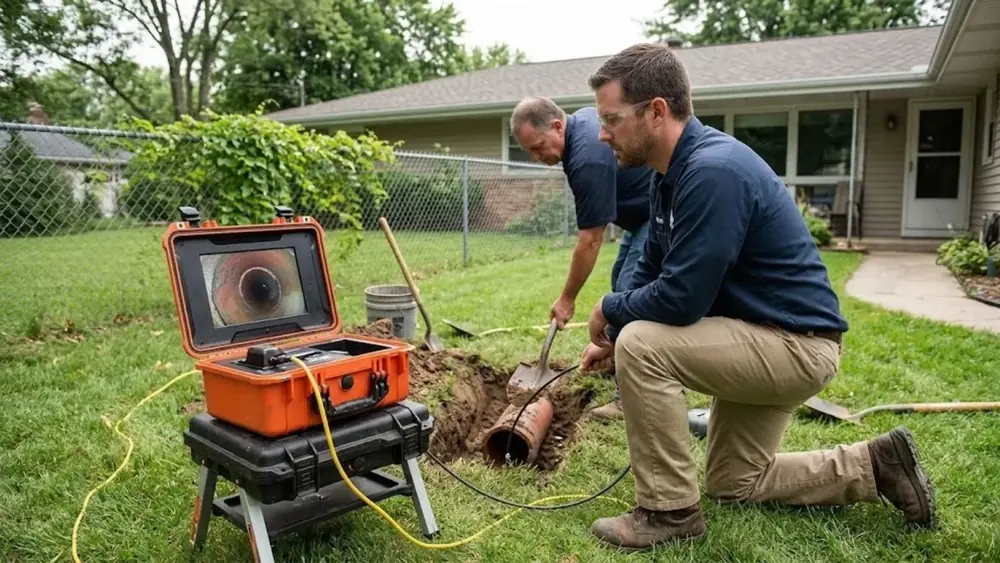
| Camera inspection | Feeds a waterproof camera through the line to show the pipe's condition | Finding the cause, confirming the clearing worked, spotting damage | Cannot pass a full collapse, and standing water in a sag can hide detail |
Pressure and nozzle choice depend on the pipe material and condition, which is why the camera matters.
What usually causes a main-line clog
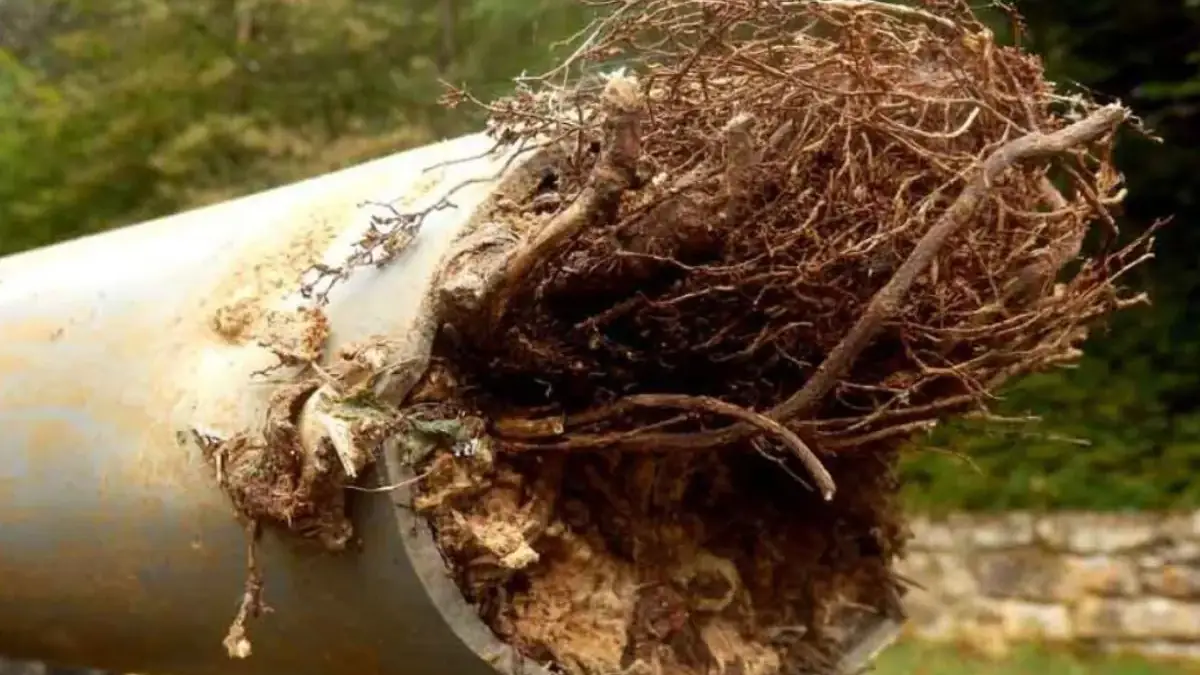
Roots are a common culprit in older lines. Tree roots find the tiny gaps at joints, grow into the pipe and catch paper and grease until the line closes. Hydro jetting clears root hairs well, but the joint they entered through needs attention or they return.
Grease cools and hardens on pipe walls, narrowing the opening a little more with each kitchen drain. Flushable wipes, paper towels and feminine products do not break down the way toilet paper does and knit together into a mat.
Sags are a different problem. A low spot in the pipe, often called a belly, holds standing water that collects solids, so the line clogs again and again no matter how often it is cleared. Shifted joints, cracked sections and collapsed pipe do the same job from the structure side.
What a homeowner can safely try
A few steps help and none of them put you at risk.
- Stop running water the moment you suspect a main-line problem, including the washer and dishwasher
- Use a plunger on a toilet that is slow, since a clogged bowl trap is the one local cause you can fix
- Check the cleanout for standing water, then stop if it is full
- Skip chemical drain openers on a suspected main clog, because they sit in the pipe, damage some materials and can burn the next person who opens it
- Do not enter a pit, crawlspace corner or sump area with sewage in it. Gas and bacteria are real hazards in a confined space
- Keep electrical cords and appliances out of any wet basement area
Backed up and not sure why?
Tell us which fixtures are affected and whether a floor drain is involved. We can usually sort a local clog from a main-line one over the phone.
Clog or repair: how to tell
Cleaning solves a blockage. It does not fix a pipe that is broken. A camera pass after clearing settles which one you have.
A cleaning is enough when
- The camera shows a clean wall once the blockage is cleared
- Grease or paper caused the problem and the habit changes
- A short root intrusion is cut back and the joint is sound
- Months pass before any slowdown returns
It is a repair when
- The camera shows a crack, offset joint or hole
- A belly keeps holding water and solids
- Roots return within weeks through the same spot
- The pipe is crushed, collapsed or separated
Where our work stops on septic homes
We clear and repair the house-side drain lines that run from your fixtures to a septic tank inlet or to the sewer connection. We do not pump septic tanks, and we do not repair tanks or drain fields. We say that up front so you are not waiting on the wrong truck.
If the cleanout is dry, the house drains well, and the problem shows at the tank or in a soggy area of the yard, call a septic company. If water backs up in the house, the blockage may well be in the line we clear, and a camera pass shows which side of the tank inlet the trouble is on.
What happens when we come out
We confirm which fixtures are affected, find the cleanout and clear the line with the tool that fits the cause. Cabling gets water moving, and our sewer line cleaning work uses jetting when grease or scale is the problem.
Afterward we recommend a sewer camera inspection so you can see the pipe wall instead of taking our word for it. If the footage shows damage, the conversation moves to repair options, not another cleaning.
We work across Etna and nearby Kirkersville and Pataskala, and the process is the same wherever the house sits.
Ready for a camera look?
Seeing the line is the fastest way to learn if you need a cleaning or a repair.
Frequently asked questions
The washer pushes a large volume of water into the main line quickly. If the line is partly blocked, that water and the air ahead of it back up to the lowest opening, which is often the floor drain. Treat it as a main-line warning. Stop using the washer, avoid flushing, and have the line checked.
We advise against it. Main lines are large, so the product dilutes and sits in standing water without reaching the blockage, and it can harm some pipe materials. It also leaves a hazard for whoever opens the cleanout later. Mechanical cleaning followed by a camera look is safer and more reliable.
A clog clears and stays clear for a good while. A collapse or serious break keeps coming back, or a cable stops at the same spot every time. Soggy ground or a sinking patch in the yard adds to the suspicion. A camera passed through the line is the only way to tell for sure.
Cabling opens the pipe but does not scrub the walls or repair damage. If the same clog returns, the line likely has a root entry, a belly or heavy grease on the walls. Jetting can clear the buildup, and a camera pass finds out whether a repair is the real answer.
Yes. A person answers the line around the clock. While you wait, stop all water use, keep people and pets out of the wet area, stay away from wet electrical outlets and cords, and leave the cleanout capped unless you are sure of what you are doing.
We can clear and repair the house-side line, but we do not pump septic tanks or repair tanks and fields. Start at the cleanout: a full pipe with a dry house often means a tank issue, while a backed-up house points to a line we can clear. The county health department's sewage program handles septic permits and inspections.