Why one toilet keeps clogging
A toilet that keeps clogging has a repeating cause, either in the bowl itself, in the short drain just beyond it, or in the larger line the whole house shares. A single clog is an accident. Three in a month is a pattern, and the pattern tells you where to look.
The first question is whether the problem lives in one fixture or the whole house. If only one toilet struggles while the tub, sinks and other toilets drain well, the trouble is local. If several fixtures slow down together, or the lowest drain backs up when you flush, the main line is the suspect.
Work through the causes in order, from the cheapest check to the most involved.
One fixture or the whole house: a decision table
Use what you observe to decide how deep to look. Test other fixtures before you start work.
| What happens | Likely location | First step | Call a plumber when |
|---|---|---|---|
| Only this toilet clogs, others flush fine | Bowl, trap or the stub just past the flange | Plunge, then auger | It clogs again within days |
| Toilet clogs and the tub or sink gurgles | The branch drain serving the bathroom | Stop using the fixtures and check other drains | Gurgling continues after you clear the toilet |
| Toilet and the lowest floor drain both back up | Main sewer line | Stop flushing and run no water | Right away, before sewage reaches the floor |
| Toilet bubbles when a washer drains | Partial main line blockage or a vent problem | Note which fixtures react | The pattern repeats |
| Toilet rocks, leaks at the base | Flange or wax ring | Do not keep using it | Any water appears around the base |
| Weak flush, then clog | Rim jets blocked or low-flow bowl design | Clean the rim jets | A weak flush stays even after cleaning |
If more than one fixture is affected, treat it as a line problem until proven otherwise.
Common causes in one toilet
These show up in the bowl or just below it. Most are simple to confirm.
Too much paper or wipes
Even thin paper can jam in a bowl with a narrow trapway. Wipes labeled flushable do not break down like paper and they gather into ropes in the line.
Low-flow bowl design
Toilets made to use less water per flush rely on a clean, fast siphon. A partly scaled trapway or blocked rim jets can turn a good bowl into a weak one.
Partial blockage
A hair, a rag or a toy left in the trap can slow every flush without ever fully stopping it. You hear a slow gurgle or see the water level rise and fall.
A bad flange seat
The flange connects the bowl to the drain. If it sits too high, too low or is damaged, waste can hang up at the joint.
A weak flush
A half-open supply valve, a flapper that closes early or a clogged rim lets too little water enter the bowl.
Vent trouble
If the vent is restricted, the toilet may drain slowly and bubble. The fix is outside the bowl.
Plunger first, auger second
Use the right tool in the right order. A plunger moves the clog, an auger removes it.
- 1
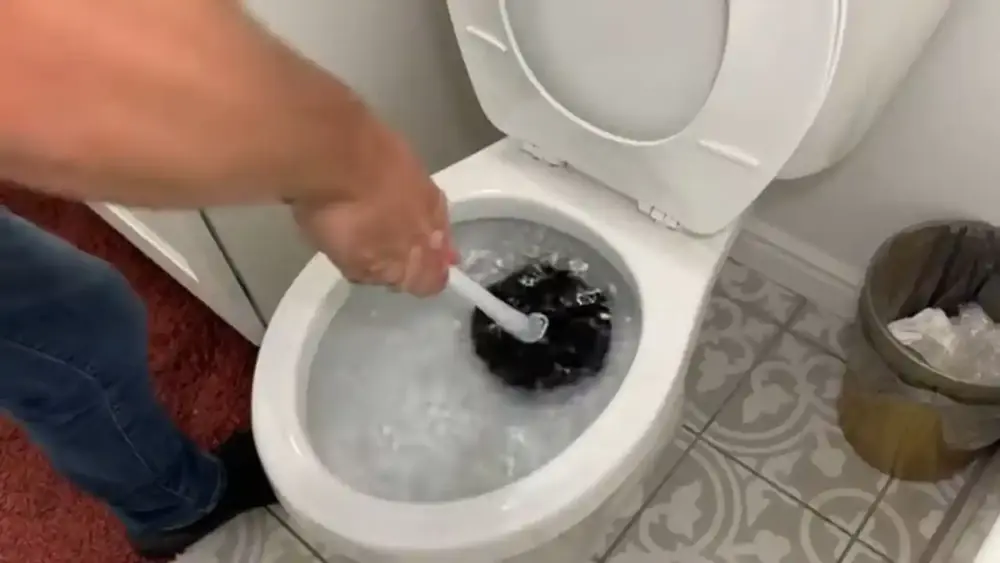
Choose a flange plunger
A flat cup plunger is for sinks. A toilet needs one with a rubber flap or flange that fits the outlet at the bottom of the bowl.
- 2
Seal and push gently
Cover the drain hole, push down slowly to expel air, then pull up sharply. Ten to fifteen strokes is a fair try. Wear gloves and keep the water level below the rim.
- 3
Watch the bowl, not the clock
If the water drains steadily, flush once and test again. If it only drops a little, the clog is still there.
- 4
Switch to a closet auger
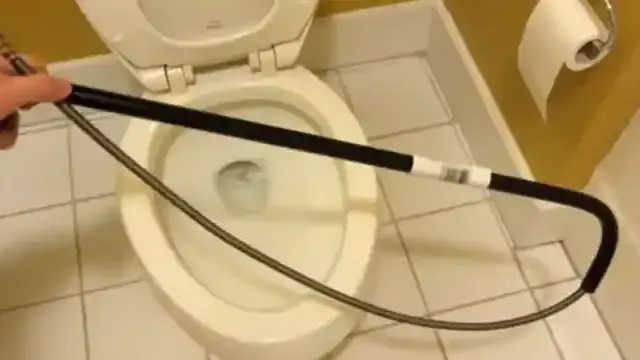
A closet auger is a short cable with a bend that protects the porcelain. Feed it into the drain, crank clockwise and retrieve the obstruction.
- 5
Stop if the water rises
Do not flush a second time. Pour in nothing and close the supply valve behind the toilet until you have a plan.
- 6
Use only the right cleaner
Avoid caustic drain chemicals in a toilet. They sit in the bowl, can splash back onto skin and make a later repair hazardous.
Plunger not working?
A person answers 24/7. Tell us what the bowl is doing and which other drains are slow, and we can help you decide what to try next.
What should never go down a toilet
A toilet is designed for human waste and toilet paper, and that is all. Wipes, including those labeled flushable, paper towels, cotton swabs, feminine products, dental floss, cat litter and diapers do not break down. They collect on rough pipe walls or roots and form a mat that catches everything after.
Kitchen grease is a separate problem. Poured into a drain, it cools and coats the pipe, building a layer that narrows the line over months. Grease and wipes together make the most stubborn blockages we see in main lines.
If you keep a small wastebasket by every toilet and train the household to use it, repeat clogs often stop with no repair at all.
Bowl problem or line problem: what to try yourself
Some work is reasonable to attempt, and some should wait for a pro.
Reasonable to try
- Plunging with a proper flange plunger
- Using a closet auger gently on a single clogged toilet
- Cleaning the rim jets and checking the flapper
- Removing a visible object from the bowl
Call a plumber
- More than one fixture is slow or backing up
- A floor drain or tub gurgles when you flush
- The toilet rocks, leaks or smells at the base
- It clogs again within days of clearing
The flange and the wax ring
The flange is the ring on the floor that bolts the toilet down and connects it to the drain. A wax ring or similar seal sits between flange and bowl. If the flange is cracked, rusted or set below the finished floor, the seal never closes and waste catches on the joint.
The clues are a toilet that rocks, a faint sewage smell, or a stain around the base. These rarely cause a full clog, but they turn small problems into repeat ones. Fixing it means pulling the toilet, which is the point where our toilet repair team often takes over.
When it points to the main line
A main sewer line blockage affects the whole house. Signs include the lowest drain backing up first, a toilet that bubbles when the washer drains, and gurgling in a tub or shower after a flush. Roots, grease, a belly in the pipe or a collapsed section can all cause it.
If you see this, stop running water. Every flush and every load of laundry adds to the problem. Our sewer line cleaning page explains how a camera and cable or jetting work. Do not keep plunging a backed-up toilet, since you are pushing against the whole system, not a short blockage.
A cleanout, a capped pipe near the foundation or in the basement, is the access point for a cleaning. Learn where yours is before you need it.
Backing up in more than one place?
Do not wait. A person answers around the clock, and we will tell you what to do while the line is cleared.
After the clog is gone
Run water to check the repair. Flush several times, run a sink and a tub, and watch for gurgling. If the problem returns, you now know the trouble is not the bowl.
For houses with persistent trouble, a camera inspection shows what is happening inside the pipe, and we cover the Etna area alongside Pataskala and Kirkersville. We will tell you what the picture shows and what the realistic fix looks like.
Frequently asked questions
Check the flush first. A weak flush from a blocked rim, a flapper that closes early, or a partly scaled trapway leaves waste behind. If the flush looks strong and it still clogs, a partial blockage downstream is likely.
Older low-flow models were weaker, but current designs flush well when clean. A bowl that clogs often usually has scale in the rim or trapway, a worn flapper, or a partial blockage beyond the bowl.
We do not recommend it. Caustic cleaners sit in the bowl, do little to a solid clog, and make a later plunge or repair hazardous because the water now burns skin.
Check other fixtures. If the tub gurgles, a floor drain backs up, or several toilets are slow, the main line is likely. A single slow toilet with every other drain normal points to the bowl or its short branch.
If neighbors have backups too, or the cleanout outside is full to the top, the blockage may be in the public main, not your service line. The Licking Regional Water District lists inspectors on call around the clock for emergencies, so contact the district. If only your house is affected, the problem is on your side, and we can clear and inspect it.
Give it a fair attempt, then stop. Repeated plunging on a toilet that has a main line problem pushes against a full pipe. Switch to an auger once, and if that fails, close the supply valve and call.