
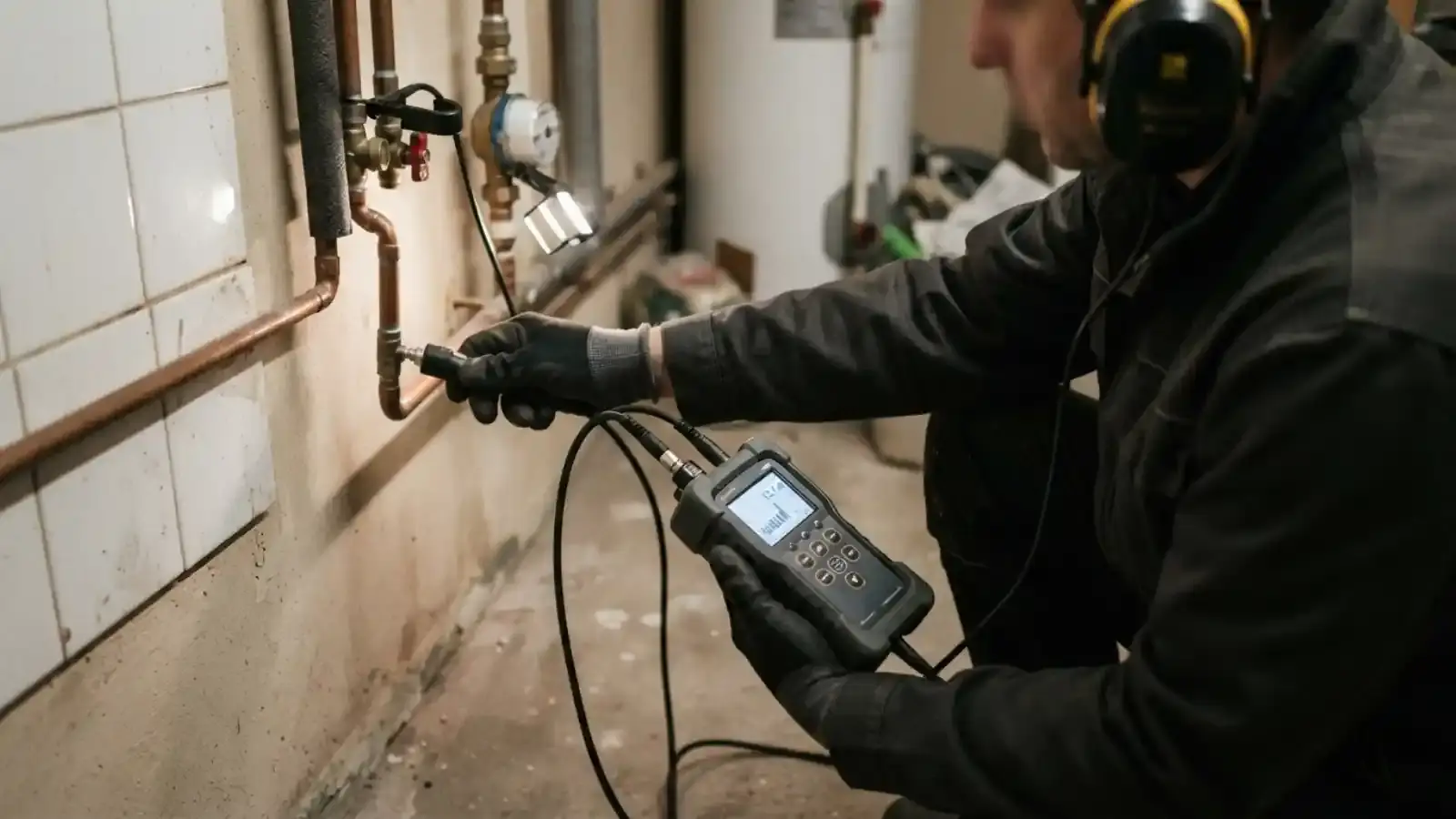
Water leak detection in a house is the work of proving that water is escaping from the supply or drain piping, then narrowing down where, before anyone cuts into a wall or digs up a yard. You can confirm that a leak exists with two cheap checks, a water meter test and a toilet dye test. Finding the exact spot behind drywall, under a slab or in a buried line usually takes specialist tools.
This guide walks through the home tests in order, lists the signs that point to a hidden leak, and explains what listening gear, thermal cameras and pressure tests are good at. It also shows how the answer changes when the leak is in a wall, under the floor or in the yard line. If you already see water spreading, skip ahead and call our team, because a person answers around the clock.
The water meter test, step by step
A meter test tells you whether water is moving through your plumbing when nothing should be using it. It takes about half an hour, and it separates a real leak from a high bill caused by habits.
- 1
Shut off every water use
Close all taps, make sure no one flushes or runs a shower, and pause the dishwasher, washing machine and ice maker. If you have a softener, check that it is not mid-cycle. Outdoor spigots and irrigation zones count too.
- 2
Find the meter and the main valve
The meter usually sits in a lidded box near the street or the property edge, or inside the basement or utility room where the line enters. Lift the lid carefully, since insects and spiders like these boxes. Note where the house shutoff valve is while you are there.
- 3
Read the dial and the low-flow indicator
Most meters have a small triangle, star or dial that spins when even a trickle passes. If it turns with every fixture off, water is moving somewhere. Write down the full register reading as well.
- 4
Wait and read again
Leave everything off for 20 to 30 minutes, then compare the register. Any change means a leak, and the size of the change gives a rough sense of how big it is.
- 5
Close the house shutoff and repeat
Turn off the main valve inside the home and watch the meter again. If it stops, the leak is inside the house. If it keeps moving, the leak is on the line between the meter and the house, which is a different repair and a different conversation about responsibility.
The toilet dye test
Toilets are the most common source of a silent leak, because a worn flapper lets water trickle from the tank into the bowl without making a sound. Lift the tank lid, add a few drops of food coloring or a dye tablet, and do not flush. After 10 to 15 minutes, any color showing in the bowl means the flapper or fill seat is leaking.
A toilet that runs on its own can waste a lot of water over a month, and it will also keep the meter turning during your test. Run the dye test before you decide the leak is in the walls. If the toilet is clean, you can also try a dye check on the water heater overflow pipe and the drain pan, looking for drips that a dry floor would hide.
Signs of a hidden leak
Hidden leaks leave clues long before water pools on a floor. Look for several of these together rather than one in isolation.
A bill that creeps upward
Usage that climbs while the household stays the same is the classic sign. Compare the last few months, not just the latest bill.
The sound of running water
A faint hiss or trickle at night, with every fixture off, often means a pressurized pipe is losing water.
Stains, bubbling paint or soft drywall
A brown ring on a ceiling or a wall that feels cool and damp points to a leak above or behind it.
Warm spots on the floor
A floor patch that feels warm over a slab can mean a hot-water line is leaking underneath it.
Musty smells and mold
A smell that returns after cleaning usually means moisture is feeding it from inside a cavity.
Wet or unusually green yard patches
A soggy area that stays wet in dry weather, or a stripe of lush grass, can sit above a leaking buried line.
Meter still moving after the tests?
Call and describe what the dial is doing. We will help you decide whether it is a quick fixture issue or a hidden leak that needs tools.
What each detection method can and cannot find
No single method finds everything, which is why a careful tech combines two or three. Use this table to see where each one earns its place.
| Method | What it finds | What it cannot do | Best used for |
|---|---|---|---|
| Meter test | Whether any leak exists | Tell you where it is | First check on every house |
| Toilet dye test | Flapper and fill valve leaks | Find leaks in pipes | Ruling out the easiest cause |
| Acoustic listening | The sound of pressurized water escaping | Work well in noisy areas or on plastic pipe that muffles sound | Slab and buried supply lines |
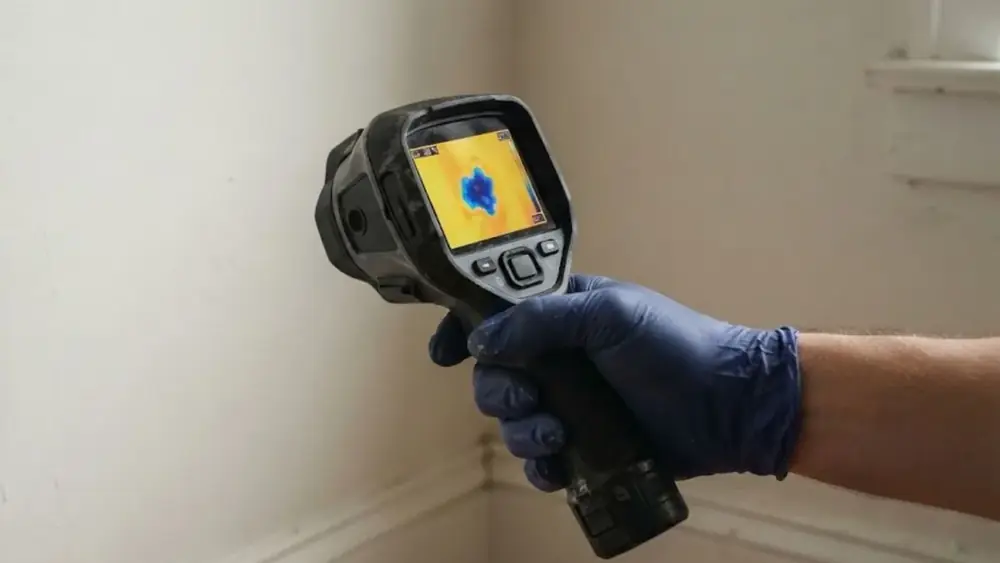
| Thermal imaging | Temperature differences from wet material or hot lines | See through thick concrete or prove moisture on its own | Hot-water leaks, wet walls and ceilings |
| Pressure testing | Whether an isolated pipe section holds pressure | Pinpoint the spot | Confirming a line is leaking, then narrowing the section |
| Moisture meter | Dampness in drywall, wood and flooring | Tell a leak from old moisture or condensation | Mapping how far wet material spreads |
Methods overlap. A good diagnosis cross-checks at least two of them before anything is opened up.
Slab, wall or yard line: why the location changes the plan
Where the leak sits decides which tools make sense and how invasive the repair will be.
Under a slab
Listening gear on the floor, thermal imaging for hot-line leaks and a section-by-section pressure test usually come first. Rerouting a line through the attic or walls is sometimes cleaner than breaking concrete, so ask for both options.
Inside a wall or ceiling
A moisture meter and thermal camera map the wet area, and a small inspection opening confirms the source. A neat access hole near the confirmed leak is easier to patch than several guesses in the wrong places.
In the yard line
The meter test with the house valve closed points here, and a listening device at the meter box and shutoff helps locate the run. Digging comes last, after the line is located and marked.
Do it yourself or call a pro
You can do all the confirming. The locating is where tools and experience save a wall or a patio.
What you can do
- Read the meter, run the dye test and check under sinks and around the water heater.
- Photograph stains and note when they appear after rain, showers or laundry.
- Shut the main valve if water is visibly spreading.
- Look at your last several water bills for a trend.
What a plumber brings
- Acoustic and thermal tools that pinpoint a leak without demolition.
- Pressure tests that isolate one pipe section at a time.
- A repair plan that compares rerouting, spot repair and replacement.
- Honest limits: some leaks need two methods, and a few stay unlocated until a wall is opened.
Common mistakes when chasing a hidden leak
The biggest error is opening a wall on a guess. Water travels along studs, pipes and slab edges, so the wet spot is often several feet from the real source. Mark the damage, confirm with a meter test, and let a locator narrow it down before drywall comes off.
Another mistake is ignoring a small meter movement. A dial that turns slowly with everything off still means water is leaving the system, and slow leaks rot subfloors and feed mold for months. If the movement is small, look first at toilets and outdoor spigots, then book a proper check. Our leak detection team uses the same meter-first logic before bringing any tools into the house.
Finally, retest after any repair. Run the meter test again once the work is done, because a corroded pipe can fail in a second place and the dial will show it.
Talk to someone about a suspected leak
Describe the meter behavior, the stains and the age of the pipes, and we will tell you what to check next or when to send a tech.
Local help near Pataskala and Reynoldsburg
We work across the western Licking County towns, including Pataskala, and out toward Reynoldsburg on the Franklin County side. If your home is in either place and the meter keeps moving, the same steps apply. Start with the meter test, then call with what you saw.
Frequently asked questions
Twenty to thirty minutes with every fixture closed is enough to see a change on most residential meters. If you suspect a very slow leak, leave everything off overnight and read the meter first thing in the morning. A moving dial or a changed register confirms water is escaping somewhere in the system.
Yes, for flappers and fill valves. Dye in the tank that shows up in the bowl without a flush proves water is slipping past the seal. It cannot find a leak in a pipe, so a clean test only rules out the toilet, and the meter test then tells you whether something else is leaking.
Often, yes. Listening gear, thermal imaging and section pressure tests can narrow a slab leak to a small area without demolition. Breaking concrete is the last step and happens only after the location is confirmed, and the plan can include rerouting the line instead of digging through the floor.
A thermal camera shows surface temperature differences, not water itself. It works well for hot-water leaks and wet drywall, but thick concrete, insulation or a cold-water leak in a cool house can hide the signal. That is why it is combined with moisture readings and listening.
Call the Licking Regional Water District first and tell them the meter moves with your house valve shut, so they know a line problem may exist on the meter side. Then call us for a leak check of the buried run, and ask the district where its responsibility ends and yours begins at your address.
If water is visibly spreading or you cannot find the source, yes. Close the main shutoff valve, then open one low tap to drain the lines. Keep clear of wet electrical outlets and appliances, and take photos of any damage before cleaning up.